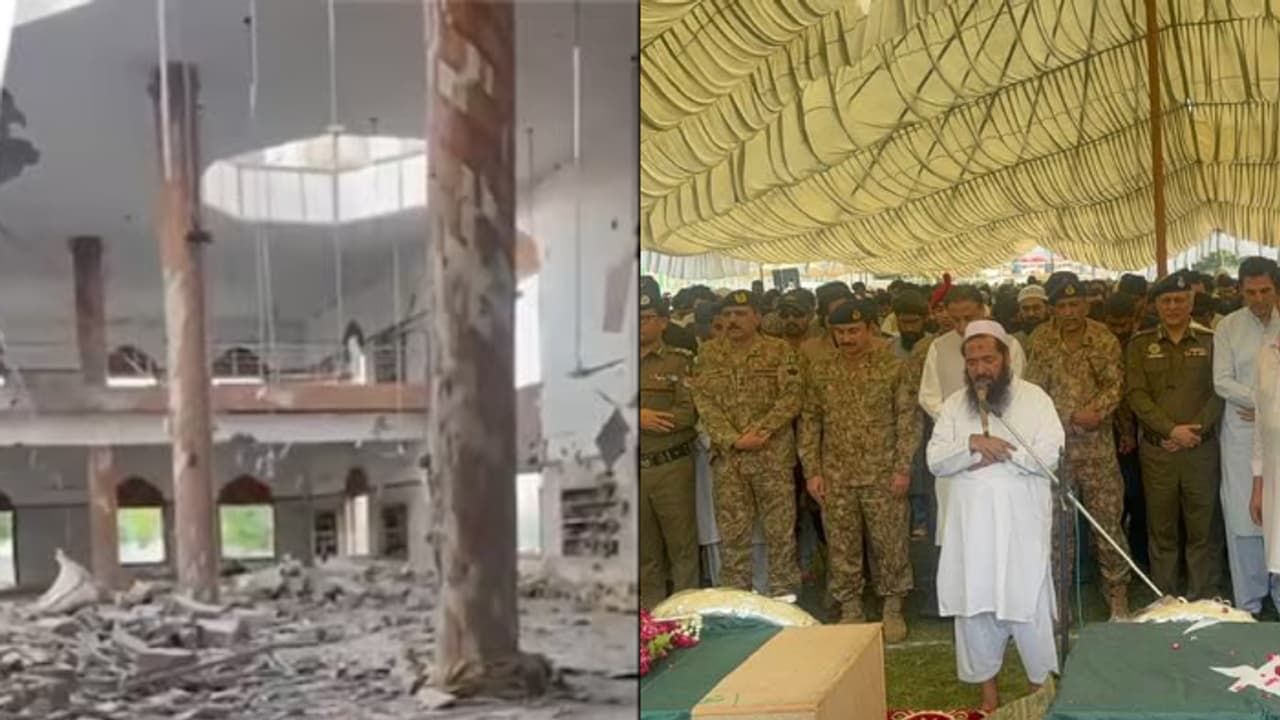
India launched 'Operation Sindoor', executing precision strikes against Jaish-e-Mohammed's headquarters in Bahawalpur, Pakistan.
New Delhi: In a major move in counter-terrorism efforts, India conducted precision strikes under 'Operation Sindoor', targeting the headquarters of Jaish-e-Mohammed (JeM) in Bahawalpur, Pakistan. According to sources, the strike, carried out 100 kilometers deep inside mainland Pakistan, was the most powerful of the operation, employing India's most advanced and potent weaponry.
The Indian armed forces successfully demolished nine terror launchpads, with the Bahawalpur strike standing out for its strategic and symbolic importance. The attack resulted in significant casualties, including ten members of JeM chief Masood Azhar's family. His brother and operational commander, Abdul Rauf Azhar, was also reportedly killed in the strikes.
Abdul Rauf Azhar, the mastermind behind the 1999 IC-814 hijacking, had orchestrated several deadly terror attacks on Indian soil, including the 2001 J&K Assembly and Parliament strikes, the 2016 Pathankot attack, and the 2019 Pulwama suicide bombing that claimed 40 CRPF lives.
Related Articles

Sources revealed that the targeting of the Bahawalpur base was deliberate, aiming to dismantle the JeM leadership and send a direct message to Pakistan's Inter-Services Intelligence (ISI), the agency that founded and sustained Jaish for decades.
In a statement following the strike, Masood Azhar acknowledged the heavy losses, saying, "Ten members of my family are dead. It should have been me." This admission underscores the devastating impact of the Indian operation.
With 'Operation Sindoor', India has shifted its approach from tactical response to strategic deterrence, directly targeting the epicenter of Masood Azhar's network in Bahawalpur.