
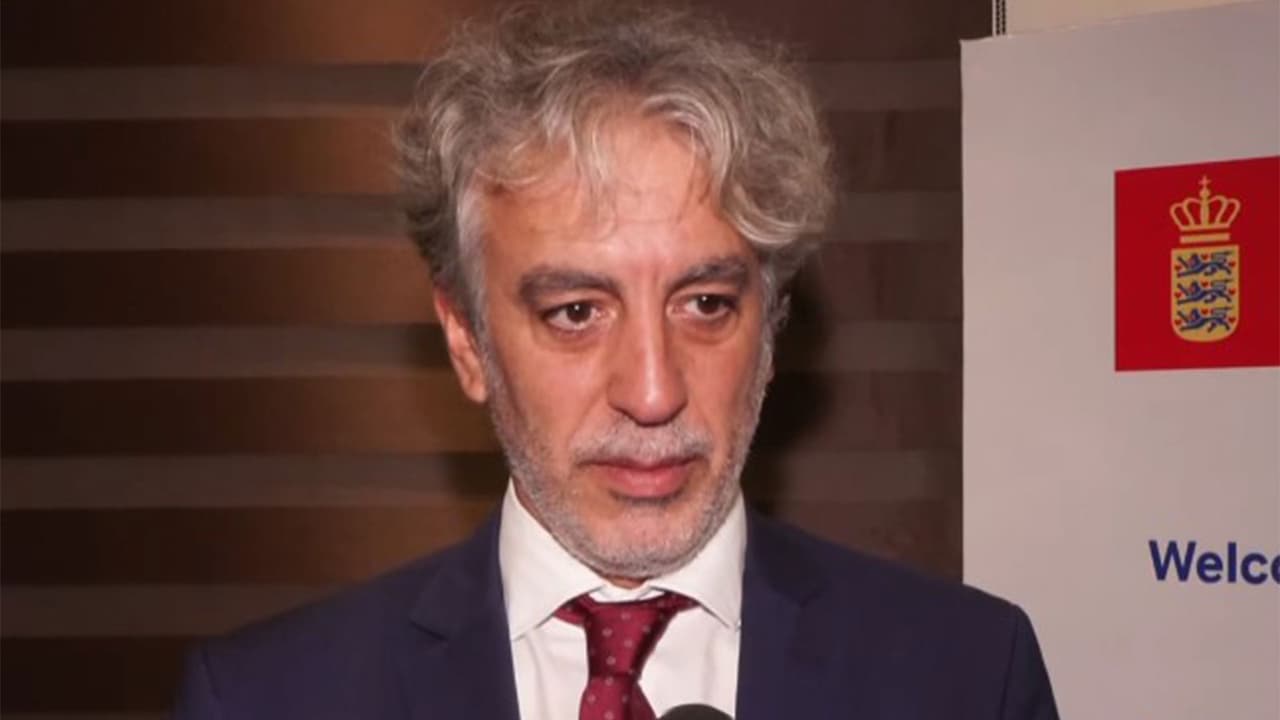
Danish pharma firm Novo Nordisk has pledged support for India's mission to eliminate sickle cell disease by 2047, emphasizing the need for early diagnosis, awareness, better infrastructure, and access to treatment for the debilitating genetic disorder.
Novo Nordisk, a Danish multinational pharmaceutical company, has expressed support for India's mission to eliminate sickle cell disease by 2047, highlighting the need for early diagnosis, public awareness, better healthcare infrastructure and improved access to treatment.
Understanding Sickle Cell Disease
Sickle cell disease (SCD) is a chronic single gene disorder causing a debilitating systemic syndrome characterized by chronic anemia, acute painful episodes, organ infarction and chronic organ damage and by a significant reduction in life expectancy.
Habib Bennaceur, Senior Vice President of the Rare Disease Unit at Novo Nordisk, said India accounts for a significant share of the global sickle cell disease burden, with around 10 million people living with the condition worldwide. Explaining the impact of the disease, speaking to ANI, Bennaceur said it affects the shape of red blood cells and their ability to carry oxygen, potentially causing anaemia and serious complications. “Actually, sickle cell disease is an inherited disease that will affect the red blood cell shapes and will limit the transport of oxygen, which is the role of the red blood cell, to organs and to the organism, which will result in anaemia. It might also result as well in multiple organ damage, strokes, heart issues, kidney failures, and also sickle cell disease is also very well known for vaso-occlusive crises, deep severe pain that will force patients to go to hospital and be hospitalised for a long duration sometimes. So it's a very severe disease that has multiple complex complications in the organism,” Bennaceur said.
Novo Nordisk's Commitment and R&D
Explaining the company's interest in the disease, he said the unmet medical needs of patients and Novo Nordisk's experience in treating blood disorders, particularly haemophilia, prompted it to invest in sickle cell disease. “Novo is first guided by the unmet need and patient needs. So sickle cell disease has been left on the side of innovation for a very long time. It's a large population globally; there are 10 million people living with sickle cell disease over the world. And India is the second largest country in that aspect. And our long legacy in haemophilia, so with our portfolio there, it was a natural move to go and invest in making a difference in sickle cell disease with the ambition to defeat sickle cell disease,” he said.
Bennaceur added that the company was committed to supporting patients, medical professionals and the central and state governments in achieving the 2047 target. “India is the second-largest country in the world in terms of sickle cell disease prevalence, which means as a global pharma company, as Novo, we cannot decently say we are invested in sickle cell disease if we don't support and make a difference in India. But India is facing what many countries globally are facing in terms of the severity of the disease and the complications, but India is leading in many ways, actually and in the understanding of the fact that if you want to improve sickle cell disease, you need to work first on diagnosis. You need to work first on awareness, education, and infrastructure. And that's again one of the reasons of our visits here is one to learn about the critical sickle cell disease mission elimination for 2047, but also to commit to the Indian community to support all patients, the medical community and also the government, central and state government, in that mission,” he said.
Focus on Diagnosis and Treatment
He said the company was supporting projects focused on improving diagnosis and awareness, including the Single Point of Contact (SPOC) Hub and wellness hub. He cited the lack of diagnosis and treatment as a major challenge in parts of sub-Saharan Africa. “We already started the support by working on many projects, one of them being the SPOC Hub, but also the wellness hub, which is obviously first to improve the first medical contact, working on first diagnosis and awareness. There's a reason why, in sub-Saharan African countries, for example, 90% of kids born with sickle cell disease will die before the age of five is because they're not diagnosed and thus not even treated,” he said.
He added that Novo Nordisk was developing potential treatments, with its most advanced candidate having reached Phase 3 trials with positive results. The results were scheduled to be presented at the American Society of Rheumatology Congress in December. Vikrant Shrotriya, Corporate Vice President and Managing Director of Novo Nordisk India, said clinical trials had been completed and the company was working with regulatory authorities to make the treatment available in India as soon as possible. “The trials are finished. We are working very closely, obviously, with regulatory authorities and relevant authorities here to make it available as soon as possible,” Shrotriya said.
Shrotriya said India had an estimated 1.5 million to two million people living with sickle cell disease and that the company was conducting research on potential treatments in the country. “Coming to the blood disorder, we came with one of our products called Nova 7. Over a period of time, we have got many factors in this area of haemophilia. So it was very natural that we started working in the sickle cell area. So we have got a couple of molecules, and for those molecules we are so proud because India has got a dubious distinction of being second in the world with the highest population of sickle cell, 1.5 to 2 million people. Every sixth or seventh person in the world for sickle cell is actually in India,” he added.
India's National Elimination Mission
Expressing hope that the forum would strengthen efforts towards the 2047 target, Shrotriya said, “So I am very, very happy that along with the Danish Embassy, Novo Nordisk, Niti Aayog, the Ministry of Tribal Affairs, many of the stakeholders who are involved therein have come together to take a pledge that we would work together for sickle cell elimination, which was called by Prime Minister Modi by 2047. So, this is just the start of that advocacy of that movement, and I wish and hope that this becomes strengthened over a period of time.”
The National Sickle Cell Anaemia Elimination Mission (NSCEM) was launched by Prime Minister Narendra Modi on July 1, 2023, with the goal of eliminating Sickle Cell Disease (SCD) as a public health problem in India by 2047. Implemented in 17 high-focus states across the country, this program aims to improve the care and prospects of all sickle cell disease patients while reducing the prevalence of the disease. (ANI)
(Except for the headline, this story has not been edited by Asianet Newsable English staff and is published from a syndicated feed.)