
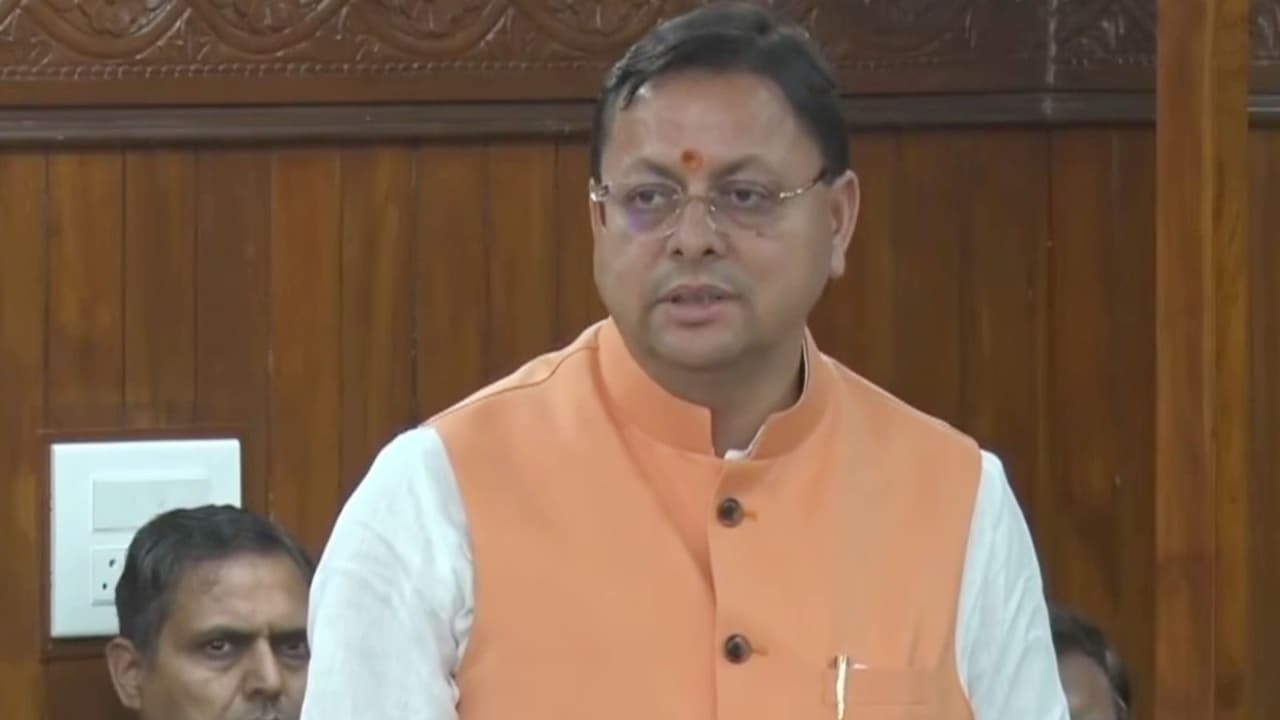
CM Pushkar Singh Dhami told the Assembly that outdated practices won't be encouraged, assuring action on madrasa education and Anganwadi pay. He also slammed Congress for politicising the Char Dham Yatra and held a public grievance meeting.
Uttarakhand Chief Minister Pushkar Singh Dhami, on Tuesday, during the special session of the Assembly, responded candidly and with factual clarity to questions raised by opposition MLAs. The Uttarakhand CM asserted that "outdated practices and regressive mindsets will not be encouraged in the state."
CM responds to opposition in Assembly
On the issue of honorarium hikes for Anganwadi workers, the Chief Minister stated that his government has previously increased their remuneration and remains aware of their expectations. He assured that positive decisions in this regard will continue to be considered in the future.
Addressing madrasa education and the education of minority children, he emphasised that "outdated practices and regressive mindsets will not be encouraged in the state." He added that minority children will be integrated into the new education policy to ensure equal opportunities and a better future. He also noted that it is the responsibility of public representatives to convey the right message to society, while the government continues to work with the commitment of "Sabka Saath, Sabka Vikas."
Taking a sharp dig at the Congress over the Char Dham Yatra, the Chief Minister alleged that the party is attempting to malign the sacred pilgrimage for political gains. He termed it unfortunate to politicise such an important symbol of the Sanatan faith.
CM addresses public grievances
Earlier on Saturday, Uttarakhand Chief Minister Pushkar Singh Dhami listened to the grievances of citizens who had come from across the state at the Chief Minister's Camp Office, Mukhya Sevak Sadan. He interacted directly with the public, took their concerns seriously, and resolved several cases on the spot
The Chief Minister issued directions for swift action on matters related to roads, drinking water, healthcare, education, and financial assistance. He instructed officials to ensure time-bound and effective disposal of public grievances on a priority basis.
He also emphasised that there should be no unnecessary delays in resolving issues and that regular monitoring of each case must be ensured.
He stated that the government's objective is to make governance more sensitive, accountable, and transparent so that people receive prompt relief. He added that public hearings serve as a strong bridge between the government and citizens, enabling quick resolution of issues while continuously improving administrative functioning.
(Except for the headline, this story has not been edited by Asianet Newsable English staff and is published from a syndicated feed.)