Operation Sindoor showcased India’s cutting-edge drone warfare capabilities, redefining modern conflict with precision strikes, real-time surveillance, and strategic deterrence.
In the quiet of the night on May 7, 2025, the skies over the India-Pakistan border buzzed with a new kind of warrior – drones. Operation Sindoor, as India’s military dubbed its swift and precise strikes, marked a turning point in how wars are fought. With Israeli-made Harop drones diving into Pakistani radar stations and terrorist hideouts, and Heron drones beaming live intelligence to Indian commanders, the operation showed the world that drones are no longer just gadgets – they are the future of warfare. But as we celebrate this technological triumph, we must also reflect on what this means for India, our region, and the world.
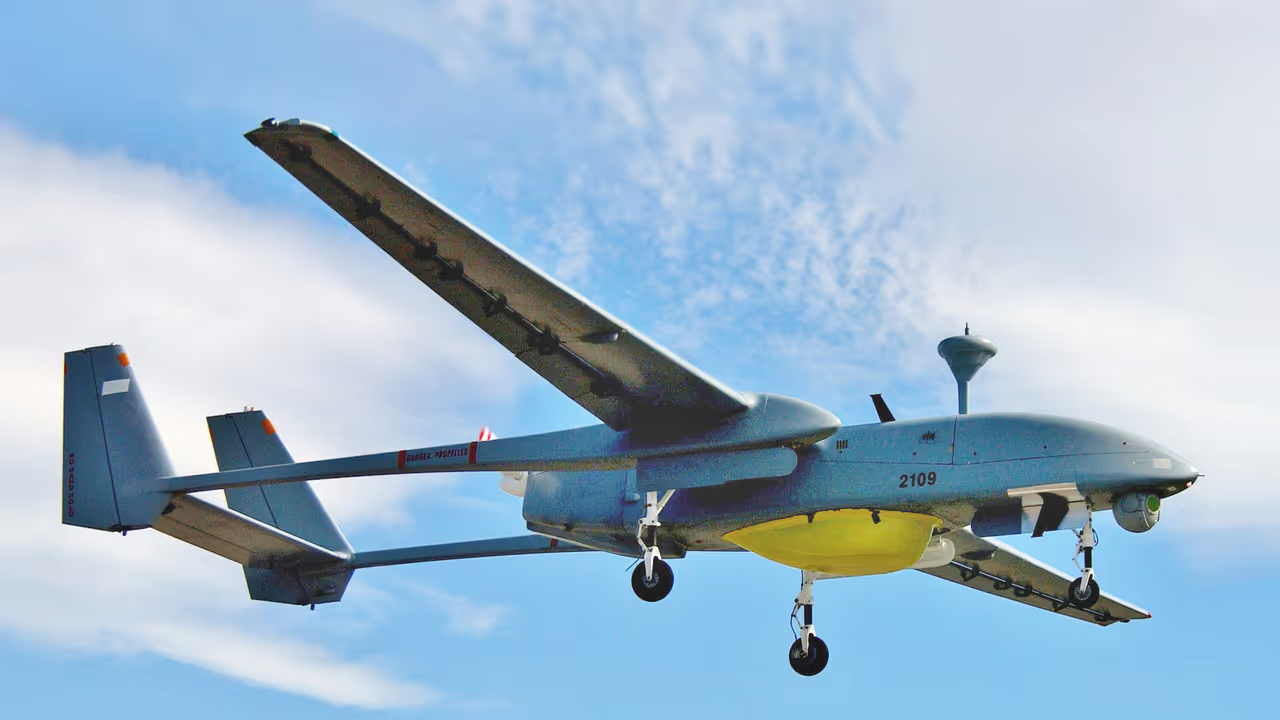
The story of Operation Sindoor began with a familiar problem: cross-border terrorism. Pakistan-based groups had long exploited the rugged terrain along the Line of Control to launch attacks. In the past, India’s response often meant risky manned missions or ground operations. But this time, drones took centre stage. On May 7-8, waves of Harop loitering munitions – kamikaze drones that can hunt and destroy targets – struck with surgical precision, dismantling terrorist camps and air defence systems. Heron MkII drones, hovering high above, fed real-time visuals to military planners, ensuring no target was missed. The result? A decisive blow without a single Indian soldier crossing the border or a pilot risking their life.
This wasn’t just India flexing its muscle. Pakistan hit back, sending swarms of armed drones into Indian airspace on May 8-9. From Kashmir to Rajasthan, these machines – likely Burraq, Chinese Wing Loong models, and possibly Turkish Songar drones – carried explosives, aiming to disrupt and destroy. The Songar, a versatile combat drone capable of firing small-calibre weapons or dropping munitions, added a new dimension to Pakistan’s offensive. India’s air defences showcased its might, shooting down many, but the message was clear: drones have levelled the playing field. Even nations with smaller budgets can now wield air power that was once the preserve of superpowers.
Related Articles

Why Drones Are Game-Changers in Modern Warfare
For one, they’re fast to deploy. Unlike fighter jets that need pilots and runways, drones can be launched quickly, often from mobile units. They’re hard to detect, flying low or using stealth designs. They strike with pinpoint accuracy, reducing collateral damage – a critical factor in densely populated regions. Best of all, they’re relatively cheap. A Harop or Songar drone costs a fraction of a manned jet, making it a weapon even cash-strapped militaries can afford. Operation Sindoor proved this: India’s drone-led strikes were not just effective but also cost-efficient.
But the drone revolution isn’t just about technology; it’s about strategy. In the Russia-Ukraine war, we saw how Turkish Bayraktar TB2 drones wrecked Russian tanks early on, while small, off-the-shelf quadcopters became eyes in the sky for soldiers. Similarly, in Operation Sindoor, drones didn’t just attack – they shaped the battlefield. India’s Heron drones tracked Pakistani troop movements, giving commanders a clear picture. Pakistan’s drone swarms, potentially including Songar’s rapid-strike capabilities, showed how numbers and versatility can challenge defences. This is the “drone signature” of 21st-century wars – a blend of surveillance, precision strikes, and sheer volume.
Yet, this new era comes with challenges. Drones make warfare easier, but also riskier. When borders are porous, as in Punjab and Jammu, cheap civilian drones can smuggle drugs or weapons, as both India and Pakistan have seen. Swarm drones, which India is developing and Pakistan may soon acquire, could escalate conflicts by flooding defences. And what happens when drones like Songar fall into the wrong hands? Terrorist groups with access to such combat drones could wreak havoc in cities. Operation Sindoor was a success, but it also showed how drones can make conflicts more unpredictable.
For India, the lesson is clear: we must double down on our drone capabilities. Our indigenous efforts, like DRDO’s Tapas-BH and Ghatak, are promising but need faster development. Private players making Nagastra and SWITCH drones are stepping up, but we need more innovation and production. The recent deal for 30 American MQ-9B drones is a big step, but self-reliance is the goal. At the same time, we must strengthen our anti-drone defences to counter threats like Pakistan’s Songar-led swarms.
Operation Sindoor wasn’t just a military victory; it was a glimpse into the future. Drones are rewriting the rules of war, making it faster, cheaper, and more precise – but also more complex. As India stands tall after this operation, we must ask: are we ready for a world where drones dominate the skies? The answer lies in building our own wings, sharpening our defences, and preparing for a new kind of battlefield. The buzz of drones is here to stay – and India must soar with it.
(Girish Linganna is an award-winning science writer and Defence, Aerospace & Geopolitical Analyst based in Bengaluru. He is also Director of ADD Engineering Components India Pvt. Ltd., a subsidiary of ADD Engineering GmbH, Germany. Contact: girishlinganna@gmail.com)