
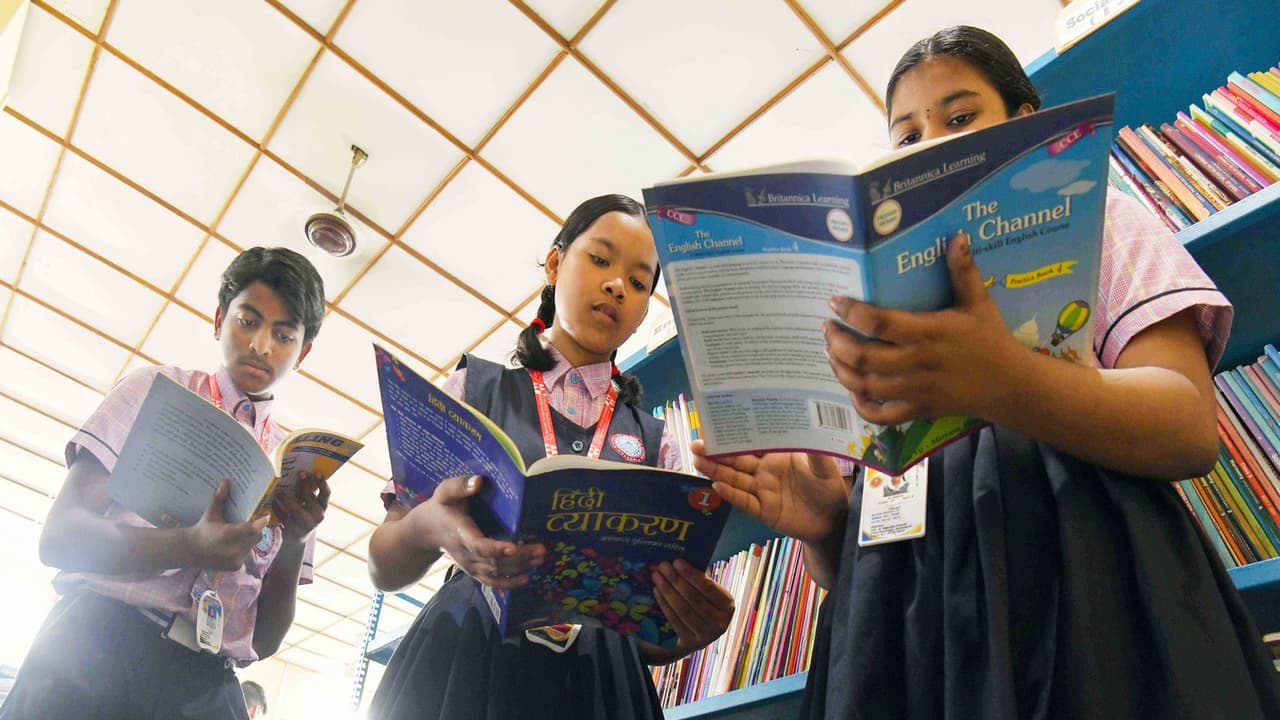
NCERT clarified that the Grade 6 Kannada textbook is named 'Krishna' after the river, not for ideological reasons. It also stated the book promotes a balanced diet, with images of both veg and non-veg food, and does not advocate for vegetarianism.
The National Council of Educational Research and Training (NCERT) on Thursday issued a clarification in response to concerns raised in sections of the media regarding the title and content of the Grade 6 Kannada R3 textbook, stating that the textbook neither promotes vegetarianism nor opposes non-vegetarian food.
In a press release, NCERT said concerns had been raised about the title of the textbook and references to diet in its content.
Clarification on Textbook Title
Addressing the title of the Kannada textbook, NCERT said that its language textbooks under the R3 series have been named after major rivers of India. It noted that the Kannada textbook has been titled "Krishna" after the Krishna River, one of Karnataka's major rivers. "With regard to the title of the textbook, it is to be stated that NCERT has named its language textbooks, including R3 language textbooks, after rivers of India. The title of the book 'Krishna' is after the Krishna River, which is one of the major rivers of Karnataka. It is to be noted that the Hindi textbook has been named as 'Ganga', the English textbook has been named as 'Kaveri', and the Urdu textbook has been named as 'Jamuna' (Yamuna). Similarly, the Kannada textbook has been named 'Krishna'. This approach is appropriate from a localised and cultural perspective, particularly in view of the emphasis laid in NEP 2020 and NCF-SE 2023 on rootedness, cultural connect, and meaningful contexts for learners," the NCERT said in the release.
Clarification on Diet-Related Content
On the issue of diet-related content, NCERT said a balanced diet is covered in Chapter 6 of the textbook and that the chapter emphasises the importance of nutrition, exercise and cleanliness for good health. "A balanced diet has been covered in Chapter 6 of this textbook," NCERT said.
The council further stated that the chapter titled "Health is Wealth" explains that a balanced diet includes food items such as milk, green leafy vegetables, fruits, and other foods that should form part of a daily diet. According to the release, the illustrative image on page 63 includes both vegetarian and non-vegetarian food items.
NCERT also said the chapter features examples of healthy traditional foods from different states to highlight India's food diversity. "Nowhere in the textbook is vegetarianism explained or justified, nor is non-vegetarian food opposed. The purpose of the chapter is to create awareness about healthy food items," the release stated.
NCERT said the chapter's message is reinforced through activities and questions, including "What is a balanced diet?"
The council reiterated its commitment to providing students with high-quality teaching-learning material and welcomed suggestions and constructive criticism from stakeholders to further improve its textbooks in line with the vision of NEP 2020 and NCF-SE 2023. (ANI)
(Except for the headline, this story has not been edited by Asianet Newsable English staff and is published from a syndicated feed.)