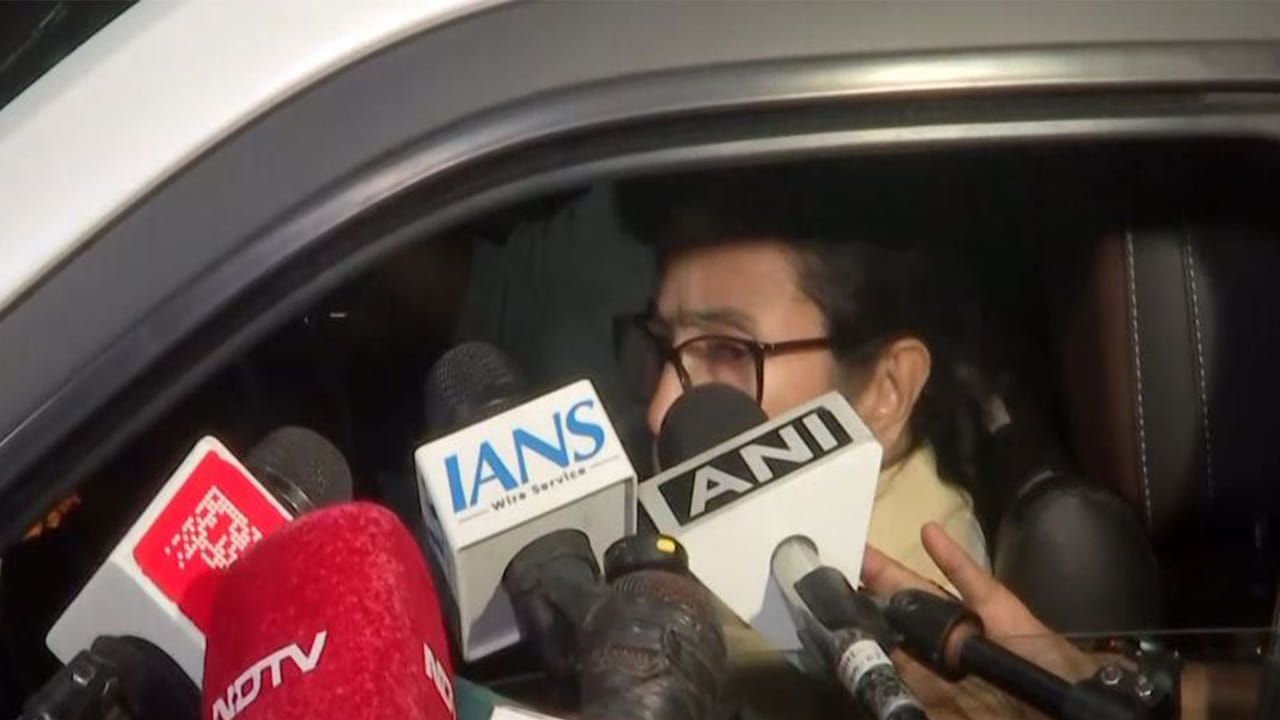
Mamata Banerjee has harshly criticized the Centre's Delimitation Bill, terming it a bad bill while questioning its 2051 timeline. She emphasized her party's commitment to women's representation ahead of the upcoming special Parliament session.
New Delhi [India], November 28 (ANI): Former West Bengal Chief Minister and INDIA bloc ally Mamata Banerjee on Saturday dismissed the Centre’s proposed Delimitation Bill as a "bad bill," questioning a 2051 horizon and asserting her party’s track record on women’s representation ahead of Parliament’s special sitting beginning Monday, November 30. She labelled the Delimitation Bill a "bad bill" and questioned stretching horizons up to 2051 when nobody can say whether they will even survive until then.
She also asserted that her side fought the hardest for Nari Shakti, pointed out that the Women’s Reservation Bill was already passed, and urged pulling out footage from her time as a Lok Sabha MP when she and her colleagues faced assault inside the House. Speaking on the legislation, Banerjee questioned locking decisions up to 2051 and invoked past parliamentary episodes while arguing that the Women’s Reservation Bill had already been passed. "It is a bad bill. Nobody can say up to 2051 whether they will even survive until that time. We fought the most for Nari Shakti. Do you remember when we were assaulted inside the Lok Sabha? Pull out that footage from when I was an MP! The Women's Reservation Bill was already passed," she said.
Banerjee’s sharp attack comes as Parliament prepares to reconvene on Monday, November 30, for a high-stakes special sitting centred on the revised delimitation and women’s reservation legislative push—even as floor arithmetic continues to shift across parties and Houses. In the Lok Sabha, changing stances and whip directives among regional and opposition groupings have kept the two-thirds special majority equation under Article 368 closely watched, with potential backing from parties outside the core NDA—such as signals around the DMK and NCP–Sharadchandra Pawar—lifting estimated pro-bill calculations while actual attendance, absences, abstentions, and party whips remain decisive ahead of voting. In a 543-member Lok Sabha with five vacancies leaving 538 sitting members—and with the Speaker voting only in a tie—full participation by all 538 eligible voters sets a two-thirds mark of 359 votes, putting the bloc within 10 votes of that mark before factoring in absences, abstentions, and Article 368’s twin requirement of a majority of total membership plus at least two-thirds of members present and voting. (ANI)