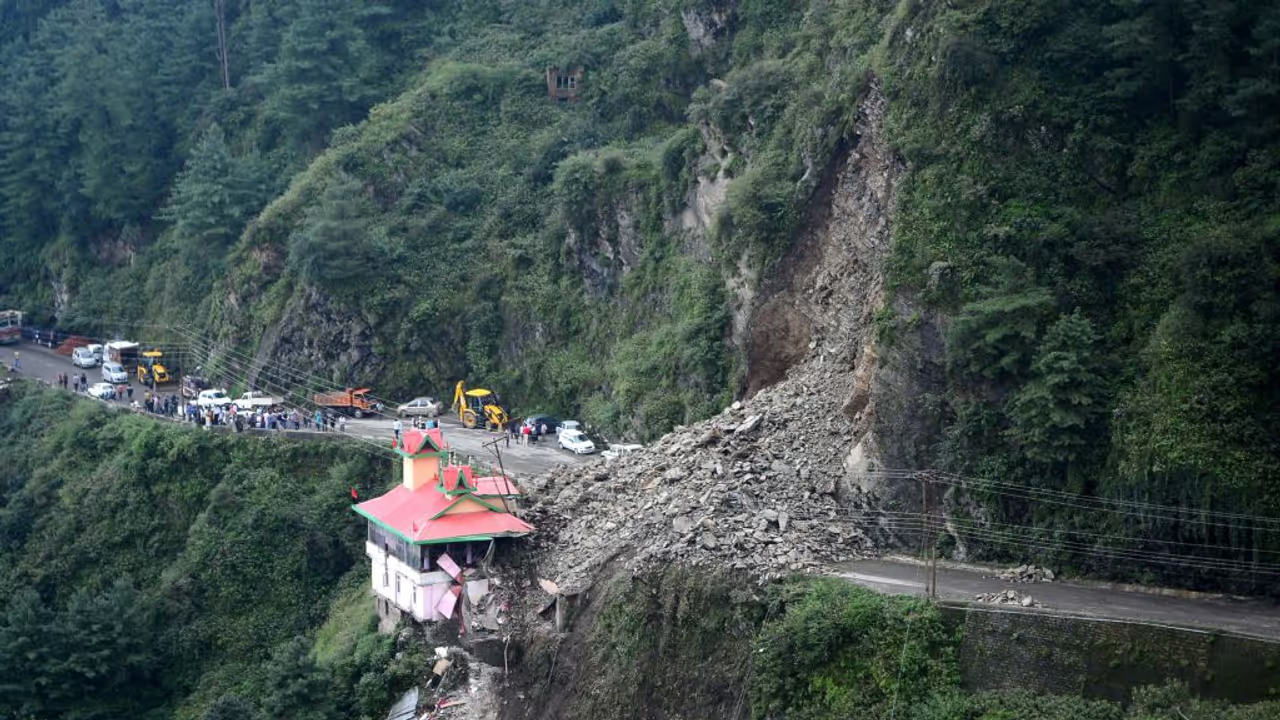
IIT Mandi has developed a low-cost AI device that can predict landslides up to 3 hours in advance with over 90% accuracy. Installed across over 60 sites in Himachal, it uses sensors and machine learning to send SMS alerts, sirens and blinkers.
As the world marks International Mountain Day today (December 11), an important innovation from IIT Mandi is offering fresh hope to families living in landslide-prone mountain regions. A simple, affordable and AI-powered device developed by Dr Kala Venkata Uday and his team can now warn people up to three hours before a landslide, giving them critical time to move to safety, according to a report by The Better India.
The device, already installed at more than 60 sites in Himachal Pradesh, shows how Indian science can create solutions that protect communities living in dangerous terrain.
How the idea began
The project started with one important question: can technology alert people before the ground collapses? Landslides strike suddenly, often during heavy rain, when phone networks fail and roads are blocked. Many disasters happen without warning, leaving villagers with no chance to escape.
Related Articles

This pushed Dr Uday to create a system that not only predicts danger but does so early enough to save lives.
How the device works on the ground
The early warning system uses a network of sensors placed on slopes. These sensors measure soil moisture, rain, temperature, humidity and small ground movements. Even a movement as tiny as one millimetre is picked up and sent to a central system powered by machine learning.
This data is processed in real time to check whether the slope is stable or becoming risky. When danger rises, the device sends instant SMS alerts, activates blinkers and sounds sirens for the local community and district authorities. These alerts are designed to work even when communication systems are weak.
The device has shown over 90% accuracy, making it one of the most dependable early warning tools in India.
An affordable system built in India
Many imported early warning systems are expensive and difficult to maintain. They also need specialised support. In contrast, IIT Mandi’s device is made with locally sourced parts, reducing both cost and repair time.
Dr Uday believes technology must be usable by local communities. His team trains villagers and works closely with local administrations so that people trust the alerts and know how to respond.
Why India needs this landslide-predicting AI device NOW
Nearly 12% of India's land is vulnerable to landslides. Yet early warning systems are rare. Some devices installed in past projects were damaged or not maintained. This model solves these issues through:
- Strong and durable design
- Local repair options
- Community involvement
- Simple alarms that everyone understands
As a result, the system is both technically strong and socially accepted.
Recognition for the work
For this life-saving innovation, Dr Uday received the Disaster Preparedness Award at the WCDM-DRR Awards 2024, held at the Constitution Club of India, per The Better India. His work at IIT Mandi spans over 15 years across biogeotechnics, landslide monitoring and natural mitigation methods.
He hopes this model will soon be installed across all major mountain belts in India.
In landslide zones, even a few minutes can mean the difference between life and death. Dr Uday’s system gives hours, which can save entire communities. As he says, "Technology should empower communities, not replace them. If a simple alert can save even one life, it's worth it."