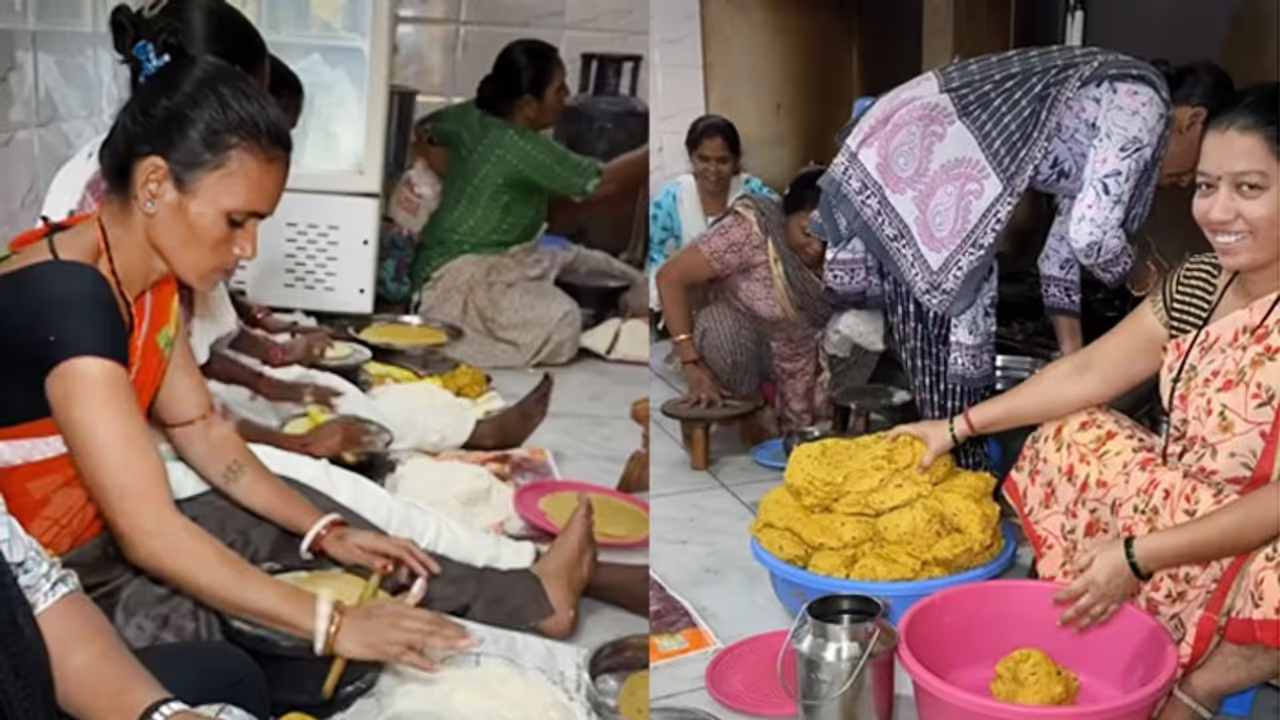
A viral Instagram video offers a fascinating glimpse inside one of Gujarat's largest thepla plants, showcasing the mass production of this popular snack. The footage reveals a coordinated effort by women using industrial mixers and hot griddles to prepare, cook, and package the flatbreads with accompaniments.
Thepla is a common Gujarati breakfast or travel food and is commonly eaten as a quick snack. But have you ever wondered how these flavorful flat breads are made in vast quantities? A peek inside one of Gujarat's largest thepla plants gives an insight at the process. A video published on Instagram shows a bunch of ladies preparing and making theplas in mass.
The video starts in what appears to be a traditional Indian kitchen, with a number of women sitting around a number of hot griddles creating round and yellow flatbreads. There are also images of young females packaging the theplas in plastic sheets.
A lady puts flour and assorted spices and ingredients in an industrial mixing machine to start the cooking. She pours in water and oil, slowly and carefully, as the machine combines the ingredients. Slowly the loose material begins to join together and gives birth to a thick dough.
Related Articles

Women on the other side divided the prepared food into little amounts and spread them out in containers. Everyone gets involved, kneading the dough ready for the next stage of cooking. Women take separate bits of dough and flatten them into round shapes before putting them on heated griddles. The women are flipping several flatbreads at once with deft hands as they cook.
Another set of girls are seen packing and making accompaniments like green chilies and some sort of red chutney in little plastic bags. The video ends with the young girl placing a flatbread on a plastic sheet. She packages the prepared thepla with accompaniments in transparent plastic wrapping stapled. The meal is ready to be sold immediately.
Watch Viral Video
The entire process gives a fascinating look at how this Gujarati favourite makes its way from the factory floor to kitchens and travel bags across the country.