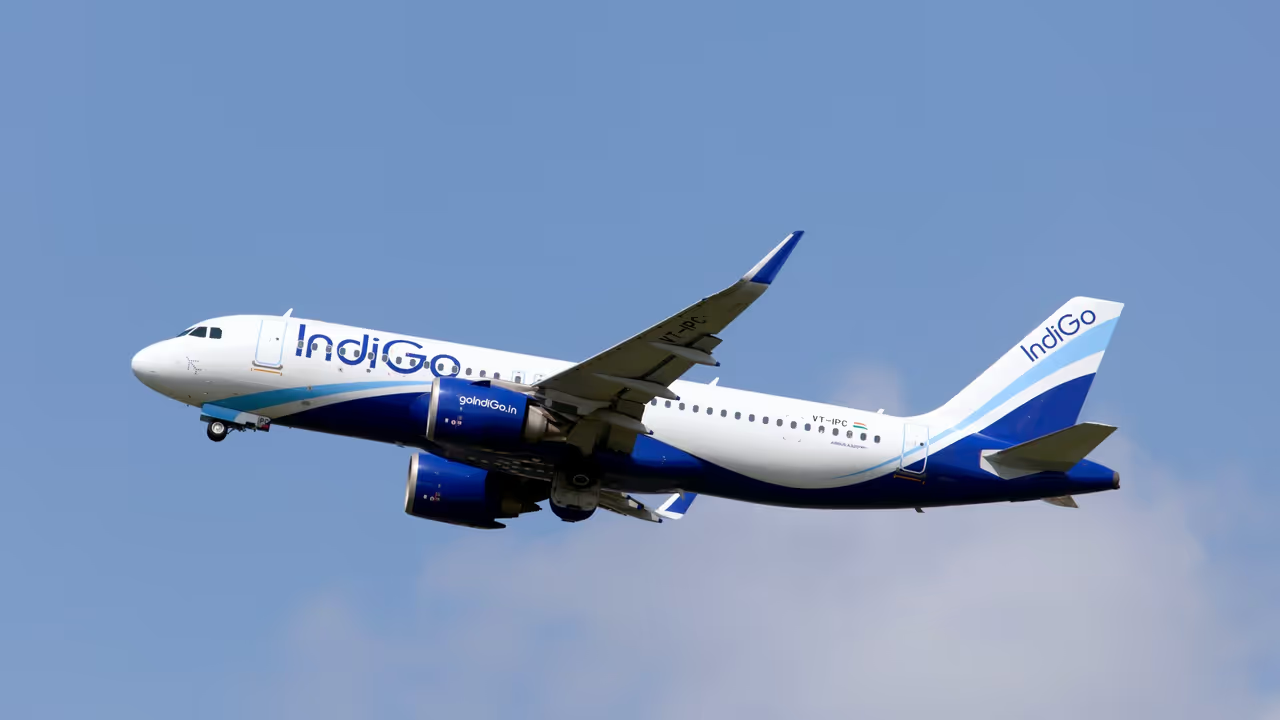
IndiGo faces massive flight disruptions as pilots blame a years-long lean staffing strategy and hiring freeze, saying the airline ignored warnings before new FDTL rules, triggering nationwide chaos.
As winter fog rolled over India’s busiest airports this week, thousands of passengers found themselves stranded, watching flight information boards turn from blue to red. Cancellations piled up. Tempers rose. And at the heart of the chaos stood IndiGo — India’s largest airline — grappling with a crisis many insiders say was “years in the making.”
On December 3 alone, the carrier’s On-Time Performance (OTP) collapsed to just 19.7% at six major airports. The next morning brought little relief: over 180 flights were cancelled from Mumbai, Delhi and Bengaluru.
Behind these numbers lies a deeper story — one that, according to pilots, traces back to an “unorthodox” and “avoidable” manpower strategy adopted long before the new flight duty norms came into effect.
Related Articles

A Winter Meltdown Years in the Making
The Federation of Indian Pilots (FIP), one of the country’s key pilot bodies, chose unusually strong words to describe IndiGo’s current operational mess.
In its letter to the DGCA, the organisation alleged that IndiGo — despite knowing two years in advance that new Flight Duty Time Limitations (FDTL) were coming — “inexplicably adopted a hiring freeze.”
FIP argued the airline had more than enough time to prepare for the legally mandated rest-period changes but instead chose a “prolonged and unorthodox lean manpower strategy.”
It was a strategy that may have worked in normal seasons. But not during India’s winter rush, and certainly not alongside a major regulatory transition.
“The Current Disruption is the Direct Consequence…”
The pilots’ body did not mince words.
“The current disruption is the direct consequence of IndiGo's prolonged and unorthodox lean manpower strategy across departments, particularly in-flight operations,” FIP declared.
The group pushed back firmly against claims that the FDTL norms were responsible for the chaos, adding:
“All other airlines have provisioned pilots adequately and remain largely unaffected due to timely planning and preparation.”
For an airline that built its reputation on reliability, punctuality, and ruthless operational discipline, this public indictment from cockpit crew marks a sharp and uncomfortable shift.
Hiring Freeze, Leave Cuts, and a Morale Crisis
Inside IndiGo, the past year has reportedly been marked by discontent. According to FIP, instead of preparing for stricter rest norms, the airline:
- Froze pilot hiring
- Entered non-poaching arrangements
- Maintained a pilot pay freeze
- Followed what pilots described as “cartel-like behaviour"
Once Phase 1 of the FDTL norms rolled out on July 1, IndiGo allegedly moved in the opposite direction: trimming pilot leave quotas. The situation worsened on November 1, when Phase 2 kicked in — bringing down permissible night landings from six to two.
That’s when the airline, FIP claims, attempted to buy back pilot leave — a step that “saw poor response and further damaged pilot and employee morale.”
The pilots’ body remarked:
“These measures … further damaged pilot and employee morale — especially in a year when airline executives took home record increments approaching or exceeding 100 per cent.”
A Schedule That Outran the Staff
Perhaps the most damning allegation comes in the form of cold, hard numbers.
IndiGo’s winter schedule — approved by the DGCA — expanded to 15,014 flights per week, a 10% rise from last year.
But this ramp-up happened, FIP argues, “without recruiting or training additional pilots.”
With fog season demanding even higher crew availability, the mismatch between ambition and manpower appears to have pushed the airline into a corner.
A Passenger Crunch Across Metro Airports
By December 4, the ripple effects were visible nationwide:
- Mumbai Airport: 86 cancellations (41 arrivals, 45 departures)
- Bengaluru: 73 cancellations
- Delhi: 33 cancellations (expected to rise)
As per internal assessments quoted by PTI, the number is “expected to be higher by the end of the day.”
Each cancellation not only meant disrupted plans but also pressure on airlines and airports already handling peak holiday traffic.
Regulator Steps In
The DGCA, taking note of the disruptions, has sought answers from IndiGo regarding:
- Reasons behind the cancellations
- Steps being taken to stabilise operations
- Plans to prevent further delays
FIP has gone a step further — urging the regulator to hold back schedule approvals unless airlines can guarantee adequate staffing under the new FDTL rules.
It also asked the DGCA to consider slot reallocation:
“…if IndiGo continues to fail in delivering on its commitments to passengers due to its own avoidable staffing shortages.”
This is a remarkable suggestion — essentially asking India’s largest airline to surrender its slots to better-prepared competitors during peak season.
The Larger Question: How Did IndiGo Get Here?
Every major airline faces crew challenges during regulatory transitions. But FIP argues this situation was not inevitable — it was the result of deliberate choices.
The letter hints at a deeper organisational philosophy: running lean at all costs, even when the winds are changing.
For passengers, the human cost is visible at airports: long queues, anxious faces, hours of uncertainty.
For pilots, it’s a moment of vindication as they demand that airlines respect fatigue science and internationally benchmarked rest norms.
For IndiGo, it’s a moment of reckoning.
What Happens Next?
Aviation insiders say the next few weeks will be crucial.
- If IndiGo stabilises staffing or adjusts its winter schedule, the worst may be behind.
- If the DGCA tightens its scrutiny, slot reallocations may become a real possibility.
- If pilot morale remains low, recovery could stretch into the new year.
What’s clear is that India’s most punctual airline — the one that promised clockwork efficiency — has run into a storm of its own making.
And as thousands of flyers brace for the foggy days ahead, the question that hangs in the air is simple:
Could this have been avoided?