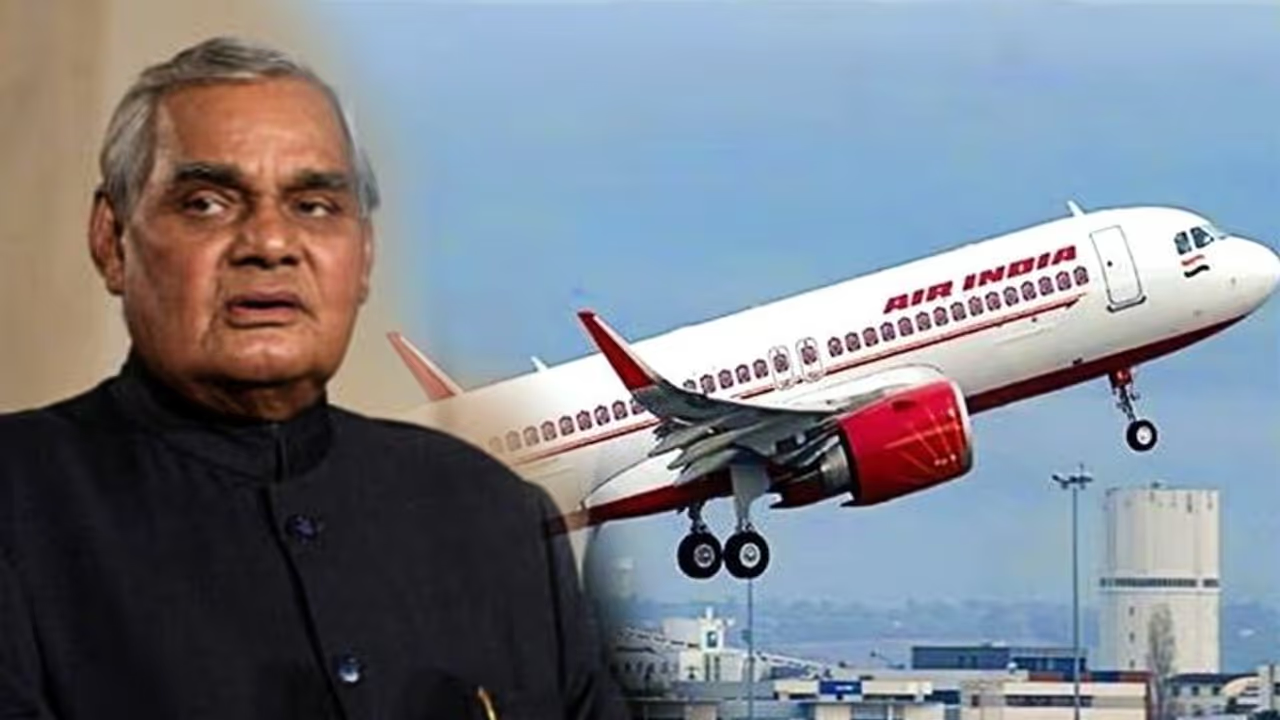
A new book by ex-PMO officer Ashok Tandon reveals how journalists nearly travelled to Kandahar with IC-814 hijackers in 1999. Then Foreign Minister Jaswant Singh was stopped only after PM Atal Bihari Vajpayee was woken from his afternoon nap.
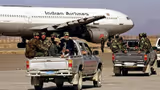
December 24, 1999 remains one of the darkest days in India's history. On that fateful day, Indian Airlines flight IC-814 was hijacked by terrorists and forced to fly to Kandahar in Afghanistan, with hundreds of passengers trapped onboard. Now, more than two decades later, a new book has revealed a lesser-known but shocking moment from that crisis.
The book, Atal Sansmaran by Ashok Tandon, claims the episode could have become even more dangerous if former Prime Minister Atal Bihari Vajpayee had not been woken from his afternoon nap at the right time.
Book written by senior PMO officer close to Vajpayee
Ashok Tandon served as an Additional Secretary in the Prime Minister's Office between 1998 and 2004. He worked closely with Vajpayee and witnessed the IC 814 crisis from inside the government.
Related Articles

In his book, according to News18, Tandon writes that then Foreign Minister Jaswant Singh was preparing to travel to Kandahar as the government's representative. He was to hand over three jailed terrorists, Masood Azhar, Omar Sheikh, and Mushtaq Zargar, to secure the release of the hostages.
But something unexpected was unfolding at Palam airport in Delhi.
Journalists almost boarded the same flight as terrorists
Tandon recounts receiving alarming calls from media contacts. He was told that Jaswant Singh was taking some journalists with him to Kandahar. Outside the airport, more journalists were demanding to be allowed onboard.
The author writes that the idea of journalists flying on the same aircraft meant to carry terrorists raised serious alarm.
“Journalists going on a plane with terrorists? I sensed something was amiss,” Tandon notes in the book.
Concerned, he contacted the then spokesperson of the Ministry of External Affairs. The reply he received was brief and unhelpful: “No comments.”
Vajpayee had to be woken from his afternoon nap
With no clarity and rising fear, Tandon rushed to the Prime Minister’s residence. But Vajpayee had gone for his afternoon siesta. Left with no choice, Tandon explained the entire situation to Vajpayee's adopted daughter, Namita. Realising the seriousness of the matter, she decided the Prime Minister must be woken immediately.
Tandon then called the MEA spokesperson again and said the Prime Minister wanted to speak to Jaswant Singh at once.
Prime Minister intervenes, journalists removed from plane
After Vajpayee spoke directly to Jaswant Singh, action followed quickly. Senior MEA officials personally ensured that journalists were escorted off the aircraft.
This intervention prevented a highly dangerous situation, an aircraft carrying journalists along with some of the world's most wanted terrorists on their way to Kandahar.
One journalist refused to get off the aircraft
However, the drama did not end there. Tandon writes that while most journalists disembarked, one unnamed woman journalist from a private TV channel refused to leave the plane. He described her as a 'fiery woman TV journalist' who insisted she must be taken to Kandahar.
At the same time, security officials were preparing for the terrorists to arrive at Palam airport. The situation became tense.
To resolve the final problem, Tandon contacted the MEA spokesperson and asked for a female security officer. The officer escorted the journalist off the plane, ending the standoff.
A narrow escape from a bigger disaster
Tandon concludes that but for Vajpayee's timely intervention, India could have faced an even more serious crisis on an already tragic day. The account offers a rare look into how close the country came to an unthinkable situation.