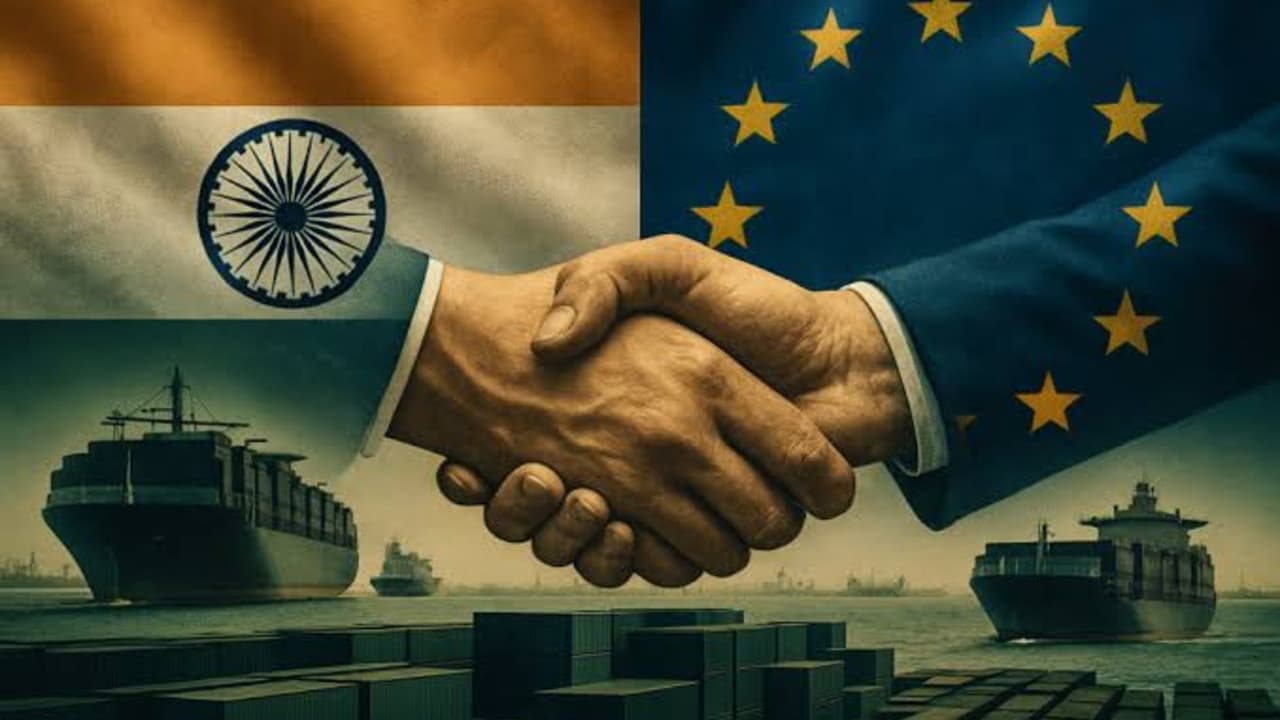
India and the EU have sealed a landmark FTA, cutting tariffs on most goods. European cars, alcohol, medical equipment will get cheaper in India, while over 99% of Indian exports, including textiles and leather, gain duty-free access to the EU market.
India and the European Union (EU) have finalized a landmark Free Trade Agreement (FTA) on January 27, 2026, concluding nearly two decades of negotiations and setting the stage for a major shift in global trade dynamics. The pact, hailed as the “mother of all trade deals” by EU leaders, is set to dramatically lower or eliminate tariffs on most goods traded between India and the EU’s 27 member states, which together represent a market of around 2 billion people.
One of the most tangible consumer benefits from the deal will be a significant drop in prices of imported European products in India. Under the agreement, duties on premium European cars — currently facing import levies of over 100% — will be substantially trimmed. For vehicles costing above €15,000 (approximately ₹16 lakh), tariffs will initially be cut to around 40% and will eventually be lowered further to about 10% under an annual quota system. This means brands such as Mercedes, BMW, Audi, and Porsche could see price reductions in India, making luxury automotive imports more attainable for affluent buyers.
Alcoholic beverages like wines, spirits and beers are also expected to get more affordable as import duties fall sharply. Premium wines from France, Italy and Spain, which previously faced duties as high as 150%, will see these slashed to around 20–30%, while spirits such as whisky and gin will see tariffs drop to about 40%. Beer duties will also be reduced, enhancing choice for Indian consumers and opening up the market to a broader range of European alcoholic drinks.
Related Articles

Another major advantage for Indian consumers and industries is on medicines and medical equipment. The agreement envisions near-total elimination of tariffs on pharmaceutical products and high-tech medical devices, such as diagnostic tools and surgical equipment. This is expected to reduce healthcare costs in India, particularly for advanced treatments and specialised medical procedures.
The FTA goes well beyond finished consumer products. Industrial machinery, electronics, chemicals, iron and steel imported from Europe are slated for duty-free access or significant tariff cuts, which can help reduce production costs for Indian manufacturers. Lower input costs may eventually translate into lower prices for end products and boost competitiveness across key sectors of the Indian economy.
At the same time, the deal is a major win for Indian exporters. Over 99% of Indian goods — from textiles, leather and gems to marine products and engineering exports — will get preferential or duty-free access to the lucrative EU market. This improved market access is expected to enhance export competitiveness, support job creation and strengthen India’s manufacturing base.
Strategically, the agreement underscores India and the EU’s intent to diversify trade partnerships amid rising global protectionism and shifting geopolitical ties. It also includes provisions on services, investment, regulatory cooperation, and mobility for professionals and students, indicating a broader economic and diplomatic alignment.
However, sensitive sectors such as dairy, rice and certain agricultural products were excluded from the tariff cuts to protect domestic interests. The deal still requires ratification by the EU Parliament, member states, and India’s Cabinet before it can be implemented, with expectations that it will come into force by early 2027.