India has begun flushing and desilting Chenab River reservoirs after suspending the Indus Water Treaty. The move is part of a broader plan to regulate river flow to Pakistan and expand hydropower and water storage capacity in J&K.
New Delhi: Following the suspension of the Indus Water Treaty (IWT) in the wake of the recent Pahalgam terror attack, India has begun implementing a comprehensive water strategy aimed at curbing the flow of western rivers Indus, Jhelum, and Chenab into Pakistan.
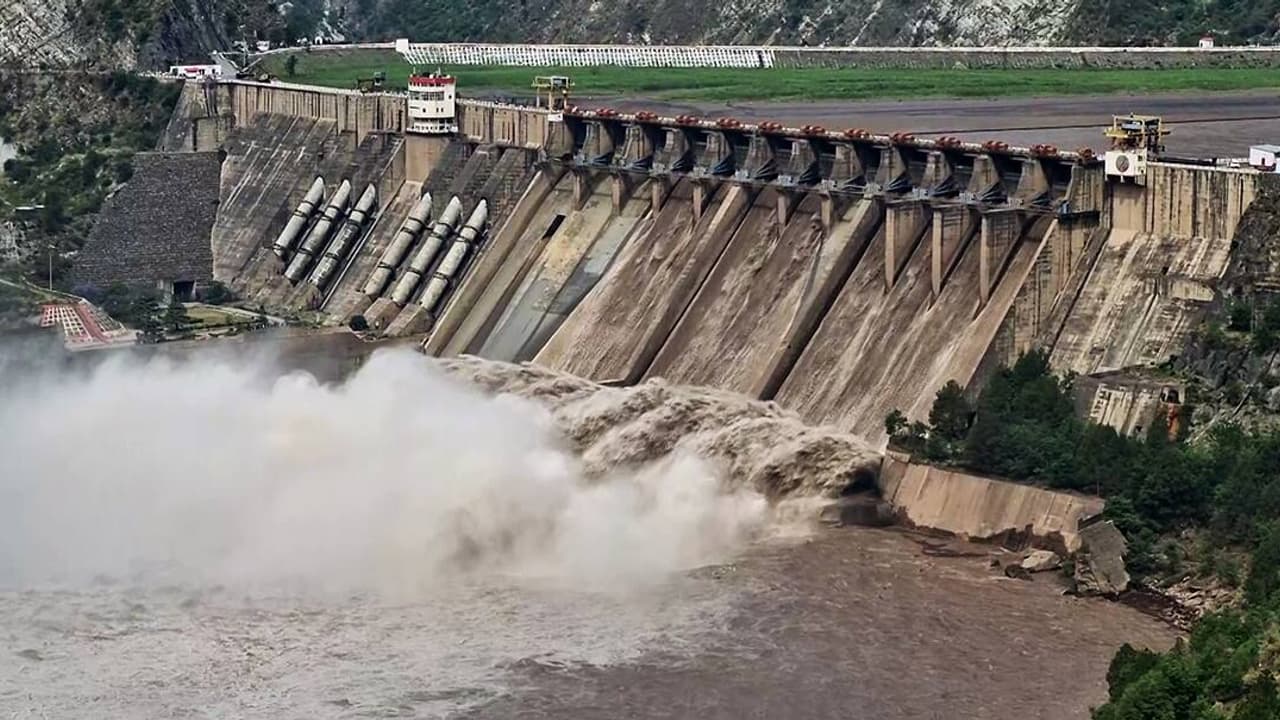
As an immediate measure, the Indian government has initiated flushing and desilting operations at the Baglihar and Salal hydroelectric projects on the Chenab River in Jammu and Kashmir. These efforts are intended to enhance water storage ahead of the winter season and strengthen India's ability to regulate water flow to the neighbouring country.
Flushing is a process that uses controlled high-water flow to remove sediment from reservoirs, while desilting involves dredging to clear accumulated silt.
Related Articles

According to Kushvinder Vohra, former Chairman of the Central Water Commission, these operations will help extend the operational life of key hydropower projects and increase their efficiency. “Since the treaty is on hold, there is no obligation to adhere to its earlier provisions. We can now carry out flushing on any project freely,” he said.
Projects like Baglihar and Kishanganga, which have smaller live storage capacities, are expected to complete flushing within one to two days. This short-term measure is part of a broader roadmap that also includes the acceleration of under-construction hydropower projects such as Pakal Dul (1,000 MW), Ratle (850 MW), Kiru (624 MW), and Kwar (540 MW). These projects fall under India’s medium-term plan to boost both power generation and water storage.
In addition, India may consider utilising the nine cusecs of water from the Kishanganga River, earmarked for Pakistan under a previous agreement, for domestic power generation. This move is also being weighed as part of the immediate action plan.
Longer-term initiatives in the pipeline include the construction of four new hydropower projects that will collectively increase India's hydroelectric capacity in Jammu & Kashmir from 4,000 MW to over 10,000 MW. These new projects will enhance water storage capabilities, providing additional resources for the Union Territory and neighbouring states.
India is also expected to revive the stalled Tulbul navigation project on the Jhelum River, improve flood management through works on the Wullar Lake and Jhelum River, and implement lift irrigation schemes that can be executed in shorter timelines. The plan further includes optimal utilisation of existing infrastructure such as the Ranbir and Pratap canals to boost water supply to the Jammu region.