
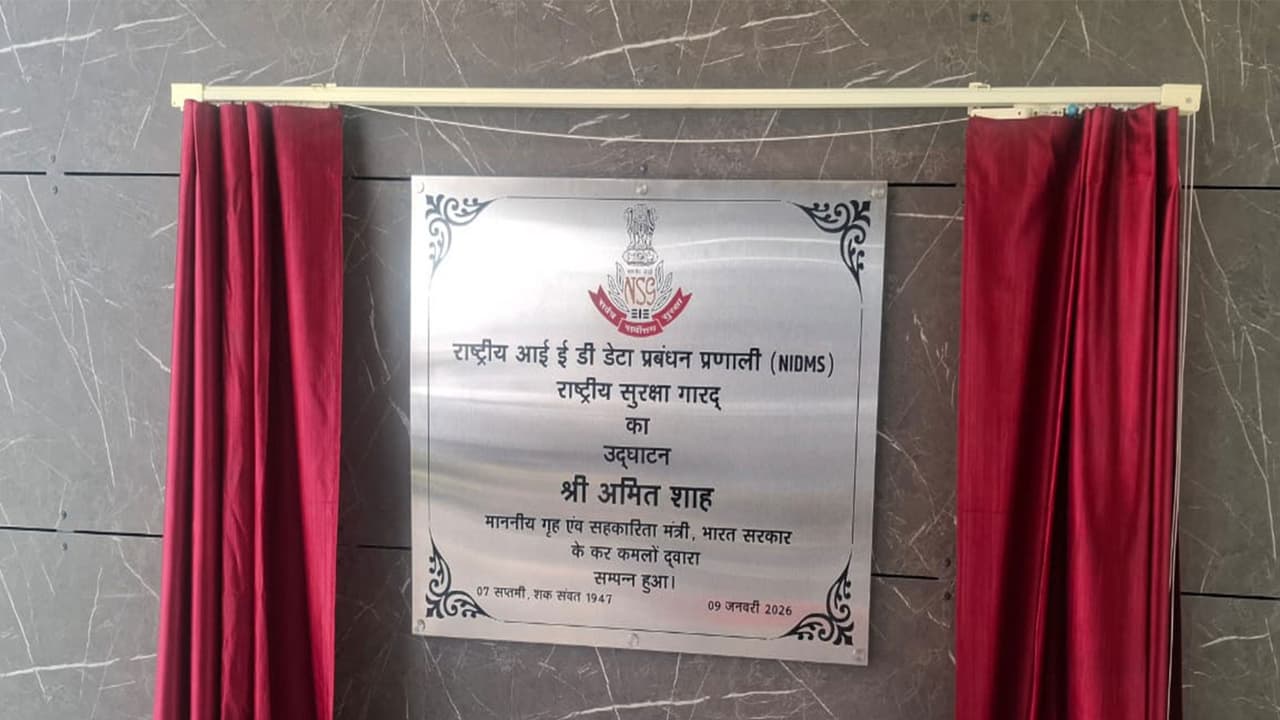
India will soon connect 780 districts under the first phase of the National IED Data Management System (NIDMS). Developed by the NSG, this digital platform will track and analyse IED incidents to strengthen the country's internal security.
NIDMS: A New Era in IED Data Management
India is set to significantly strengthen its internal security architecture as 780 districts across the country will soon be connected under the first phase of the National IED Data Management System (NIDMS) the country's first comprehensive digital platform dedicated to tracking and analysing Improvised Explosive Device (IED) incidents.
Developed by the National Security Guard (NSG), India's elite counter-terrorism force, the NIDMS is designed to enable the systematic collection, collation and dissemination of IED-related data at a national level. The first phase of implementation is already underway and is expected to link nearly 800 end users, including district-level law enforcement units and select specialised forces, through a highly secure network.
Comprehensive Database and Digitisation
"The system's end-user connectivity extends down to the district level. In the first phase, we are working to connect around 800 end users to the NIDMS. These include nearly 780 districts, along with other local units and Special Frontier Force units that may require access to the data on a need-to-know basis," a senior NSG officer told ANI on condition of anonymity. "All data will be shared through a secure network."
The officer said the NIDMS hosts IED blast and recovery data dating back to 1999, making it one of the most extensive bomb-related databases in the country. "Thousands of data points previously scattered across agencies have now been digitised and integrated into a single platform, aimed at supporting post-blast investigations and enhancing coordination among security and law enforcement agencies."
"The National Bomb Data Centre (NBDC) of the NSG has been collating IED-related data for over two decades after receiving authorisation from the Government of India. We store and maintain details of all IED recoveries and blast incidents across the country. This entire dataset has now been uploaded to the NIDMS in digitised form," the officer said.
Advanced Analytics and Predictive Capabilities
Built using advanced technologies such as artificial intelligence, machine learning and predictive modelling, the NIDMS offers analytical capabilities that go far beyond traditional intelligence methods. The system can identify trends and correlations that are not easily detectable through manual analysis.
"Once sufficient data is available, natural patterns begin to emerge. These patterns are analysed and disseminated to States, Union Territories and other forces, helping them make informed operational decisions on the ground," another NSG officer explained.
A key feature of the platform is its predictive analysis capability, which officials say could play a critical role in preventing future attacks. "If a particular trend continues in a specific region, the system can help forecast the nature of incidents that may occur in the coming period," the officer said, describing it as one of the most significant advancements in counter-IED preparedness.
Development and Collaboration
The software has been developed in collaboration with the Rashtriya Raksha University (RRU) in Gandhinagar, Gujarat, with technical development carried out by a team from IIT Delhi. The project took nearly one-and-a-half years to complete, with close coordination between academic experts and NSG personnel. The system's servers are currently hosted in Gandhinagar.
A National Repository for Enhanced Coordination
Union Home Minister Amit Shah launched the NIDMS on January 9, calling it a next-generation security shield against terrorism. He said the platform would be extremely important for the investigation of terrorist incidents and for analysing multiple dimensions of such attacks, thereby strengthening India's internal security framework.
Designed as a common national repository, the NIDMS allows State Police Forces, Central Armed Police Forces (CAPFs) and other central agencies to access, analyse and share IED-related information in real time. Officials said the platform will help standardise data formats, reduce duplication of effort and ensure seamless information flow among agencies involved in counter-terrorism and counter-insurgency operations.
Strengthening India's Counter-IED Ecosystem
IEDs have long posed a serious threat in several parts of the country, frequently used by terrorist and insurgent groups to target security forces and civilians. By leveraging data analytics and technology-driven insights, the NIDMS aims to enhance India's ability to prevent such attacks and respond more effectively when they occur.
The platform is expected to evolve continuously, incorporating new datasets and analytical tools to meet emerging security challenges. Officials said it will also support forensic analysis, training programmes and operational planning related to bomb disposal and blast investigations.
By enabling investigators to analyse patterns of explosions, study the modus operandi and identify inter-linkages between incidents, the NIDMS is poised to become a cornerstone of India's counter-IED ecosystem.
(Except for the headline, this story has not been edited by Asianet Newsable English staff and is published from a syndicated feed.)