
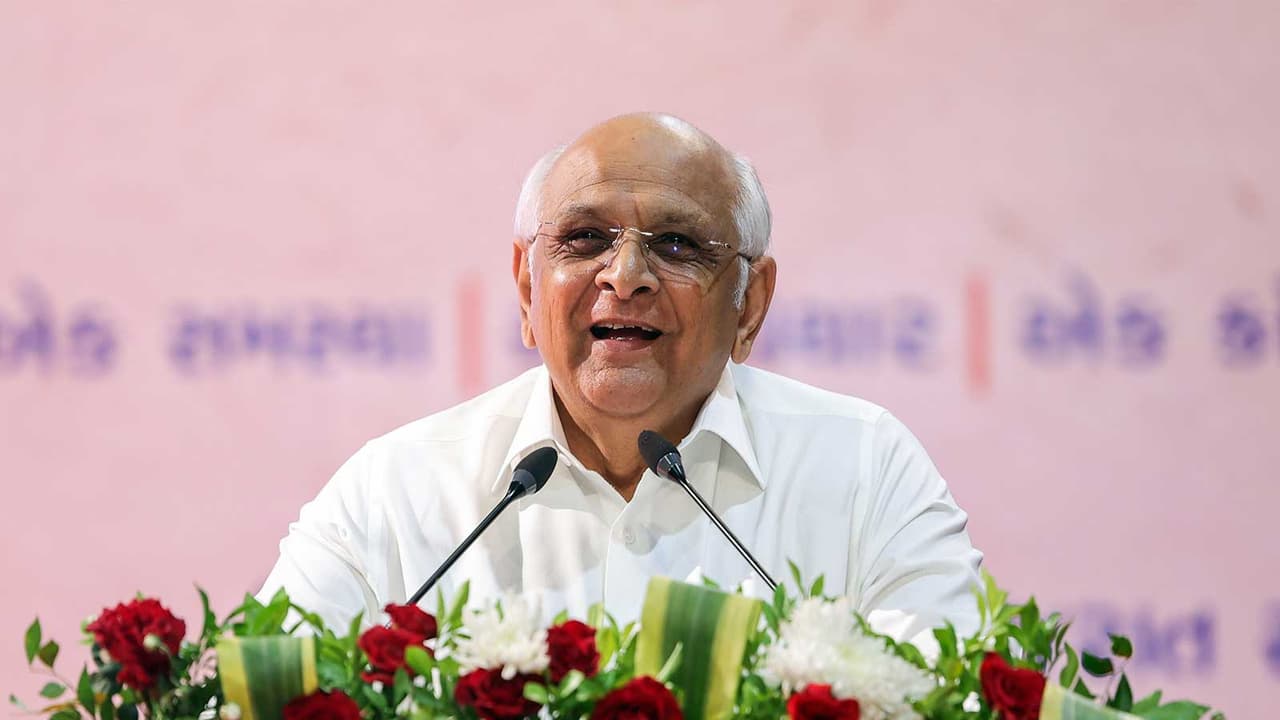
Gujarat CM Bhupendra Patel has decided to release water from Kadana Dam to protect Kharif crops in Kheda and Anand districts. The state also plans a bio-manufacturing ecosystem to promote biofertilisers amid global supply chain challenges.
Gujarat Chief Minister Bhupendra Patel on Friday decided to release irrigation water from Kadana Dam to protect standing crops in the Mahi command area, with 198 million cubic metres of water to be supplied to farmers in Kheda and Anand districts.
According to the Chief Minister’s Office, the release of 5,500 cusecs of water from Kadana Dam will begin on October 10 to irrigate Kharif crops across approximately 80,000 hectares in the command area.
The decision aims to provide much-needed irrigation water to protect standing crops in the Mahi command area covering Kheda and Anand districts.
Gujarat Plans Integrated Bio-Manufacturing Ecosystem
Meanwhile, the ongoing conflict and instability in West Asia have highlighted the vulnerability of global fertiliser supply chains and the need to strengthen domestic agricultural-input security, the Directorate of Information said on Friday.
In response to these challenges, Gujarat, under the leadership of Chief Minister Bhupendra Patel, is planning an integrated bio-manufacturing ecosystem to promote biofertilisers and biopesticides, support innovation and reduce dependence on conventional agricultural inputs.
The Gujarat State Biotechnology Mission (GSBTM), under the Department of Science and Technology, is developing the proposed ecosystem with an estimated outlay of Rs 50 crore over five years. The initiative aims to connect the state's microbial resources, agricultural universities, biotechnology institutions, startups, micro, small and medium enterprises (MSMEs), cooperatives and farmers. It will establish an integrated pathway covering microbial discovery, research, product formulation, manufacturing, field validation and farmer adoption, the department said.
Global Tensions Highlight Supply Chain Vulnerability
The West Asia crisis has demonstrated how geopolitical tensions can disrupt energy markets, shipping routes and agricultural-input supplies. These developments underline the close relationship between fertiliser security, energy supplies, mineral resources, shipping and geopolitics.
Natural gas is a key input in nitrogen fertiliser production, while phosphate and potash fertilisers depend on mineral resources concentrated in particular regions. For farmers, timely availability is critical because fertilisers must be applied at specific stages of crop growth. Delays can affect productivity and increase cultivation risks.
The West Asia crisis has demonstrated how geopolitical tensions can disrupt energy markets, shipping routes and agricultural-input supplies. These developments underline the close relationship between fertiliser security, energy supplies, mineral resources, shipping and geopolitics. Natural gas is a key input in nitrogen fertiliser production, while phosphate and potash fertilisers depend on mineral resources concentrated in particular regions. (ANI)
(Except for the headline, this story has not been edited by Asianet Newsable English staff and is published from a syndicated feed.)