
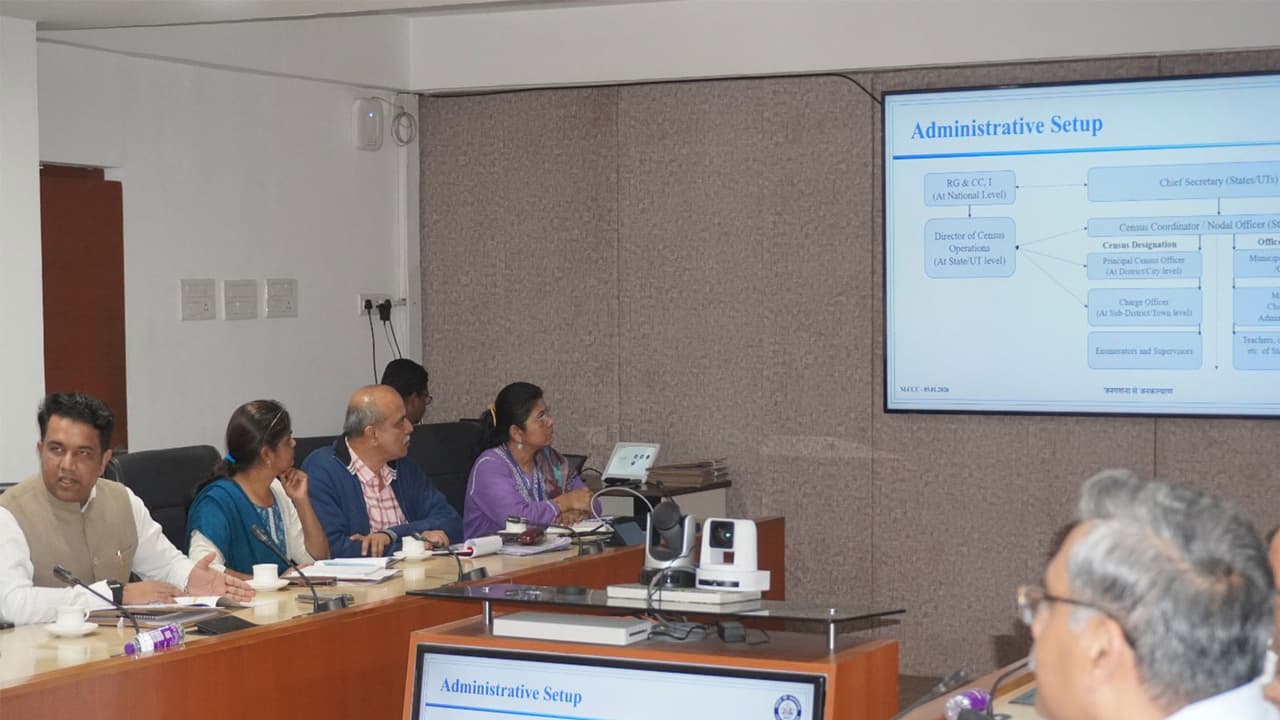
Gujarat's first State-Level Census Coordination Committee meeting was held to review preparations for Census 2027. Chaired by the Chief Secretary, the meet discussed strategy and manpower for the two-phase exercise starting in April 2026.
The first meeting of the Gujarat State-Level Census Coordination Committee (SLCCC) was convened today under the Chairmanship of the Chief Secretary of Gujarat, Manoj Kumar Das. The meeting was attended by the members of SLCCC. According to a press release, Rajesh Manju, State Census Coordinator, RIC and Ex officio Secretary, Revenue Department, was also present in the meeting.
State-Level Preparations Discussed
Sujal J Mayatra, Director DCO Gujarat, made up a brief presentation highlighting the strategy, freezing of Administrative Boundaries, outcome of Pre-Test, preparations for training, Appointment of Census Functionaries and manpower etc, for Census 2027. Modalities and readiness, including the period of HLO with various departments, were also discussed, said the release. In the end, the Chief Secretary appreciated the preparedness of the Directorate.
Census 2027 to be Held in Two Phases
Meanwhile, the Census of India 2027 would be conducted in two phases. In the first phase, Houselisting and Housing Census will be conducted from April to September 2026. The second phase would cover Population Enumeration (PE), which is scheduled in February 2027. The PE will be conducted for Ladakh, snow-bound non-synchronous areas of Jammu and Kashmir and the states of Himachal Pradesh, as well as Uttarakhand, in September 2026.
Scale and Manpower Mobilisation
The Indian Census is the largest administrative and statistical exercise in the world, in which about 30 lakh field functionaries will be engaged to complete this gigantic exercise of national importance.
To complete various tasks for the successful conduct of Census 2027, approximately 18,600 technical manpower will be engaged for about 550 days at the local levels. In other words, around 1.02 crore man-days of employment would be generated.
Further, the provision of technical manpower at the charge, district and state level will also result in capacity building as the nature of the job will be related to digital data handling, monitoring and coordination. This will also help in the future employment prospects of these persons.
The enumerators, generally government teachers appointed by the state governments, will be doing the field work of the Census in addition to their regular duties. (ANI)
(Except for the headline, this story has not been edited by Asianet Newsable English staff and is published from a syndicated feed.)