
The Gujarat Government has introduced a new Standard Operating Procedure (SOP) to ensure all state administrative departments take timely action on High Court judgments. The new system aims to prevent delays and avoid situations leading to Contempt of Court.
To ensure the timely implementation of High Court judgments, the Gujarat Government has introduced a Standard Operating Procedure (SOP) for all state administrative departments, requiring them to take action within the prescribed process and timeline after receiving a court order.
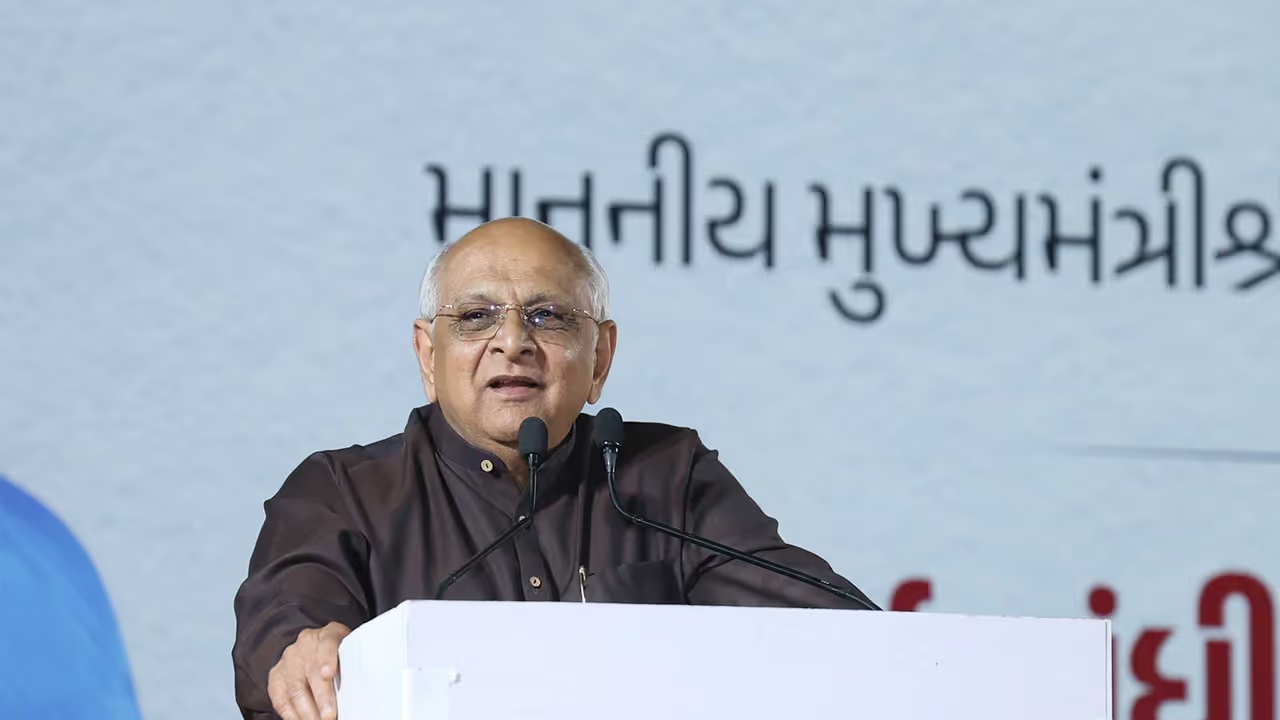
According to a press release issued by the Chief Minister's Office (CMO), the SOP aims to prevent unnecessary delays and avoid situations that could lead to Contempt of Court. Under the guidance of Gujarat Chief Minister Bhupendra Patel and the leadership of Deputy Chief Minister Harsh Sanghavi and Minister of State for Law Kaushik Vekariya, the new system clearly defines the options available to departments after a High Court judgment and the procedure to be followed.
New SOP Mandates Time-Bound Decisions
According to the recent circular issued by the Law Department, delays in taking timely action after a court decision may delay the implementation of the order. The new SOP makes the process time-bound to reduce such administrative delays. As per the CMO, if the concerned administrative department accepts the High Court judgment, necessary action will have to be taken as per the procedure prescribed by the Finance Department. If the department considers it appropriate to appeal against the judgment, it will have to initiate the litigation process within the prescribed timeframe after obtaining the advice of the Law Department along with the departmental opinion.
The concerned administrative department will also be responsible for ensuring compliance with the directions issued by the Law Department on June 29, 2024. This means that after a judgment is delivered, instead of keeping it pending, the department will have to decide in a time-bound manner whether to accept the decision or initiate legal proceedings against it. While preparing an appeal proposal, it will be mandatory to upload the documents referred to in the note recorded in the e-file on the e-Government system. The relevant documents and references will have to be mentioned with clear hyperlinks, and all necessary details will have to be provided in the proposal. A provision has also been made to record the required information, including the reasons for delay, in a checklist signed by the competent authority. This will ensure documentary completeness and procedural clarity in appeal proposals and help reduce delays caused by unnecessary correspondence or the absence of required documents.
Accountability for Delays
The Government has clarified that the concerned department will be responsible for preventing unnecessary delays caused by sending proposals to the Law Department at the final stage of the prescribed timeframe. If any officer is found responsible for violating the prescribed timeframe in any case, the Head of the Department will be responsible for ensuring necessary action as per the applicable rules.
Procedure for Seeking Time Extension
In some cases, it may not be practically possible to implement a High Court order within the prescribed period due to certain reasons. For example, the required records may not be available, necessary service-related information may be lacking, or the process of taking a decision as per the judgment may still be pending. In such circumstances, the concerned department will have to file a Miscellaneous Civil Application for Time Extension before the High Court and seek additional time. Importantly, this application for additional time must be filed within the timeframe prescribed by the High Court in the original judgment. Instead of keeping the matter pending until the final stage, the concerned department will be responsible for presenting the application before the court in a timely manner.
The new SOP establishes a clear administrative framework for all three situations following High Court orders: implementation, appeal or extension of time. This will help ensure timely implementation of judicial orders, reduce unnecessary delays and strengthen accountability. (ANI)
(Except for the headline, this story has not been edited by Asianet Newsable English staff and is published from a syndicated feed.)