
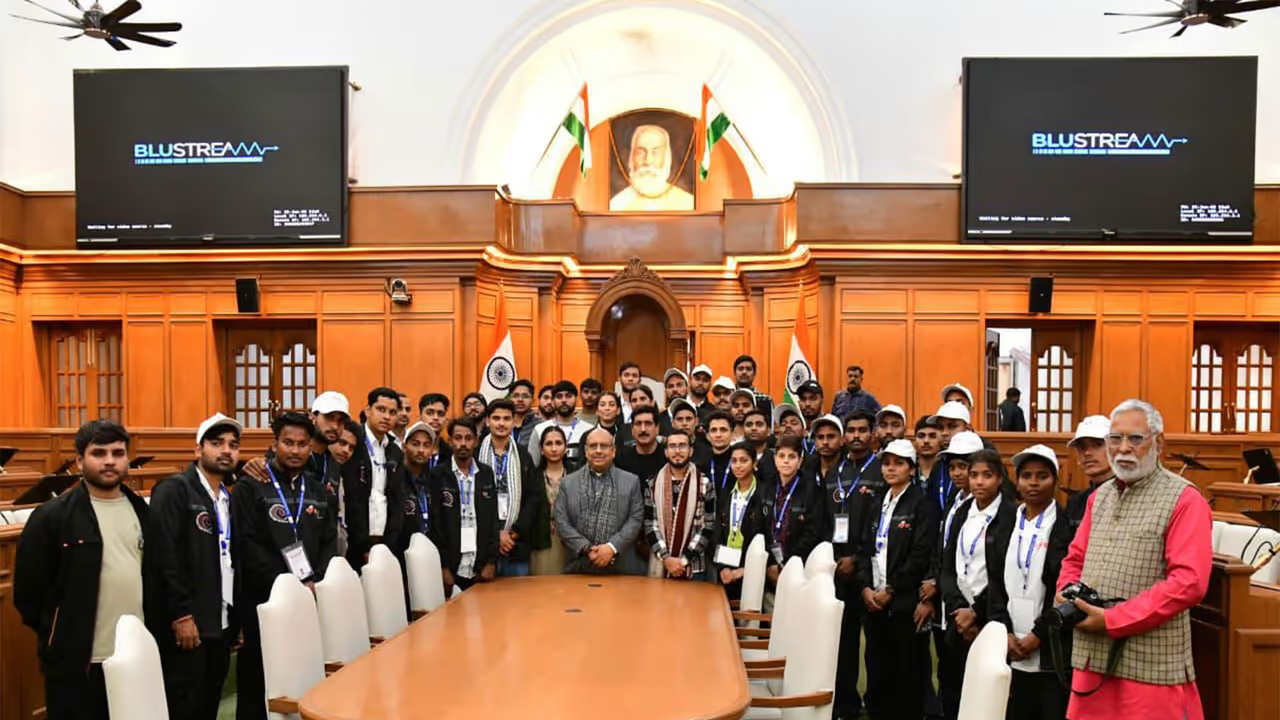
Delhi Assembly Speaker Vijender Gupta addressed 40 youth from Rajasthan at the Vidhan Sabha, calling it the 'temple of democracy'. He explained parliamentary workings and the Assembly's historic role in India's freedom struggle during the interaction.
"You have come to a place that is often described as the temple of democracy. In a democratic system, the people are supreme, and it is through dialogue, debate and discussion in the House that governance truly takes shape," said the Speaker of the Delhi Legislative Assembly, Vijender Gupta, while interacting with youth participants at the Delhi Vidhan Sabha today.
Youth Exchange Programme at Delhi Assembly
The interaction was held with 40 youth participants from various districts of Rajasthan, including Dausa, Sikar, Bharatpur, Jhunjhunu, and Alwar, who are visiting Delhi under the Inter-State Youth Exchange Programme. The programme was organised by MYBharat, Office of the District Youth Officer, South West Delhi, an autonomous body under the Ministry of Youth Affairs and Sports, Government of India, in collaboration with CCRT, Dwarka.
Highlighting India's Parliamentary Heritage
As part of the visit, participants watched a documentary on Veer Vithalbhai Patel, the first Indian elected Speaker, narrated by Padma Bhushan awardee Anupam Kher, which highlighted India's parliamentary heritage.
Speaker Elaborates on Democratic Principles
During his interaction, the Speaker explained the evolution of democracy, contrasting earlier monarchical systems with modern parliamentary democracy, in which citizens elect their representatives and governments serve as servants of the people. He noted that the renaming of Rajpath as Kartavya Path symbolises this democratic ethos of duty and public service.
Gupta elaborated on the working of parliamentary democracy, stating that elected representatives assemble in the House to debate, deliberate and enact laws. That dialogue remains the strongest pillar of democratic governance. He emphasised that the House serves as the central forum for discussion, accountability and public representation.
A Living Heritage Site
Highlighting the historic significance of the Delhi Vidhan Sabha, the Speaker described it as a living heritage site with a history spanning 113 years. He recalled that following the shifting of the capital from Calcutta to Delhi in 1911, legislative proceedings began in this building in 1912. He noted that eminent national leaders such as Gopal Krishna Gokhale, Lala Lajpat Rai, Madan Mohan Malaviya and Veer Vithalbhai Patel were associated with this House, and that debates and struggles within its walls played a crucial role in India's freedom movement.
Interactive Session and Guided Tour
During the programme, the students interacted with the Speaker in a one-on-one format, sharing their learnings, experiences and personal reflections.
The participants were also given a guided tour of the House of the Delhi Legislative Assembly, which acquainted them with its procedures, functioning, and historical legacy. (ANI)
(Except for the headline, this story has not been edited by Asianet Newsable English staff and is published from a syndicated feed.)