
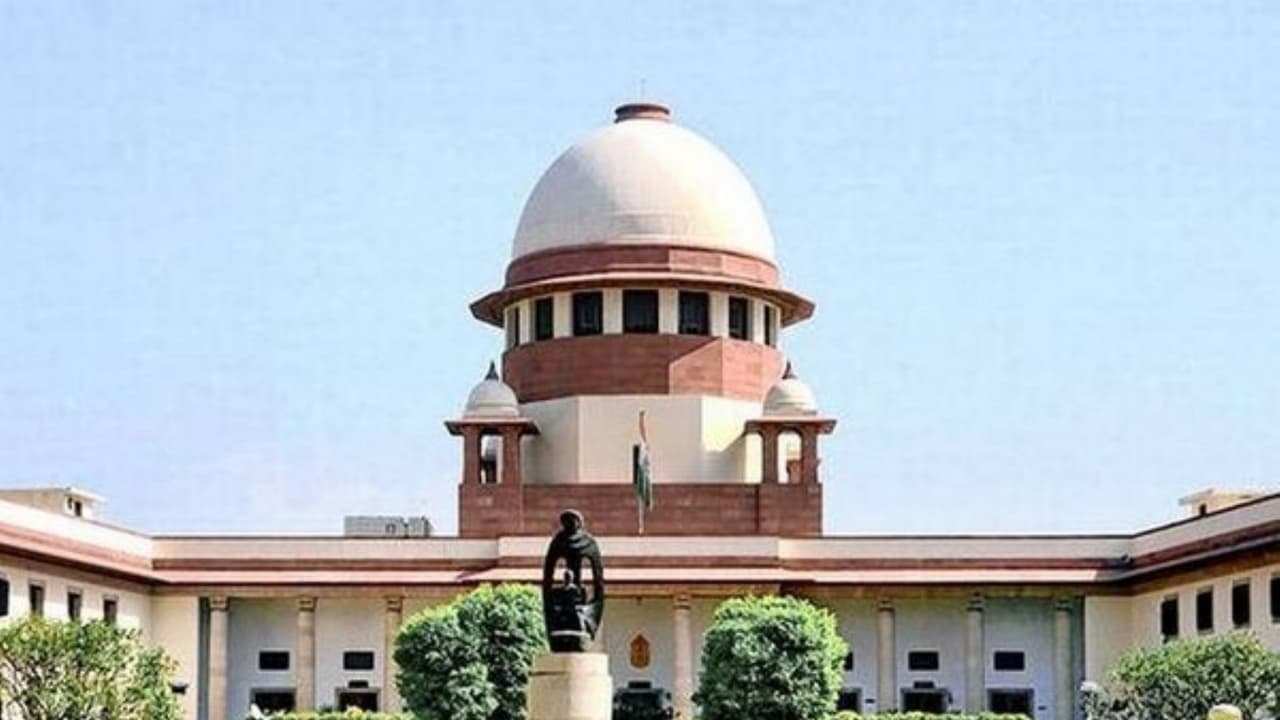
The Supreme Court took suo motu cognisance of recent rapes in Delhi-NCR, questioning systemic failures in women's safety since the 2012 Nirbhaya case. It will examine institutional mechanisms, not individual guilt, and has sought status reports.
The Supreme Court on Monday took suo motu cognisance (self-initiated proceedings by the court) of a series of recent rape and sexual assault incidents in Delhi-NCR, questioning the failure of law-enforcement and civil authorities to prevent such crimes and asking whether systemic mechanisms have made any meaningful progress since the 2012 Nirbhaya case. The Court, however, made clear that its proceedings are not about determining the guilt of individual accused persons. Its focus is on whether the State and its institutions have put in place effective preventive, monitoring and response mechanisms to keep women and children safe in public spaces.
“We remain mindful that specific allegations of crime must be investigated strictly in accordance with law and that the guilt or innocence of individual accused persons can only be determined through due process and fair trial”, the court said. “Consequently, the scope of the present suo moto proceedings is not directed at assessing individual criminal culpability, but rather at examining the broader institutional failures that transcend any single case”, it added.
Recent Incidents Draw Parallels to Nirbhaya Case
A bench of Justices JB Pardiwala and K Vinod Chandran also said the recent incidents had raised serious concerns over the safety of women and children in public spaces across the National Capital Region. The Court referred to the alleged gang rape of a 17-year-old girl at Aastha Kunj Park, the alleged gang rape and murder of a teenage girl in Swaroop Nagar, and the alleged sexual assault of a minor girl inside a moving sleeper bus that travelled over 47 km from Greater Noida to Delhi without being intercepted. It said the bus incident brought back painful memories of the 2012 Nirbhaya case.
“One cannot help but draw painful parallels to the 2012 Nirbhaya case, calling into question whether systemic law enforcement mechanisms have made any meaningful progress in the decade since then”, it said. The Court also noted that students of the nearby Lady Shri Ram College for Women had previously complained of recurrent sexual harassment around Aastha Kunj Park. It said those complaints had failed to trigger adequate patrolling and vigilance before another victim was allegedly attacked.
Institutional Failures and Inadequate Public Spaces
The Court said the incidents pointed to a larger institutional problem. “Public spaces, including parks, roads, buses, metro stations, subways, foot bridges, etc., cannot be permitted to become zones of high risk due to grossly inadequate illumination, poor surveillance, lax patrolling, or other preventable administrative deficiencies”, the court lamented.
Court Seeks Accountability on Safety Mechanisms
The Court has now asked the authorities to answer a series of questions on whether the safety mechanisms already created by the government are actually working on the ground. It appointed senior counsel Liz Mathew as amicus curiae to assist the Court. The matter will next be heard on October 5. The Court has sought a comprehensive status report on safety arrangements in parks, roads, public transport facilities, markets, educational institutions and other places frequented by women and children. It wants authorities to specifically state whether these arrangements remain effective during late evenings and early mornings, when visibility and public footfall may be lower.
National Database on Sexual Offenders (NDSO)
The Delhi Police has also been asked to explain how it uses the National Database on Sexual Offenders (NDSO). The Court wants details of its use for antecedent verification and identification of repeat or habitual sexual offenders, including the number of times it has been used in Delhi investigations over the preceding five years. The Court has also questioned whether information available through the NDSO is being converted into lawful preventive action.
Investigation Tracking System for Sexual Offences (ITSSO)
It has similarly sought details on the Investigation Tracking System for Sexual Offences (ITSSO), an online system of the Ministry of Home Affairs for monitoring time-bound investigations. The authorities must explain who monitors investigations in Delhi, how frequently cases are reviewed, what happens when investigations are delayed and whether senior officers receive alerts when statutory timelines are not followed.
Mission Shakti and Other Helplines
The Court has also asked how Mission Shakti, the Centre’s umbrella programme on women’s safety, security and empowerment, is functioning in Delhi. It has sought the present status of several other mechanisms, including Emergency Response Support System (ERSS) 112, Women Helpline 181, the Safe City Project, Women Help Desks and One Stop Centres.
Safe City Project
For the Safe City Project, the Court wants details of CCTV coverage, command-and-control infrastructure, smart lighting and emergency response mechanisms. It has also asked how many identified vulnerable locations are covered and how authorities ensure that installed equipment remains functional.
Women Help Desks
For Women Help Desks, the Court wants details of how many are operational, how many are headed by women police officers, their working hours and the training given to personnel. The Court made clear that the authorities cannot simply submit a list of schemes and infrastructure created on paper. For each mechanism, they must disclose whether it is operational, the geographical area and population covered, the officer responsible, the number of complaints or interventions handled during the preceding three years and the average response time wherever measurable.
“A mechanism intended to protect women and children can serve its purpose only if it is accessible, functional, adequately staffed, capable of responding promptly and subject to continuing institutional oversight,” it said. The Court has also asked authorities to ensure that emergency numbers, Women Help Desks and One Stop Centres are adequately publicised. It directed the Delhi Administration and Police to formulate regular information programmes in schools, colleges, other educational institutions and residential colonies so that people know what assistance is available when they face a threat.
Immediate Measures Ordered by the Court
Pending the status reports, the Court has ordered a series of immediate measures to be implemented within four weeks.
Vulnerability Mapping and Audits
The Delhi Police Commissioner must constitute dedicated teams in every police district, headed by an officer not below the rank of Deputy Superintendent of Police, to conduct an immediate survey of vulnerable areas. The teams will inspect parks, isolated stretches, transport hubs, markets, educational institution zones and other public places. They will use NCRB data, local intelligence, past complaints and previous incidents to identify locations vulnerable to such crimes. They must specifically identify problems such as poor lighting, inadequate surveillance, insufficient patrolling, and abandoned structures. The police must then prepare district-wise vulnerability maps and share them with adjoining police stations so that recurring crime patterns and information about habitual offenders are not restricted to individual police-station jurisdictions. The Court has ordered an immediate lighting and CCTV audit of public parks and vulnerable zones. The exercise will also cover metro stations, bus stops, bus terminals, railway stations and other major public-transport facilities adjoining vulnerable areas. Non-functional cameras and lighting infrastructure must be repaired, while additional lights and CCTV cameras must be installed wherever gaps are identified.
Integration of Citizen Grievances
The Court has also sought to bring citizen complaints into the safety exercise. Authorities have been directed to use existing grievance mechanisms, including the CM Jan Sunwai Portal, to identify dark stretches, inadequate CCTV coverage, unsafe access points and other public-safety deficiencies. Such complaints should be location-specific, forwarded to the competent authority and acted upon within a prescribed timeframe. Complainants should also be able to track the action taken.
Intensified Patrolling and Vehicle Checks
The Court has further directed intensified police patrolling, including mobile check-posts and regular vehicular inspections. It specifically directed the police to enforce its earlier directions in Avishek Goenka v. Union of India, which prohibit aftermarket black, tinted and solar-control films on vehicle windows. Non-compliant vehicles are to be impounded and illegal window films removed.
Review of Judicial Infrastructure
The Supreme Court also sought details of the judicial infrastructure dealing with sexual-offence cases in Delhi. The Registrar General of the Delhi High Court has been directed to file an affidavit within four weeks on the functioning of Fast Track Special Courts (FTSCs) and Exclusive POCSO Courts. The affidavit must disclose the number of functional courts, cases pending before each court, annual disposal rates for the preceding three years, and the average time taken to finally dispose of cases. The Delhi High Court’s administrative side has been directed to assign the cases to designated Fast Track Special Courts and ensure that trials are concluded expeditiously, preferably within one year of commencement of trial.
Notices Issued and Call for Measurable Response
The Court issued notice to the Chief Secretary, Government of NCT of Delhi; Commissioner of Police, Delhi; and Registrar General, Delhi High Court. The Court also directed the District Administration to immediately meet media houses and seek dedicated space in newspapers and time on electronic media to publicise protective mechanisms and emergency telephone numbers. The Supreme Court said the response to the recent crimes cannot stop at expressions of concern. “What is required is a measurable response, with responsibility and accountability fixed upon the authorities entrusted with prevention of crime, maintenance of public order and protection of vulnerable persons”, it said. (ANI)
(Except for the headline, this story has not been edited by Asianet Newsable English staff and is published from a syndicated feed.)