
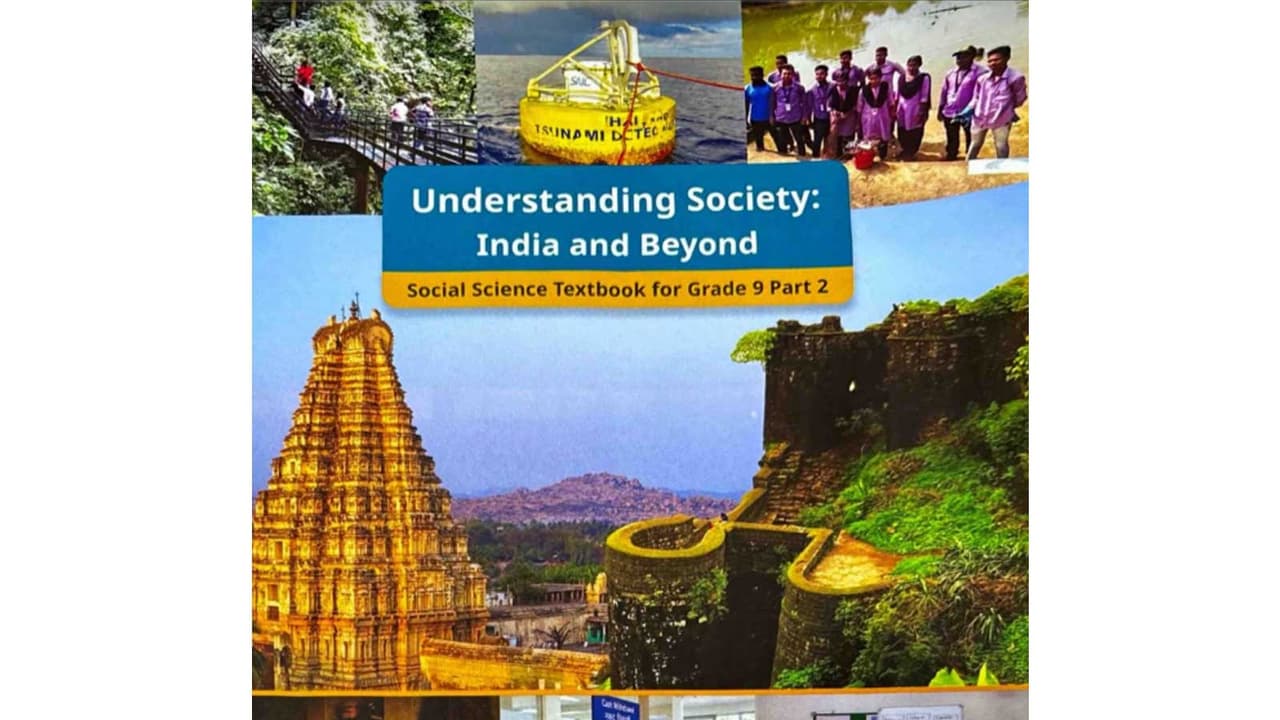
The newly released NCERT Class IX Social Science textbook includes a new chapter detailing Indian resistance against invasions from the 7th century onwards, featuring accounts of rulers like Queen Naiki Devi, Rani Abbakka Chowta, and Maharana Pratap.
The Indian subcontinent witnessed successive invasions from the 7th century onwards, driven by territorial expansion and religious motives, while Indian rulers and communities mounted resistance against Arab, Turkic, Mughal and European forces, according to the newly released Part 2 of the NCERT Class IX Social Science textbook.
New Chapter Details 'Resistance and Resilience'
The book, which contains a chapter titled Resistance and Resilience (1000–1700 CE), details several instances of resistance across different parts of the country and includes accounts of lesser-known women rulers such as Queen Naiki Devi of the Chaulukya kingdom and Rani Abbakka Chowta of Ullal.
The chapter says Queen Naiki Devi defeated Muhammad Ghuri at Kasahrada, near Mount Abu, in 1178. It also discusses the resistance offered by the Hindu Shahi rulers, Chandellas, Solankis and Chauhans against Turkic invaders.
Rani Abbakka Chowta of Ullal, in present-day Karnataka, is credited with defeating Portuguese naval forces during her reign from 1525 to 1570.
The textbook also names Queen Rudrama Devi of the Kakatiya dynasty among rulers who resisted the Delhi Sultanate.
Jat Resistance Against the Mughals
The book also details the resistance of the Jats against the Mughal Empire. It says the community, which lived in the Ganga-Yamuna Doab, faced heavy taxation and exploitation and rebelled under Gokul Jat in 1669.
“During the 17th century, the Jats, a farming community from the Ganga-Yamuna Doab, were burdened with heavy taxes and exploitation by Mughals. These economic hardships combined with Aurangzeb’s religious policies led to growing resentment amongst the Jats,” the textbook says.
A second uprising took place in 1686 under the zamindars of Sinsini and Sogar. It adds that Mughal forces struggled for several months to suppress the 1669 uprising and that the Jats continued their resistance, taking advantage of Aurangzeb’s prolonged military campaigns in the Deccan to rebel again in 1686.
Sikh Resistance and Mughal Intervention
The chapter also discusses the resistance of the Sikh community and the martyrdoms of Guru Arjan Dev and Guru Tegh Bahadur.
“Due to the growing socio-cultural influence of the Sikh Gurus, the Mughal state increasingly intervened in their affairs from the beginning of the 17th century,” the book says.
It describes the execution of Guru Arjan Dev under Jahangir and the execution of Guru Tegh Bahadur under Aurangzeb in 1675 as turning points in Sikh history.
It further discusses the establishment of the Akal Takht by Guru Hargobind and the development of the concept of miri-piri, representing spiritual and temporal authority.
“The martyrdom of the Sikh Gurus to uphold their faith and principles firmed the conviction of the Sikhs that persecution had to be met with firm resistance and resilience,” the textbook says.
Maharana Pratap and the Battle of Dewair
The textbook also recounts the Battle of Dewair, fought near Udaipur in 1582, saying it resulted in the collapse of key Mughal military outposts in Mewar and helped Maharana Pratap reclaim control over much of the kingdom.
It says his successor, Maharana Amar Singh, continued the resistance against Mughal advances.
“The Battle of Dewair, fought near Udaipur in 1582, was significant as it resulted in the collapse of key Mughal military outposts in Mewar and helped Maharana Pratap reclaim control over Mewar,” the book says.
Ahom Resistance in Assam
The chapter also narrates the Ahom resistance in Assam, including the Battle of Saraighat in 1671, when Ahom commander Lachit Borphukan defeated a Mughal fleet.
“The Ahoms' successful resistance against the might of the Mughal empire is a remarkable story of bravery, pride, and endurance,” the textbook says, attributing their success to strategic alliance-building, guerrilla tactics, Assam’s geography and the Paik system.
The Role of Religious Traditions in Warfare
Another section deals with the role of religious traditions in warfare. The textbook says worship of goddesses including Kali, Durga and Bhavani was a long-standing tradition and that rulers invoked different forms of Shakti as protectors during conflicts.
It says Annamaraja, ruler of the Bastar kingdom, is believed to have received his sword from Manikyadevi (Danteshvari), while Vijayanagara ruler Kumara Kampana was believed to have used a goddess-given sword against Sultanate forces at Madurai.
Shivaji, too, is described as traditionally believed to have received a sword from goddess Tulja Bhavani.
Other Lesser-Known Accounts of Resistance
The book also includes lesser-known accounts of resistance. One such episode concerns Muthu Virappa Nayak of Madurai, who, according to local tradition, refused to bow to a ceremonial slipper sent by the Mughal court and instead placed his own foot inside it.
The textbook also notes that Gingee (Senji) Fort in Tamil Nadu, which was held in succession by the Vijayanagara Nayakas, Bijapuri Sultans, Mughals, Marathas, French and English, was declared a UNESCO World Heritage Site in 2025.
Delayed Release Sparks Concerns
The release of the book comes months after the academic session began, with the revised Class IX Social Science textbook reaching students only after a prolonged delay.
The delay had triggered repeated concerns and protests from parents on social media, who had questioned the non-availability of the new textbooks even as the academic session was already underway.
(Except for the headline, this story has not been edited by Asianet Newsable English staff and is published from a syndicated feed.)