
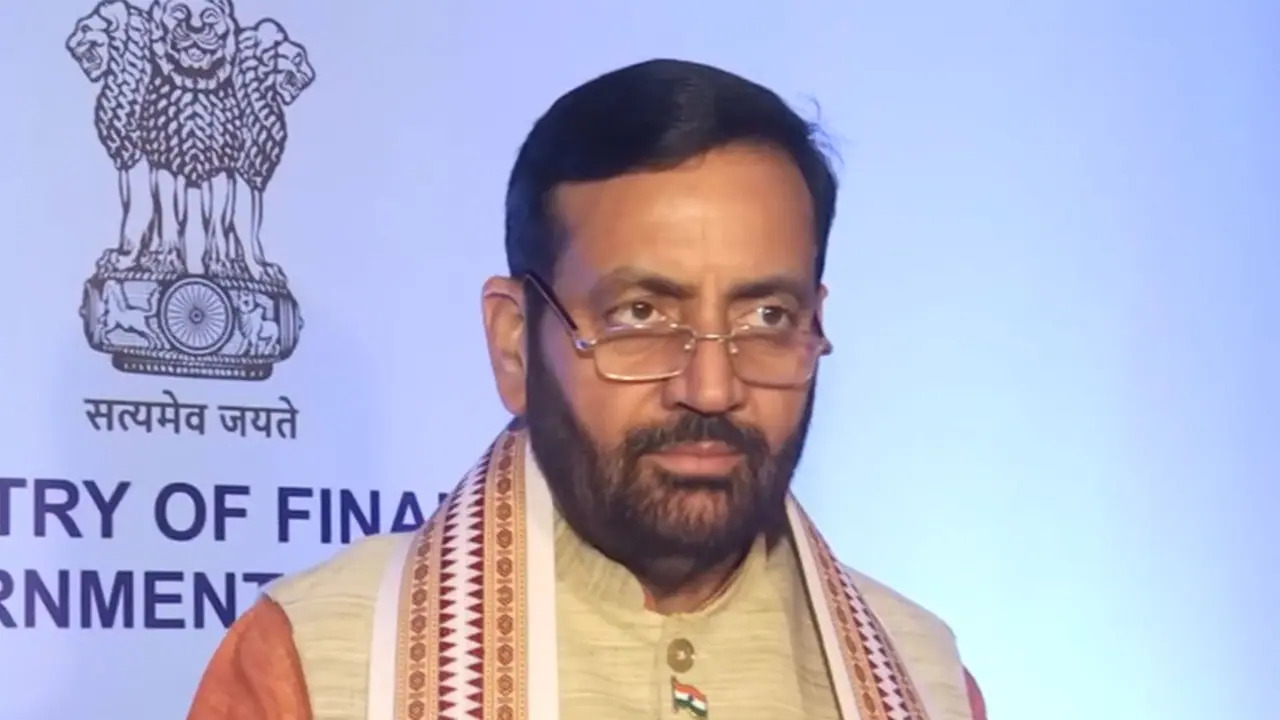
Haryana CM Nayab Singh Saini chaired a review meeting, directing officials to ensure transparent delivery of government schemes. Key directives include linking fertilizer systems to curb misuse, developing an e-Pest Surveillance System for farmers.
Haryana Chief Minister Nayab Singh Saini has directed officers to ensure that the benefits of government schemes reach eligible beneficiaries with complete transparency and that the effectiveness of these schemes is ensured at the grassroots level. He said that the objective of the best pracices adopted by departments should not merely be to increase figures, but to deliver tangible benefits to farmers, rural communities, women, youth and the general public.
The Chief Minister was chairing a review meeting of key departments of the state government in Chandigarh on Monday. During the meeting, works being undertaken and technological improvements being introduced by the Departments of Agriculture and Farmers Welfare, Horticulture, Haryana State Agricultural Marketing Board, Development and Panchayats, Irrigation and Water Resources, and Cooperation were also reviewed in detail, a release said.
Focus on Agriculture and Farmer Welfare
The Agriculture and Farmers’ Welfare Department apprised the Chief Minister of its initiative to link the Integrated Fertiliser Management System (IFMS) with the Meri Fasal Mera Byora (MFMB) portal. Under this system, fertilisers are being supplied through POS machines only to verified and registered farmers. The system has helped curb black marketing and industrial misuse of urea and DAP. Under this arrangement, savings of Rs 820 crore in subsidy were recorded between October 8, 2025 and September 14, 2026.
Directives for Agricultural Innovation and Pest Management
The Chief Minister directed that, to make the system more effective, agricultural scientists should not remain confined to offices but regularly visit fields, interact with farmers and undertake scientific research into the causes and solutions of pest and disease outbreaks in crops, particularly the emergence of caterpillars. He said that pests and diseases affecting crops should be identified in time and farmers provided with the necessary information and solutions. He also directed that effective use of this system be ensured across large agricultural areas. To alert farmers in time about pest-related problems in crops, the Chief Minister directed officials to develop an e-Pest Surveillance System.
The Chief Minister also directed the establishment of a dedicated research centre to promote research on new technologies and new crop varieties in agriculture. He said the centre should undertake research for developing new and improved varieties of sugarcane and other agricultural crops and for enhancing production and quality. Agricultural research should be linked with the actual needs of farmers so that they can directly benefit from it.
Ensuring Fair Compensation under Farmer Insurance Scheme
During the review of the Mukhyamantri Kisan Evam Khetihar Mazdoor Jeevan Suraksha Yojana, operated by the Haryana State Agricultural Marketing Board (HSAMB), the Chief Minister directed that the insurance agency through which farmers are being insured must ensure that every eligible farmer receives the full insurance benefit due and that actual losses are compensated. He also directed effective monitoring of the scheme.
Strengthening Horticulture Support Schemes
Reviewing the Horticulture Department’s Bhavantar Bharpai Yojana (BBY), the Chief Minister directed officers to ensure that farmers receive full payment according to their eligibility under the scheme. He said effective verification should be carried out of the actual production of crops covered under the Bhavantar scheme, their sale and sales made in mandis. For this purpose, the crop mapping and verification methodology should be further strengthened so that it can be clearly established whether the crop for which the Bhavantar benefit is being provided was actually produced and whether it was sold in a mandi. He directed that the verification process be made simple and effective. He also directed that natural farming be promoted.
Expanding Rural Education with Atal Libraries
In the meeting review was also done regarding the Atal Library initiative launched by the Development and Panchayats Department to provide better study facilities to students and youth in rural areas. In the first phase, 996 Atal Libraries have already been established, while 1,000 new Atal Libraries are being established in the second phase with a budget of Rs 86.6 crore. (ANI)
(Except for the headline, this story has not been edited by Asianetnews Editorial staff and is published from a syndicated feed.)