
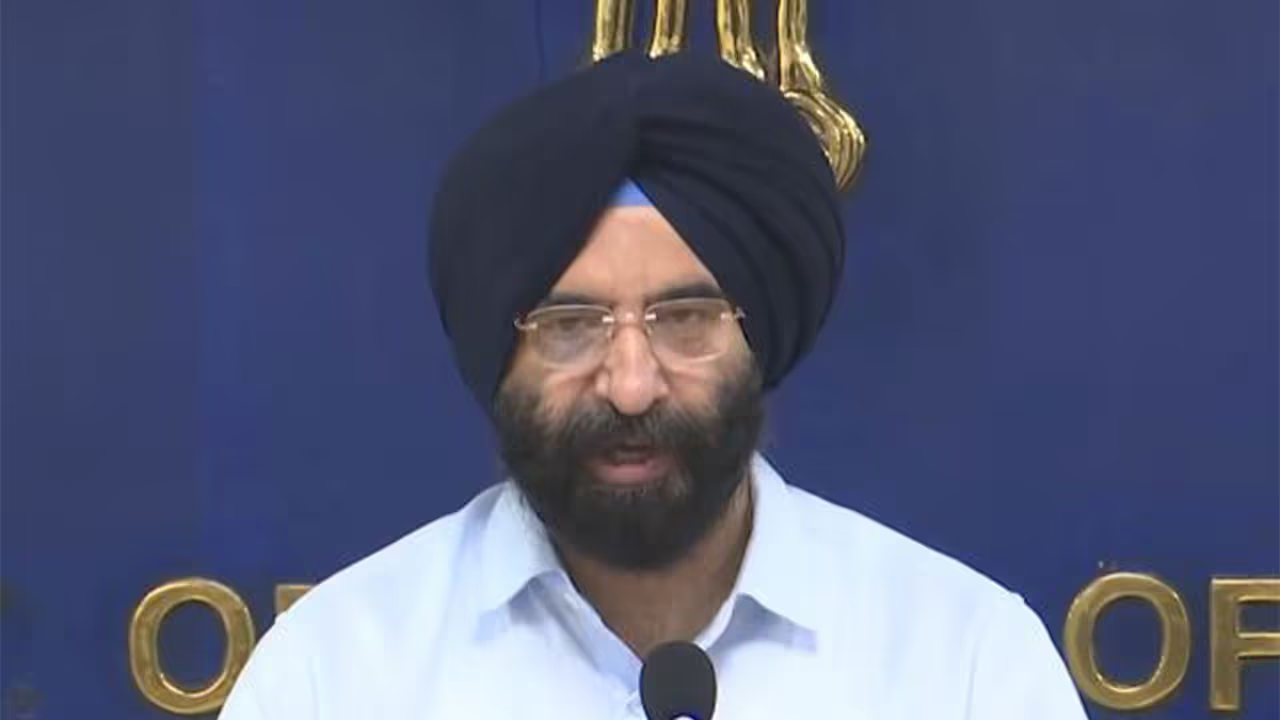
Delhi Environment Minister leads a meeting with NCR officials to discuss stricter traffic regulations, pollution control measures, and dust reduction strategies as regional air quality hits the unhealthy category ahead of the winter season.
Delhi Environment Minister Reviews Winter Pollution Strategies
With winter pollution becoming a major concern, Delhi Environment Minister Manjinder Singh Sirsa on Sunday held a virtual meeting with traffic police officials from neighbouring NCR districts to review preparations for the coming months. Officials from Noida, Faridabad, Gurugram, Sonipat and Bahadurgarh joined the meeting, along with Delhi Traffic Police and Transport Department officials.
Discussions focused on reducing traffic jams near Delhi’s borders, checking polluting vehicles and preventing buses that do not meet emission standards from entering the city. Delhi Traffic Police informed the meeting that more than 10,000 challans for traffic and pollution violations are being issued daily. Officials also discussed action against overage petrol and diesel vehicles and the diversion of trucks not bound for Delhi through the Eastern and Western Peripheral Expressways.
Implementation of Emission Standards and Enforcement
As per applicable directions, buses operating in Delhi-NCR must run on electricity, CNG or BS-VI-compliant diesel. The government will also step up mechanical road sweeping, water sprinkling and other dust-control measures, while additional enforcement teams will be deployed as GRAP restrictions are tightened. Minister said tackling air pollution requires joint efforts from Delhi and neighbouring NCR districts. He stressed the need for stricter checks, smoother traffic movement and cleaner public transport to improve air quality during winter under Chief Minister Rekha Gupta’s leadership.
Current Air Quality and Environmental Concerns
Meanwhile, Delhi-NCR is facing a double environmental blow, with toxic white foam reappearing on the Yamuna River near Kalindi Kunj and air quality across the region slipping into the 'unhealthy' category, with the overall Air Quality Index (AQI) touching 168.PM2.5 and PM10 continue to be the dominant pollutants.
Monitoring stations across the city showed local variations, with readings as low as around 110 at PGDAV College, Sriniwaspuri, while several other stations recorded levels between 118 and over 180. The deterioration had prompted the Commission for Air Quality Management (CAQM) to invoke Stage 1 of the Graded Response Action Plan (GRAP) across Delhi-NCR on October 21 to curb air pollution.
(Except for the headline, this story has not been edited by Asianetnews Editorial staff and is published from a syndicated feed.)