
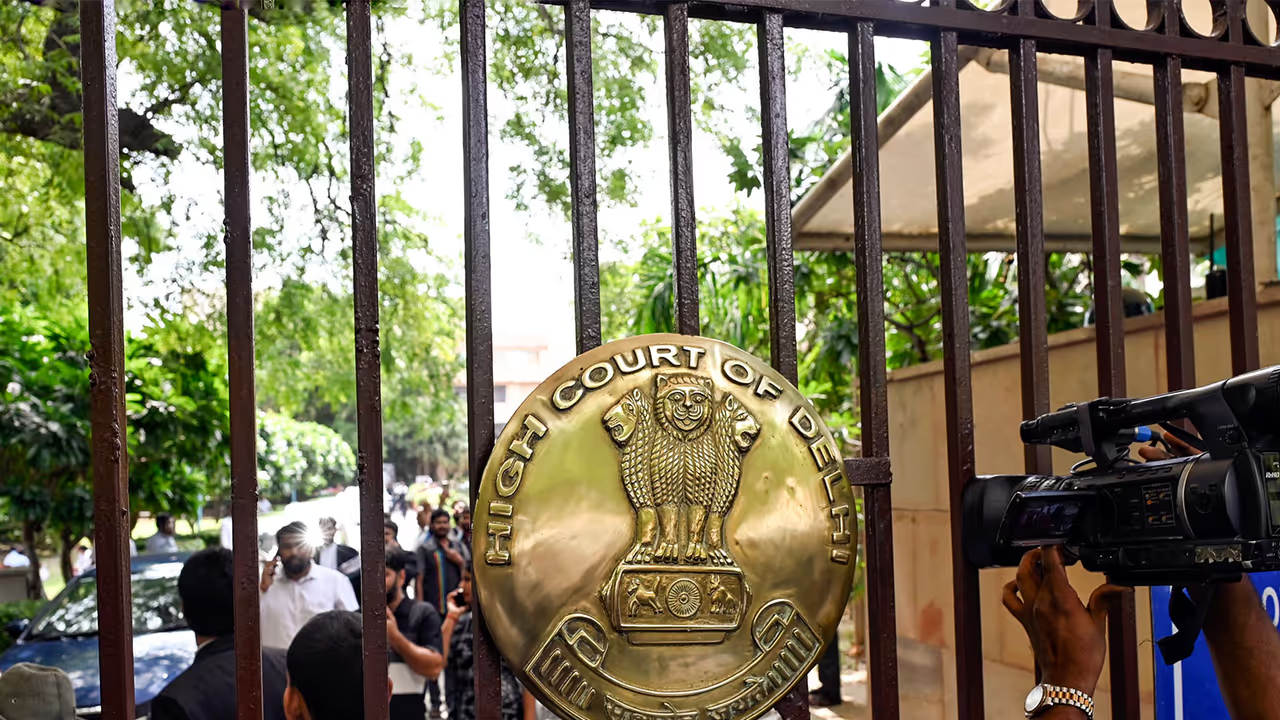
The Delhi High Court issued notice on a plea by 6 Ukrainian nationals in Tihar Jail, arrested in an NIA terror case. They are challenging a circular denying them e-Mulakat (video call) facility with family, calling it a violation of rights.
The Delhi High Court on Wednesday issued notice on a plea jointly filed by 6 Ukrainian nationals, who are lodged in Tihar Jail, aggrieved by the denial of the e-Mulakat (Video conferencing) facility with their family members. They are in judicial custody after their arrest by the National Investigation Agency (NIA) in a terror Conspiracy case.
They have challenged the 2022 circular barring foreigners arrested in terror-related offences against the State from e-Mulakat with family. There are other similar petitions pending before the bench of the Chief Justice of the Delhi High Court. Division Bench of Justices Navin Chawla and Ravinder Dudeja issued notice to concerned authorities on the petition and clubbed it with other similar petitions listed for hearing on September 21.
Plea Challenges Circular as Unconstitutional
Petitioner Hurba Petro and others have challenged the Circular of 26.12.2022 as void and inoperative for being ultra vires Articles 14 and 21 of the Constitution of India, 1950, insofar as it states that "The E-Mulakat facility will not apply to foreign inmates involved in terrorist activities offences against the state".
Denial of Facility Strikes at Human Dignity
Besides other grounds, the petition has contended that the denial of the e-Mulakat facility specifically to foreign inmates strikes at the very core of human dignity guaranteed under Article 21 of the Constitution of India. It is also stated that the right to communicate with one's family is integral to a prisoner's dignity, mental well-being, and eventual rehabilitation and reintegration into society, and severing a foreign inmate who is already more isolated owing to geography, language barrier, unfamiliarity with the legal system, etc. from all contact with his family is wholly against the right to dignity.
No Family Contact Despite Court Order
It is further stated that despite securing an Order of the Special NIA court on 16.03.2026, allowing them to "meet their respective counsels/relatives for 20 minutes, virtually from 05:00 pm to 05:20 pm, on every alternate day", ever since their transfer from police custody to judicial custody on 06.04.2026, they have been completely, arbitrarily and without exception denied any form of telephonic/virtual / video conferencing contact with their family members. It is also stated that despite a considerable period of more than130 days in judicial custody, not a single interaction with any family member has been facilitated or permitted by the jail administrations. (ANI)
(Except for the headline, this story has not been edited by Asianet Newsable English staff and is published from a syndicated feed.)