
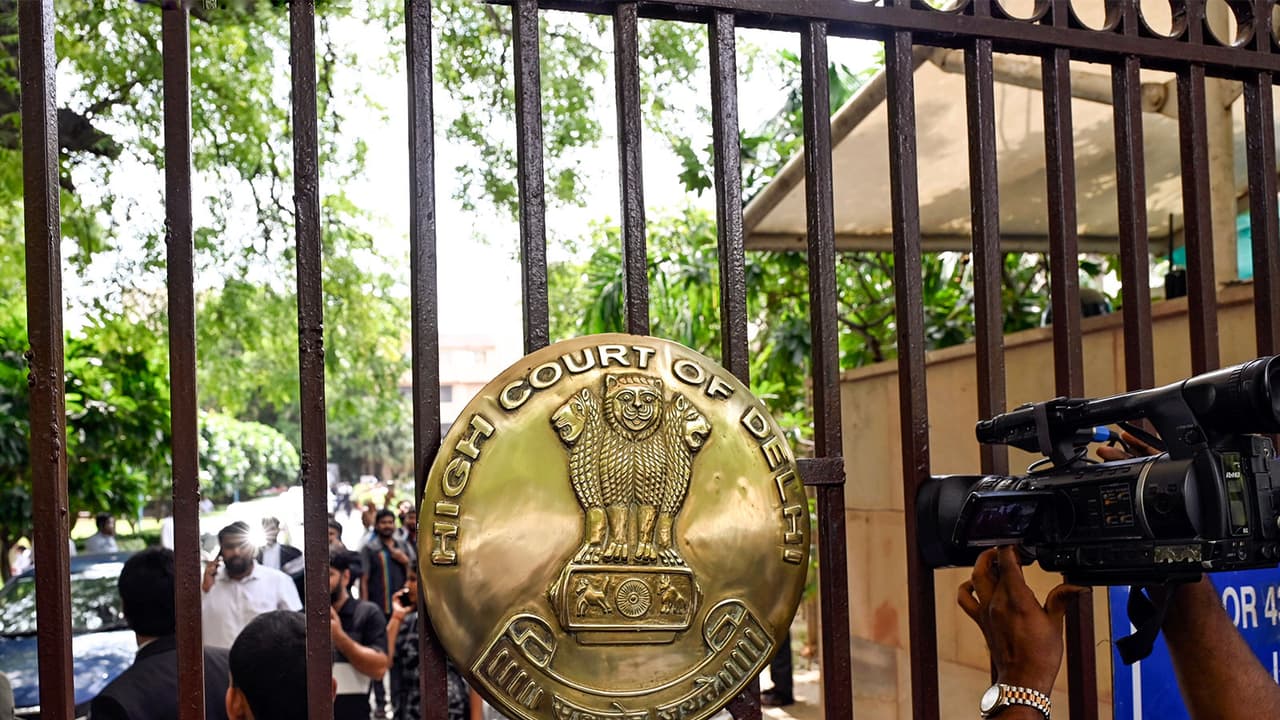
The Delhi High Court clarified it does not intend to take coercive action against a Newslaundry journalist. It expressed concern over selective reporting of oral remarks on social media, noting such comments are part of the legal process, not a final judgment.
The Delhi High Court on Friday clarified that it does not intend to take any coercive or adverse action arising from its earlier oral observations in a pending matter, while expressing concern over the manner in which selective excerpts from court proceedings were circulated on social media, leading to online hostility. In this context, the Bench referred to reporting related to Manisha Pande, a journalist associated with Newslaundry. The Court made it clear that it had no intention of proceeding against her or prejudicing her professional career.
"I do not intend to act against the journalist or prejudice her career," Justice C Hari Shankar said, adding that the remarks made earlier were limited to the manner in which certain comments were expressed and were never meant to invite action against any individual.
Court Addresses 'Out of Context' Social Media Posts
The Division Bench of Justice C Hari Shankar and Justice Om Prakash Shukla observed that a portion of a news report was taken out of context, turned into a separate social media post, and widely circulated, which subsequently led to hate messages. The Court noted that neither the judiciary nor the media would want such consequences to follow from court reporting.
Stance on Media Reporting and Judicial Remarks
Justice Hari Shankar emphasised that the Court was not attempting to gag the media or restrict reporting of oral observations made during hearings. However, he urged that while reporting court proceedings is legitimate, publishers should remain conscious of the possible impact and downstream consequences of how judicial remarks are presented.
The Bench further explained that strong oral observations are often made during hearings to elicit meaningful legal assistance from the Bar and to test arguments, not to signal final conclusions. It noted that such engagement frequently leads to constructive responses, including detailed submissions on points of law, which ultimately assist the Court in deciding appeals.
Clarifying its position once again, the Court stated that it does not propose to take any action against the journalist. Justice Hari Shankar remarked that the comments reflected an immediate reaction during the course of arguments and should not be read as a judgment on the journalist's overall work or professional standing.
The observations were made during the hearing of cross-appeals between Newslaundry and TV Today Network, in which the Delhi High Court has reserved its verdict, reiterating that it will confine itself strictly to the legal issues involved. (ANI)
(Except for the headline, this story has not been edited by Asianet Newsable English staff and is published from a syndicated feed.)