
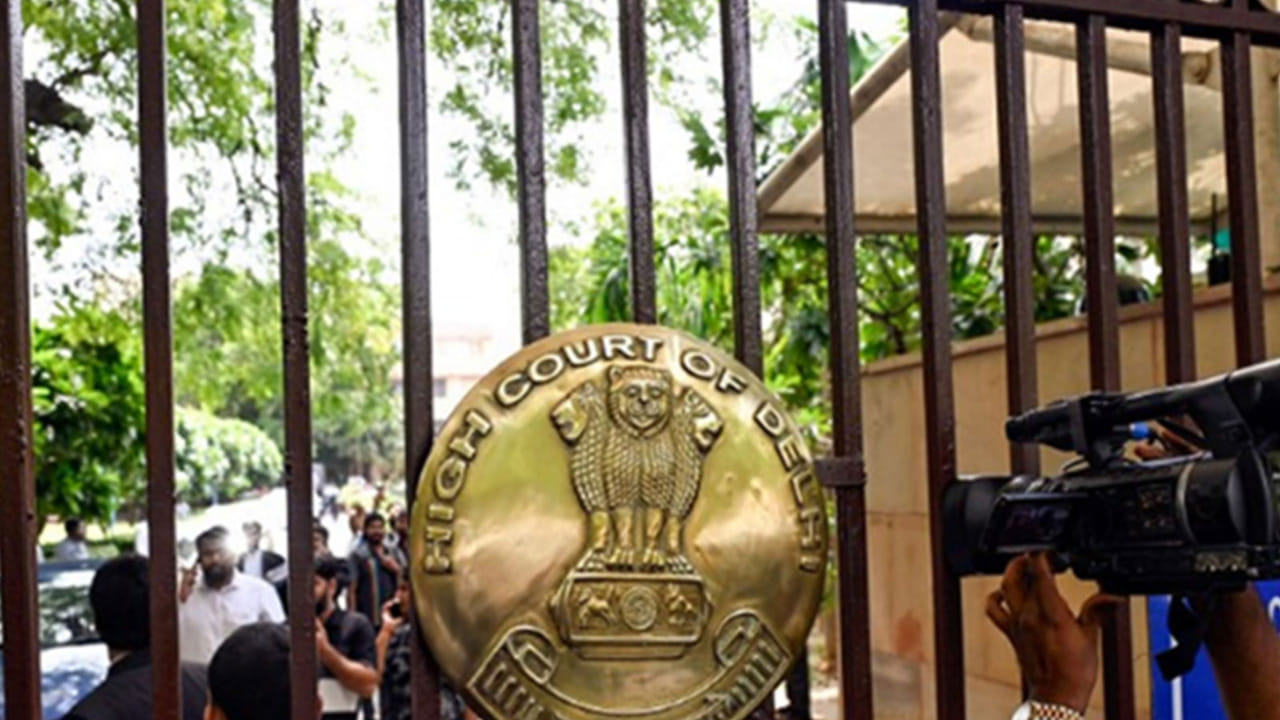
The Delhi High Court has permitted two elderly respondents living in the UK and US to record their evidence via video conferencing, citing their age, travel difficulties, and health risks from pollution as valid reasons for remote testimony.
Delhi HC Allows Video Conferencing Evidence For Elderly UK US Residents
The Delhi High Court has permitted the recording of evidence of two senior citizens residing in the United Kingdom and the United States through video conferencing, observing that their age, difficulties associated with international travel and health concerns arising from Delhi’s air pollution conditions were relevant considerations. Justice Vinod Kumar directed that the cross-examination of the two witnesses be conducted through video conferencing, with the High Commission of India in London and the Consulate General of India in New York designated as their respective remote points.
The court directed the Registrar (IT) to appoint an IT officer to ensure the availability of video conferencing facilities for extended durations on the dates fixed by the Local Commissioner. It further directed the two witnesses to pay a composite fee of Rs 1 lakh in advance for the IT officer’s services, to be shared equally between them. The court passed the directions while allowing an application seeking permission to record the evidence of two respondents through video conferencing in an ongoing probate petition concerning the alleged will of a deceased person.
The applicants, aged 79 and 77, are residing in the UK and the US, respectively. They had sought permission to record their evidence remotely, citing their advanced age, inconvenience associated with international travel and health risks posed by the severe air pollution conditions ordinarily prevailing in Delhi between October and January. Opposing the plea, the petitioner raised concerns over the possibility of witnesses being tutored during remote examination, availability of relevant documents, the procedure for obtaining signatures on recorded statements and the time difference between India and the countries concerned. It was also argued that the arrangement could delay the proceedings.
Rejecting these objections as insufficient grounds to deny permission, the court observed that the Delhi High Court Electronic Evidence and Video Conferencing Rules, 2025 provide adequate safeguards to address concerns relating to tutoring of witnesses, presentation of documents and authentication of evidence. The court emphasised that the permission would not dilute procedural safeguards governing examination and cross-examination and that the petitioner must retain a full and effective opportunity to challenge the testimony of both witnesses, including by confronting them with relevant documents. It directed the Local Commissioner to determine the dates and timings of the examination in consultation with the parties and concerned coordinators, keeping in view the time difference between India and the respective countries. The court further directed that officials from the Indian High Commission in London and the Consulate General of India in New York remain present at the designated remote points during the proceedings. The Registry was directed to email a copy of the order along with the applicable video conferencing rules to both diplomatic establishments. The court also directed the Local Commissioner, parties and coordinators to ensure strict compliance with provisions relating to identification of witnesses, prevention of tutoring, presentation and exhibition of documents, administration of oath, recording of evidence, signing of transcripts and preservation of electronic records. Observing that recording the evidence through video conferencing would avoid postponing the examination until the witnesses’ proposed physical visit to India in February or March 2027, the court allowed the application. The alternative request for physical appearance in India in February or March 2027 was consequently not required to be considered separately.








