
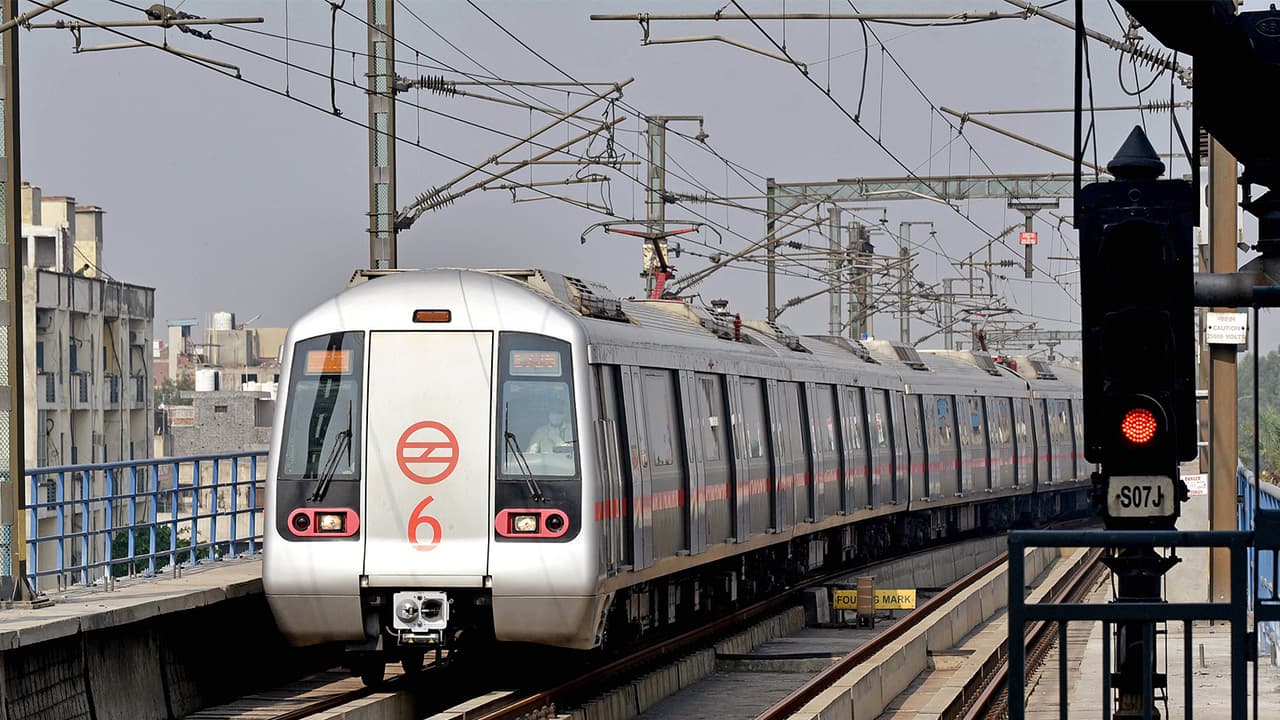
The Delhi Cabinet has approved the Rs 12,014.91 crore Metro Phase V(A) project. The expansion includes three new corridors totalling 16 km and 13 stations, aiming for completion by 2028 to enhance the city's public transport system.
Delhi government has taken a major step towards strengthening and modernising the capital's public transport system. The Cabinet, chaired by the Chief Minister Rekha Gupta, approved Metro Phase V(A). Delhi CM informed that this ambitious project will develop three new corridors totalling 16 kilometres in length, including 13 metro stations. The estimated cost of the entire project is Rs 12,014.91 crore, with the Delhi Government's budgetary share being Rs 2,940.46 crore. The project is targeted for completion in 2028, accoridng to a release from Delhi CMO.
The Chief Minister thanked Prime Minister Narendra Modi for his support and said the project is a significant step toward implementing his "7-C Vision" for transportation -- Common, Connected, Convenient, Congestion-free, Charged, Clean, and Cutting-edge mobility. She emphasised that strengthening public transport is essential for achieving environmental protection and net-zero emission goals.
According to the Delhi CM, this metro expansion will play a crucial role in making Delhi cleaner, more efficient, and globally competitive. She also reaffirmed the government's commitment to working closely with the Centre to build an integrated, citizen-focused transport system aligned with the vision of a "Viksit Bharat" (Developed India).
Chief Minister Rekha Gupta described this decision as an investment in Delhi's future, stating that the construction of these new corridors will not only reduce traffic congestion but also help control pollution.
Details of the Three Approved Corridors
The three approved corridors include RK Ashram to Indraprastha (via Central Vista), Tughlakabad to Kalindi Kunj, and Aerocity to Indira Gandhi Domestic Terminal-1 (IGD T-1). Of the 13 stations to be built, 10 will be underground and 3 will be elevated.
This expansion will facilitate seamless interchange with the existing metro network and further improve connectivity between the airport, commercial centres, and residential areas. The government aims to provide citizens with a clean, efficient, and integrated transportation system by reducing dependence on private vehicles, according to the release.
RK Ashram to Indraprastha Corridor
The most significant corridor under Phase V(A) will run from RK Ashram Marg to Indraprastha, covering 9.913 kilometres with nine proposed stations. Passing through the Central Vista area, this corridor will directly connect Delhi's key administrative, cultural, and historic zones to the metro network, the release stated.
It will link major government offices and Kartavya Bhavan complexes, making daily commutes easier for thousands of government employees and visitors. An estimated 60,000 employees and nearly 2 lakh daily commuters are expected to benefit. By reducing reliance on petrol and diesel vehicles, the corridor will also contribute to lower emissions and improved air quality. Major locations to be connected include RK Ashram Marg (under construction), Shivaji Stadium, Central Secretariat, CCS Buildings, India Gate, War Memorial-High Court, Baroda House, Bharat Mandapam, and Indraprastha. This corridor alone will cost ₹9,570.40 crore, with Rs 2,337.24 crore to be contributed by the Delhi government.
Aerocity to Indira Gandhi Domestic Airport Terminal-1 Corridor
The second corridor will run from Aerocity to Indira Gandhi Domestic Airport Terminal-1 (IGD T-1). Stretching 2.26 kilometres, it will include one station. This short but strategic link will offer faster, direct metro access to the airport, reducing dependence on taxis and private cars. It is expected to significantly ease traffic congestion around the airport zone. The project cost is estimated at Rs 1,419.64 crore, of which ₹351.86 crore will be funded by the Delhi government, according to the release.
Tughlakabad to Kalindi Kunj Corridor
The third corridor, from Tughlakabad to Kalindi Kunj, will span 3.9 kilometres and include three stations. This route will strengthen metro connectivity in South and South-East Delhi, making daily travel more convenient for residents of these areas. The corridor is estimated to cost Rs 1,024.87 crore, with the Delhi government contributing Rs 251.36 crore.
Vision for a World-Class City
Chief Minister Rekha Gupta said that expanding the Delhi Metro is fundamental to the city's holistic development. The existing network, along with the new Phase V(A) corridors, will make Delhi and the NCR's transport ecosystem more efficient, safer, and environmentally sustainable, according to the release.
She added that the expansion will ensure smoother, more punctual travel, reduce pressure on roads, and significantly cut vehicular pollution. With a clear focus on transforming Delhi into a world-class city, the government continues to strengthen public transport -- and this latest metro expansion marks another decisive step in that direction. (ANI)
(Except for the headline, this story has not been edited by Asianet Newsable English staff and is published from a syndicated feed.)