
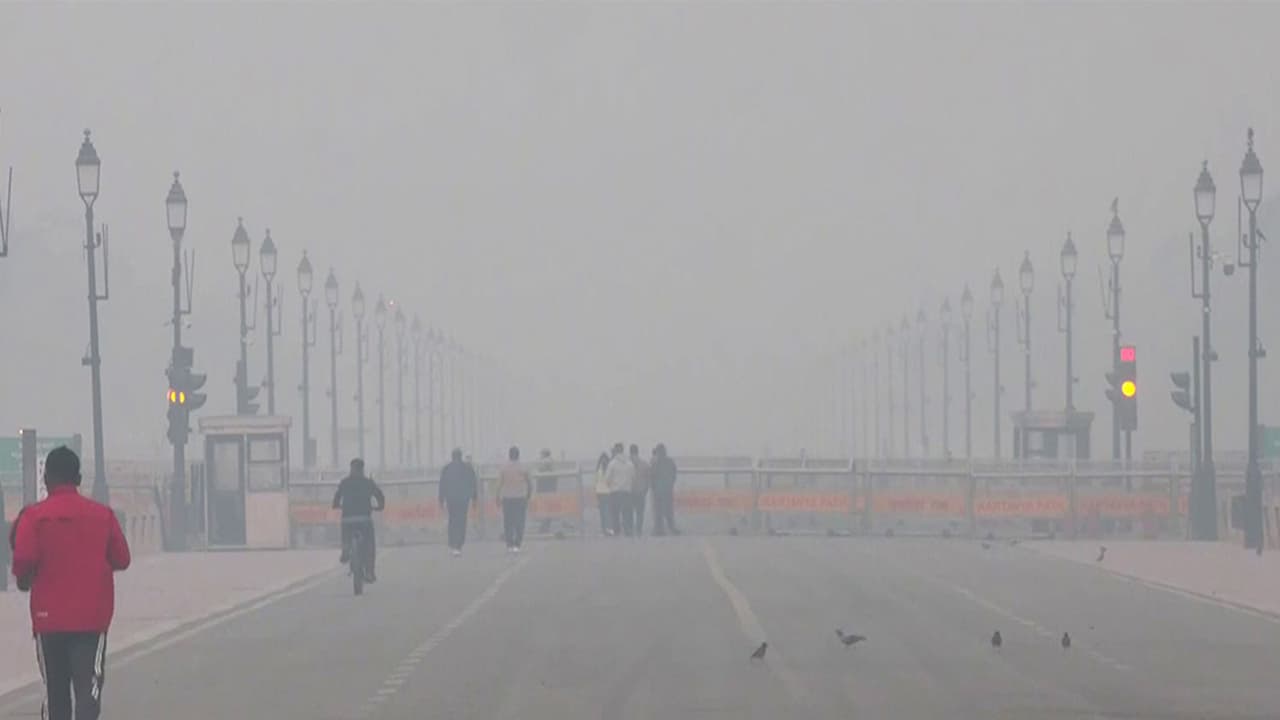
A dense toxic smog has blanketed Delhi, pushing the Air Quality Index (AQI) into the 'very poor' category in many areas. The Commission for Air Quality Management (CAQM) has invoked stringent GRAP Stage-IV measures to curb pollution levels.
Delhi Chokes Under 'Very Poor' Air Quality
Large parts of the capital were blanketed by a dense layer of toxic smog, significantly reducing visibility and causing discomfort for residents. RK Puram was shrouded in thick smog, with an AQI of 374, placing it in the 'very poor' category, according to CPCB. A thick layer of smog also engulfed areas around Jawaharlal Nehru Stadium, with an AQI reported to be 349, placing the area in the 'very poor' category. The AQI around the Najafgarh area was a bit low, and reported to be 284, though it was surrounded by a toxic smog as well, according to the CPCB data.
CAQM (Commission for Air Quality Management) has invoked all GRAP Stage-IV measures in Delhi-NCR to control pollution levels in the capital. A thick layer of fog also blanketed the city of Ayodhya in Uttar Pradesh. According to AQI categorisation, 0-50 is 'good', 51-100 'satisfactory', 101-200 'moderate', 201-300 'poor', 301-400 'very poor', and 401-500 'severe'.
CAQM Inspection Reveals Lapses in Dust Control
Earlier, the Commission for Air Quality Management in NCR and Adjoining Areas (CAQM) deployed 19 teams for a road-inspection drive on December 12. This drive was conducted as part of the Commission's ongoing monitoring and enforcement under the statutory framework and provisions of the extant GRAP.
Inspection Drive Findings
According to the release, a total of 136 road stretches within the Delhi Development Authority (DDA) jurisdiction were inspected across Delhi. According to the final compiled data, 15 road stretches exhibited high visible dust levels, 38 showed moderate dust, 61 recorded low dust intensity, and 22 stretches had no visible dust. Road stretches with accumulation of MSW and C&D waste were reported to be 55 and 53, respectively. 6 stretches were reported to have evidence of MSW/ Biomass burning, the release said.
DDA's Negligence Highlighted
The above observations clearly indicate gaps and recurring negligence in the maintenance of the affected stretches. It highlighted the need for DDA to enhance operational efficiency and implement prompt corrective measures through consistent, timely dust-mitigation interventions. The agency also needs to improve compliance across all road stretches for MSW/Biomass burning, it was highlighted.
Corrective Measures Recommended
The Commission observed that these kinds of incidents impact particulate matter levels in Delhi and emphasised the need for strengthened on-ground action, including regular mechanical sweeping, timely disposal of collected dust, maintenance of road shoulders and central verges in addition to deployment of water-sprinkling/ dust-suppression systems and focused action(s) for prevention of open burning cases across all stretches maintained by DDA. (ANI)
(Except for the headline, this story has not been edited by Asianet Newsable English staff and is published from a syndicated feed.)