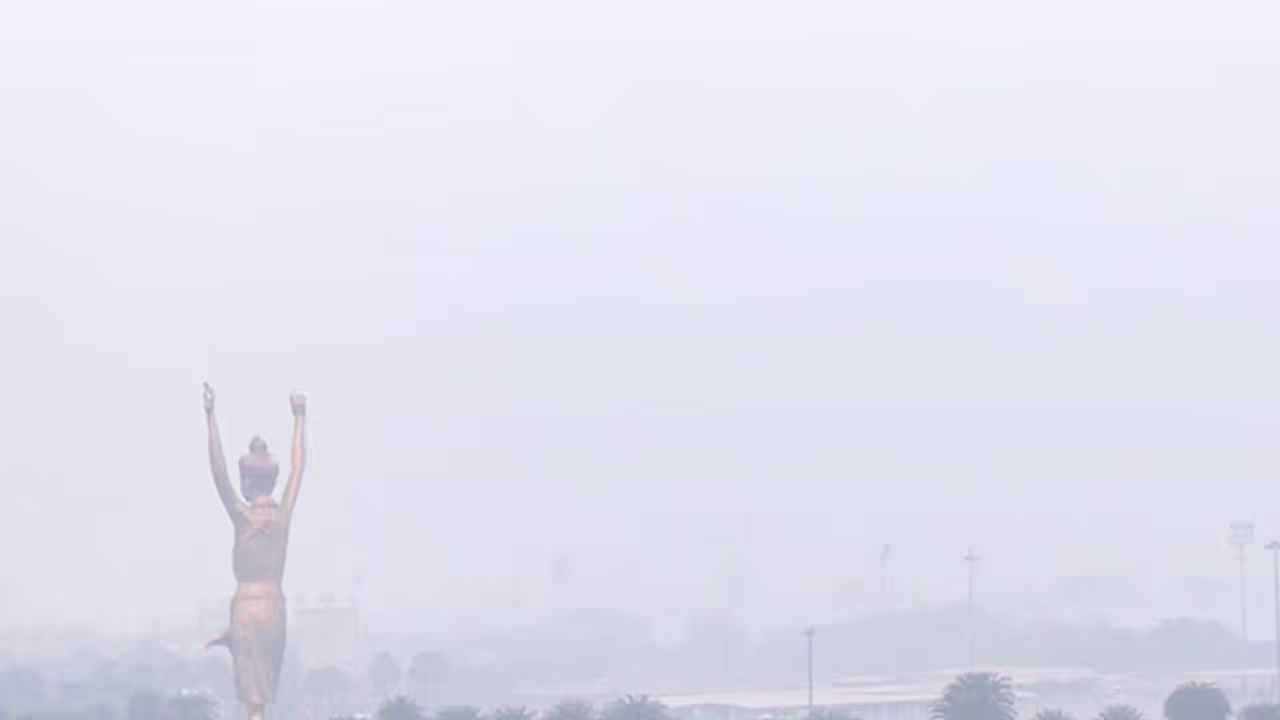
The CAQM has invoked Stage-II of the Graded Response Action Plan (GRAP) across the Delhi NCR as the Air Quality Index plummeted to the 'Very Poor' category, triggering stringent measures to combat rising air pollution levels in the region.
CAQM Activates Stage-II of GRAP Across Delhi NCR
New Delhi [India], November 2 (ANI): In response to a spike in pollution levels, the Commission for Air Quality Management (CAQM) on Monday invoked Stage-II of the Graded Response Action Plan (GRAP) across the entire National Capital Region (NCR), with immediate effect. The decision comes on the heels of rapidly deteriorating meteorological conditions that pushed Delhi's Air Quality Index (AQI) into the 'Very Poor' category at 324 on Monday
According to the CAQM sub-committee review meeting held today, Delhi's air quality witnessed a steep and sudden downward spiral over a 72-hour window, beginning with an AQI of 117 in the 'Moderate' category on Saturday, followed by a sharp rise to 261 in the 'Poor' category on Sunday, and worsening further to 324 in the 'Very Poor' category by Monday.
Stringent Anti-Pollution Measures Implemented
Operational Enforcement and Traffic Regulation
With Stage-II now active alongside existing Stage-I restrictions, municipal corporations, traffic police, and pollution control boards across Delhi, Haryana, Uttar Pradesh, and Rajasthan have been directed to enforce stringent actions. Daily mechanical or vacuum sweeping and water sprinkling, mixed with dust suppressants, will be carried out on heavy-traffic corridors and congestion points, with priority given to pre-peak traffic hours. Additionally, heightened inspections and remedial interventions will target known pollution hotspots and Construction & Demolition (C&D) sites across the NCR. To discourage the use of private transport, urban local bodies have been instructed to enhance vehicle parking fees.
Public Directives and Citizen Cooperation
Furthermore, state governments and the GNCTD are implementing staggered working hours for public offices and municipal bodies in Delhi, Gurugram, Faridabad, Ghaziabad, and Gautam Buddha Nagar. Finally, Resident Welfare Associations (RWAs) are mandated to provide electric heaters to security guards, sanitation workers, and horticulture staff to prevent open biomass or municipal solid waste burning during chilly winter periods.
The CAQM has urged residents to actively support pollution-mitigation efforts by minimising the use of personal vehicles, opting for public transport or carpooling, and avoiding dust-generating construction activities. Citizens whose work allows have also been encouraged to work from home. (ANI)
(Except for the headline, this story has not been edited by Asianetnews Editorial staff and is published from a syndicated feed.)