Kerala declared itself India's 1st fully digitally literate state on August 21. Centered on Digi Keralam project, 22 lakh people, including 105-year-old Abdullah Maulavi, were trained as services move online with DigiLocker and cyber-safety support.
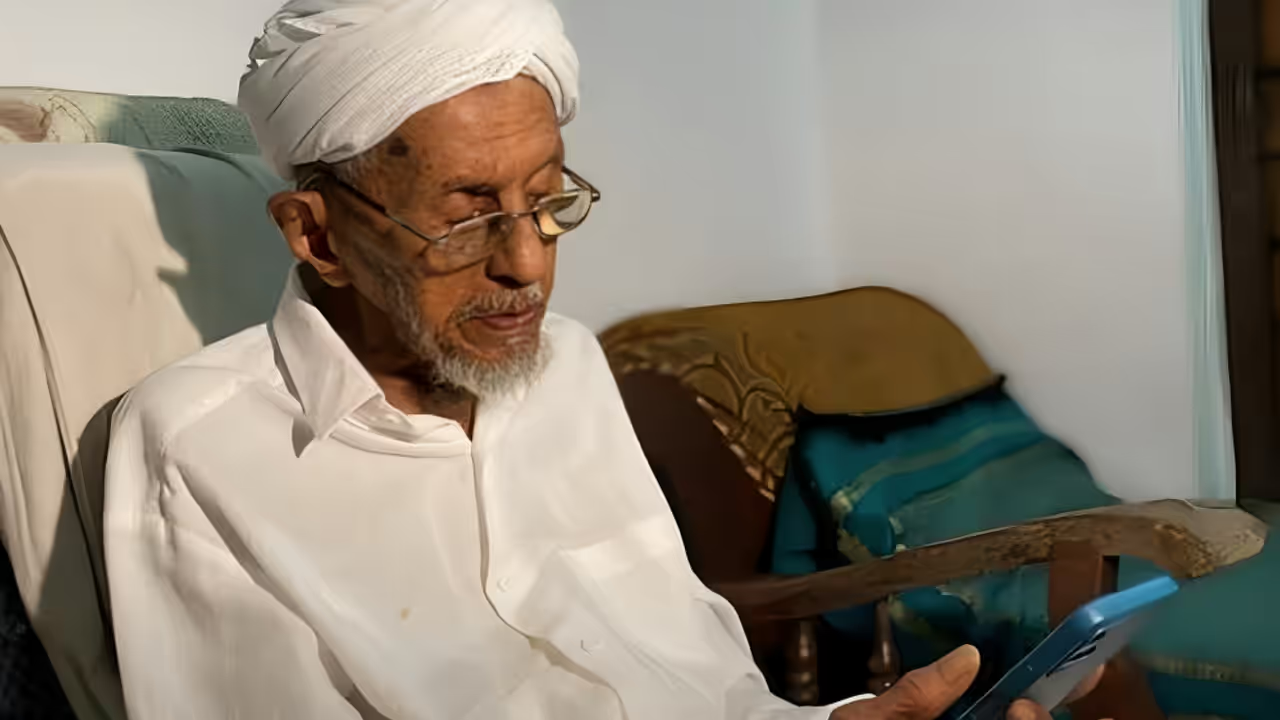
The year MA Abdullah Maulavi was born marked the start of the Roaring Twenties, an age of fast technological change. A century later, at 105, the Kerala native has discovered his own tech stride, now proudly ‘fully digi-literate’ and able to use a smartphone. "I used to have keypad phones. With training from the panchayat, I can now access internet on a smartphone, keep myself abreast of news," Abdullah told The Times of India. His journey reflects a statewide milestone: on August 21, Chief Minister Pinarayi Vijayan declared Kerala the first fully digitally literate state in India.
The Digi Keralam project
Abdullah Maulavi is among 22 lakh (2.2 million) Keralites trained under the state’s Digi Keralam project, which aims for 100% digital literacy. It is Kerala’s second landmark of this kind since the state, under a Left government, became India’s first fully literate state in 1991. For Abdullah, who lives in Odakkali, Perumbavoor, Ernakulam, the COVID-19 pandemic was the turning point. His son, Faisal Ali, recalls how newspapers stopped during the lockdown and his father grew restless. Abdullah watched TV news on family phones but disliked depending on others. When Digi Keralam volunteers offered training last year, he “grabbed the opportunity.”
MA Abdullah Maulavi learnt with patience and planning
A religious scholar and lifelong learner, Abdullah is fluent in Arabic, Urdu, English and Hindi, besides Malayalam. Even so, teaching him needed patience and planning. Jaya C. R., the area’s saksharatha pracharak and Digi Kerala panchayat coordinator, said Abdullah had a disciplined routine formed over decades, leaving little room for new habits. Volunteers adapted to his schedule and learning style. Over two months of training, Abdullah and others learned smartphone basics, paying bills online, and accessing government e-services, skills that reduce dependence and open doors to essential public services.
Related Articles

CM Pinarayi Vijayan on Abdullah Maulavi's achievement
Announcing the achievement in a video call with the 105-year-old Abdullah Maulavi, CM Pinarayi Vijayan said Kerala is not just declaring the internet as a right but ensuring it is available to everyone. He stressed there would be no rural-urban divide in internet access. Today, 900 government services are available online. “No one has to go to offices for government services. This change is the real Kerala story,” he said. The Chief Minister added that steps are in place to make government services available to non-resident Keralites without requiring travel to the state.
The government also announced that official certificates issued by local bodies will be digitised and integrated with DigiLocker to make access easier and faster for citizens. Importantly, people who have attained basic digital literacy under Digi Keralam will receive further training in cybercrime prevention, building safer digital habits and protecting citizens from online frauds and scams. This layered approach, basic skills first, safety and resilience next, aims to make digital inclusion both wide and secure.
Abdullah's story shows how inclusion works at the last mile. After decades with keypad phones, he now uses a smartphone to read news and handle simple tasks online. The pride is clear: he no longer waits for someone else to read the headlines to him. For his family, the change has been practical and emotional, more independence for their elder, and less worry during emergencies. For local volunteers like Jaya C. R., his success is proof that patient, community-based teaching can bridge age, education, and access gaps.
The Digi Keralam milestone
Kerala’s digital push also continues its long social development path. The state's first big leap, universal literacy in 1991, made it a national example. The Digi Keralam milestone is the digital echo of that achievement. By combining panchayat-led training, online delivery of 900 services, DigiLocker integration and cyber safety education, the state is trying to ensure that technology serves everyone, from schoolchildren to centenarians. For many families like Abdullah’s, the benefits are immediate: timely bills, quick certificates, and direct access to welfare schemes.
In the Chief Minister’s words, Kerala is working to make the internet a right and a reality. That means practical steps, connectivity without urban bias, services available anywhere, and training that reaches the most senior citizens. With over two million people already trained and more to follow, the state wants every resident to feel confident online. Abdullah Maulavi’s blue-tick moment—reading the news on his own phone, captures what that confidence looks like in daily life. It is small, simple, and quietly powerful.