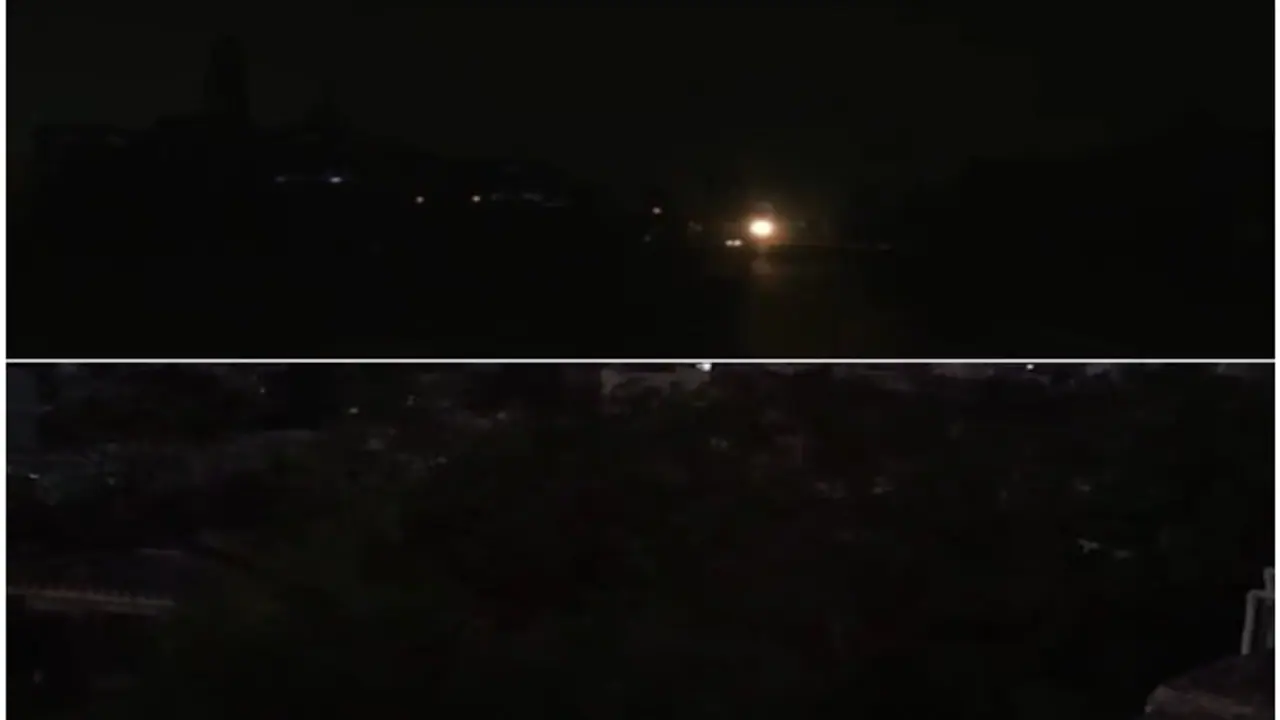
Cities across India observed 10-minute blackouts during a nationwide civil defence drill, simulating wartime emergency protocols after the Pahalgam attack. The exercise tested blackout readiness, alert systems, and public responsiveness to threats.
For 10 minutes on Wednesday evening, large parts of India deliberately went dark. From Vijay Chowk and Akshardham in Delhi to Barmer in Rajasthan and Patna in Bihar, lights were turned off and air raid sirens blared — not due to any emergency, but as part of a nationwide civil defence mock drill ordered by the Ministry of Home Affairs (MHA).
This coordinated blackout was the most visible part of ‘Operation Abhyaas’, a massive drill conducted across states to simulate wartime readiness and emergency response following the April 22 terror attack in Pahalgam that left 26 civilians dead. The exercise aimed to prepare civilians and authorities for high-stress scenarios involving enemy strikes, including air raids.
At precisely 4 PM in many areas and 7:50 PM in others, sirens sounded and public lighting systems were shut down. In Delhi, iconic locations such as Vijay Chowk, Moti Nagar, and Akshardham plunged into darkness. The lights came back gradually after five minutes, offering a stark reminder of wartime blackouts and the importance of civil preparedness.
Related Articles

In Patna, as seen from BISCOMAUN Bhawan, the city skyline dimmed noticeably. Rajasthan’s Barmer district followed the same protocol, while in Himachal Pradesh, sirens echoed across Shimla, signalling residents to observe the blackout. Videos circulating online showed eerie silence and pitch-black neighbourhoods — from high-rise balconies in urban centres to remote stretches in the hills.
The drill was not meant to alarm, officials clarified, but to test emergency systems and enhance public awareness. Police, home guards, NCC cadets, and civil defence volunteers took part in coordination with local governments. Authorities also used the opportunity to gauge public responsiveness to alerts, practice quick shutdowns of electrical grids, and rehearse evacuation protocols.
A senior official involved in the drill said, “This is the first time since 1971 that such a large-scale civilian blackout exercise has been conducted. It is a direct outcome of the intelligence inputs received after the Pahalgam terror attack, which suggested more cross-border threats could be in the pipeline.”
The blackout, while symbolic, also carried a practical message — that preparedness is not just for soldiers but for every citizen. The Pahalgam attack, widely believed to have been carried out by Pakistan-backed terror outfits, has led to renewed urgency in both military operations and civilian readiness efforts like ‘Operation Abhyaas’.
The MHA has called the exercise a success and plans to review data gathered during the blackout to identify gaps and improve response systems. Authorities said more such drills could follow, focusing on different regions and scenarios, including chemical attacks, sabotage, and mass casualty events.
As lights flickered back on across the country, many were left with a lingering sense of vulnerability — and a renewed respect for the importance of being prepared.