
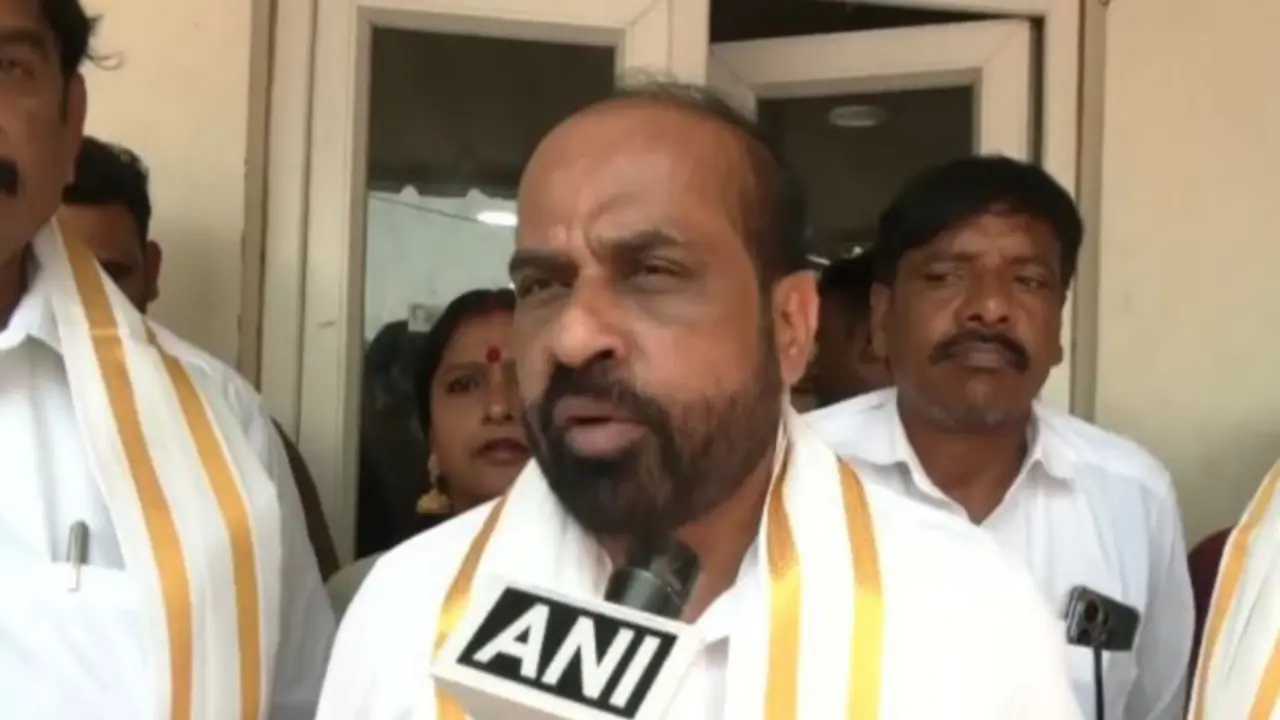
Andhra Pradesh Health Minister Satya Kumar Yadav welcomed the Women's Reservation Bill. The Centre plans to amend the Nari Shakti Vandan Act, using the 2011 census for delimitation to provide 33% reservation for women in an expanded Lok Sabha.
Satya Kumar Yadav, State Health Minister of Andhra Pradesh, on Sunday welcomed the Centre's move to introduce the Women's Reservation Bill, Nari Shakti Vandan Adhiniyam, during the special session of Parliament, stating that it marks a historic step towards ensuring 33% reservation for women in legislatures. "We welcome the decision taken by the Prime Minister and the NDA government at the Centre of bringing in the 'Nari Shakti Vandan Adhiniyam' in this special session of Parliament, which provides 33% reservation to women," Yadav said.
Calling it a transformative reform, he said the decision goes beyond politics. "This is not a political decision, but it's a social revolution... Now, with this special session on passing the bill, it will make the dream of providing 33% reservation to women a reality...," he said.
Parliament Session to Fast-Track Women's Reservation
The Parliament is set to meet for a three-day special session starting April 16, with a focus on the Women's Reservation Amendment Bill.
The Government has planned two major amendments. 2023's Nari Shakti Vandan Act tied women's reservation to the new census and delimitation. Due to census delays, the plan is to proceed with the 2011 census data. The 2011 census is to be the basis for delimitation and seat redistribution.
A bill will be introduced in Parliament to amend the Nari Shakti Vandan Act. A separate Delimitation Bill will be introduced. Both bills need to be passed as Constitutional amendments for women's reservation.
Lok Sabha Expansion and Reservation Details
Lok Sabha seats may increase from 543 to 816 post-amendment. The new Lok Sabha is likely to have more than 800 seats.
Keeping up with the status quo, there is no provision for OBC reservation, and SC/ST reservation will continue. However, states won't have a role; the bill passed by Parliament will apply to them.
Currently, the Lok Sabha has 543 seats. With a proposed 50 per cent increase, the number of seats will rise to 816, with 273 (about a third) reserved for women.
The government's key point is that they won't wait for a new census to give women, comprising half the country's population, fair representation in Parliament. Instead, delimitation will be done using the 2011 census data. (ANI)
(Except for the headline, this story has not been edited by Asianet Newsable English staff and is published from a syndicated feed.)