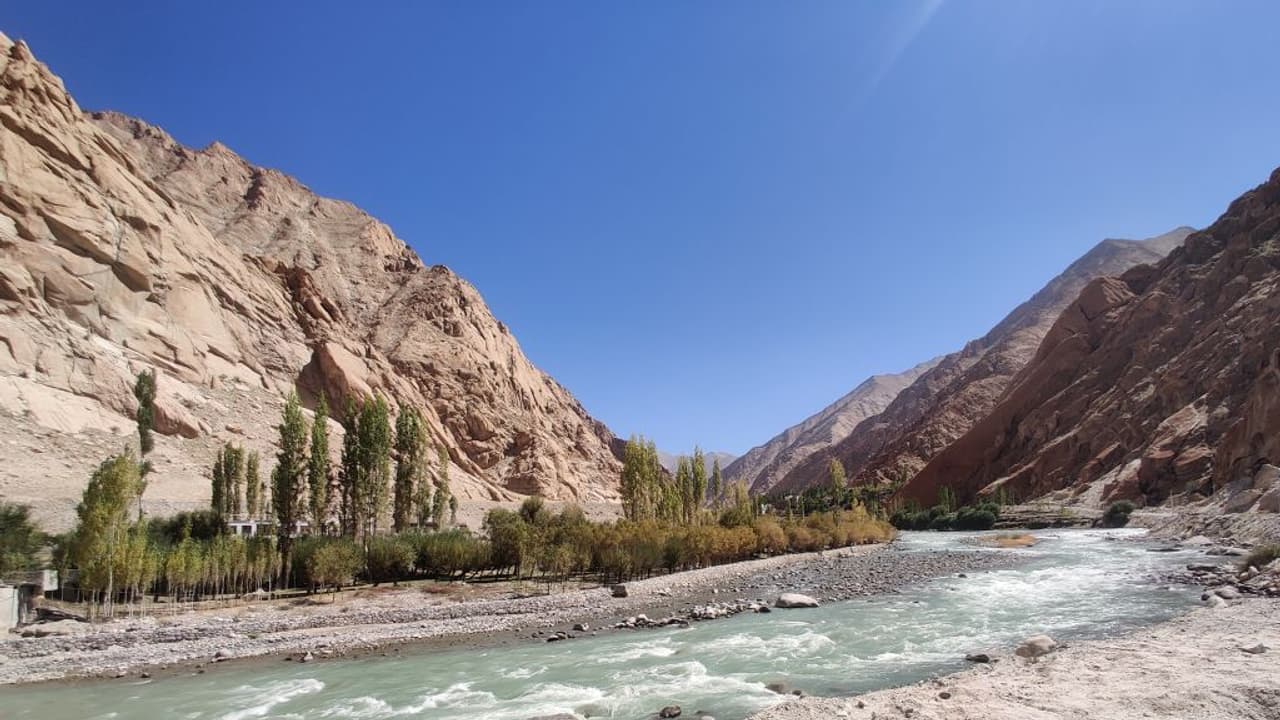
The treaty's suspension would considerably affect Pakistan, as this agreement regulates the usage and allocation of water from the Indus River system and its tributaries, which are essential for Pakistan's water requirements and agricultural sector.
India on Wednesday suspended the Indus Waters Treaty (IWT), striking one of the harshest blows yet to Pakistan amidst escalating tensions following the terror attack in Jammu and Kashmir's Pahalgam. The decision, taken during a high-stakes meeting of the Cabinet Committee on Security (CCS) chaired by Prime Minister Narendra Modi, signals a seismic shift in New Delhi's approach to cross-border provocations.
What makes this action particularly historic is the resilience the 1960 treaty has demonstrated over the decades. Despite surviving three wars—in 1965, 1971, and the Kargil conflict—as well as numerous terror strikes, India had chosen to uphold the pact, citing humanitarian obligations.
The suspension means that the flow of water from the western rivers—Indus, Jhelum, and Chenab—will be halted wherever India exercises control through dams or water-regulating infrastructure. While natural flows will continue uninterrupted, this calculated move is expected to severely impact irrigation and drinking water supplies in Pakistan’s Punjab and Sindh provinces—regions critically dependent on these rivers during the parched summer months.
Related Articles

What is Indus Water Treaty
A Treaty Tested by Time Signed on September 19, 1960, the Indus Waters Treaty was a rare beacon of cooperation between arch-rivals India and Pakistan. Brokered by the World Bank after nearly a decade of arduous negotiations, the accord was inked by Indian Prime Minister Jawaharlal Nehru and Pakistani President Ayub Khan, marking an ambitious attempt to ensure equitable water-sharing.
Under its provisions, India retained exclusive rights over the eastern rivers—Ravi, Beas, and Sutlej—while Pakistan was allotted the waters of the western rivers. The treaty provided Pakistan with nearly 80% of the total water flow from the Indus basin—vital for sustaining its agricultural lifeline, particularly in its agrarian heartlands.
The World Bank has long hailed the treaty as a model framework for transboundary water management, enabling both countries to harness their river resources for agriculture, energy, and human consumption while reducing the risk of water-related conflict.
How will Indus Water Treaty suspension impact Pakistan?
The treaty's suspension would considerably affect Pakistan, as this agreement regulates the usage and allocation of water from the Indus River system and its tributaries, which are essential for Pakistan's water requirements and agricultural sector.
The Indus River network, comprising the Jhelum, Chenab, Ravi, Beas, and Sutlej rivers, serves as Pakistan's principal water resource, supporting a population of tens of millions.
The treaty will impact Pakistan as it receives about 80% of the total water flow, which are vital for agriculture in Pakistan, especially in the provinces of Punjab and Sindh.
Pakistan relies substantially on this water supply for irrigation, farming and potable water.
The agricultural sector contributes 23% to Pakistan's national income and supports 68% of its rural inhabitants.
The Indus basin supplies 154.3 million acre-feet of water yearly, which is vital for irrigating extensive agricultural areas and ensuring food security.
Any interruption to water flow would significantly impact Pakistan's agricultural sector, a crucial component of its economy and rural livelihoods.
Reduced water availability will likely lead to lower crop yields, food shortages, and economic instability in rural areas dependent on farming.
Pakistan already faces critical water management issues such as groundwater depletion, salinization of agricultural lands, and limited water storage capacity.
The country’s water storage capacity is low, with major dams like Mangla and Tarbela having a combined live storage of only about 14.4 MAF, which is just 10% of Pakistan’s annual water share under the treaty.
The suspension exacerbates these vulnerabilities by cutting off a guaranteed water supply, leaving Pakistan with fewer options to manage its water needs.