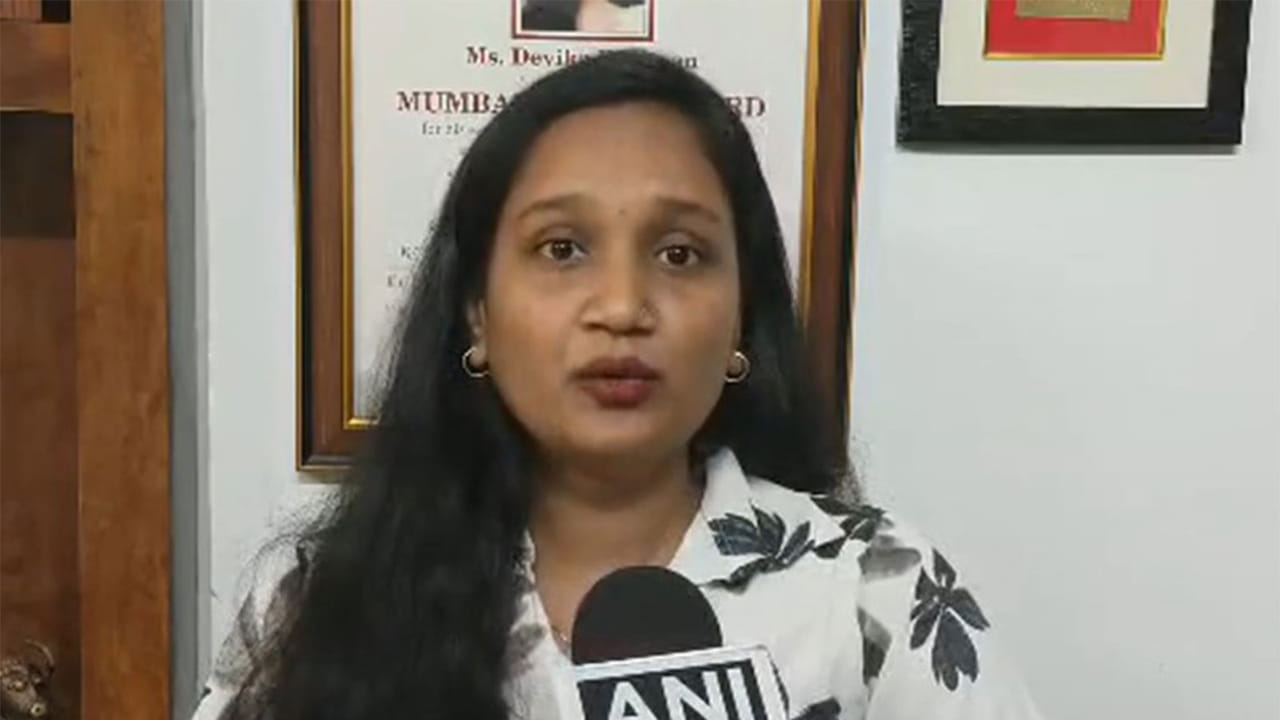
Survivor Devika Rotawan marks 18 years since the 26/11 Mumbai attacks, recounting her survival from Ajmal Kasab's gunfire at CST and reiterating her plea for the masterminds behind the tragedy to be held accountable for their actions.
Mumbai (Maharashtra) [India], November 26 (ANI): Eighteen years after the 26/11 Mumbai terror attacks, survivor and key eyewitness Devika Rotawan recalled the night she was shot by terrorist Ajmal Kasab at Chhatrapati Shivaji Terminus (CST) when she was just nine years old, saying the memories of the horrific incident remain vivid, while calling for justice against the masterminds behind the attacks.
Recalling the night of November 26, 2008, Rotawan said she was travelling to Pune to visit her elder brother when she was caught in the terror attack at CST, where she witnessed Kasab and was shot in the leg. "It has been 18 years since 26/11, yet my memories remain as vivid as ever. I still haven't forgotten that harrowing night. That day, I was on my way to Pune to visit my elder brother. I was shot at Chhatrapati Shivaji Terminus (CST). My father was with me; he saw both terrorists, and I saw Ajmal Kasab," she said.
Recalling her identification of Kasab during the trial, she said, "On June 10, 2009, I identified him in court, my father had identified him first, followed by me. Kasab's bullet struck my legs." Rotawan said Kasab's execution brought her some relief but maintained that the masterminds behind the attacks, whom she accused of operating from Pakistan, must also face punishment. "Kasab was executed, and that brings me some relief, but it feels as though he was merely a mosquito that was swatted away. The real masterminds, those sitting in Pakistan, nurturing and creating people like Kasab, will only truly face justice when they, too, are executed or punished," she added.
Describing her experience as a nine-year-old who did not understand terrorism, Rotawan said "At nine years old, I didn't even know the word 'terrorism' or what it meant. All I knew was that I saw a man holding a large gun, firing indiscriminately. He seemed to derive pleasure from killing people. A bullet struck my right leg, and I collapsed, losing consciousness," she said. "My father fell on top of me. He later told me that a police officer and a Ticket Collector had taken me to hospital," she said. Reflecting on how the incident changed her life, she added, "On June 10, 2009, I testified against Kasab in court. Becoming a witness completely altered the course of my life."
Survivor Recalls Panic at Railway Station
Another survivor of the 26/11 attacks, Taufiq Shaikh, who was working as a tea seller at Chhatrapati Shivaji Terminus (CST) at the time, also recalled the panic at the railway station. Recalling the events of that night, Shaikh said he had stepped out to collect money for tea and was standing near a medical store when he heard what initially sounded like a firecracker. "Today is the 18th anniversary, it's been 18 years and I haven't been able to sleep. I didn't know when Kasab arrived. I had gone to get money for tea. There was a huge crowd. The officials told me to wait outside and come in later. So I came outside and was standing there talking in front of the medical store. Then I heard a sound like a firecracker going." He said the ongoing India-England cricket match initially made him believe that India had won, but the scene around him soon revealed to be a terror attack. "It was the India and England match. So I thought India had won. But when I looked, there wasn't even a police officer there, nobody, just a stampede going on, so I started shouting, run, run, a bomb has exploded, get out from the back," Shaikh recalled.
This year marks 18 years since terrorists from the Pakistan-backed Lashkar-e-Taiba (LeT) unleashed mayhem on the streets of India's financial capital, Mumbai. Commonly referred to as 26/11, these coordinated assaults by a group of 10 terrorists sent shockwaves through the nation and the world. The terrorists had entered the city of Mumbai on the night of November 26, 2008, via sea route and over the course of four days, they killed 166 people and injured 300, in some of the busiest parts of the city. The scars left by the tragic event continue to haunt those who witnessed it and the families who lost their loved ones. The bullet marks at Leopold Cafe and Nariman House, the bust of Assistant Sub-Inspector Tukaram Omble, who gave up his life while capturing the lone surviving Pakistani terrorist Mohammad Ajmal Amir Kasab, and the streets of south Mumbai keep alive the memory of the gruesome terror attack. The nine LeT terrorists were killed while Kasab was arrested. In May 2010, Kasab was awarded death penalty, and two years later, he was hanged in a maximum-security prison in Pune. (ANI)