- Home
- World
- 5 Key Demands in Putin’s Ukraine Peace Deal — What Each Means for Kyiv, Moscow, And Implications Behind Every Demand
5 Key Demands in Putin’s Ukraine Peace Deal — What Each Means for Kyiv, Moscow, And Implications Behind Every Demand
Following the August 15, 2025 summit in Alaska where Vladimir Putin met with U.S. President Donald Trump, various briefings have highlighted a series of tough demands that Moscow is pushing forward. Here’s what’s on offer, and why each matters.
Full control of Donbas
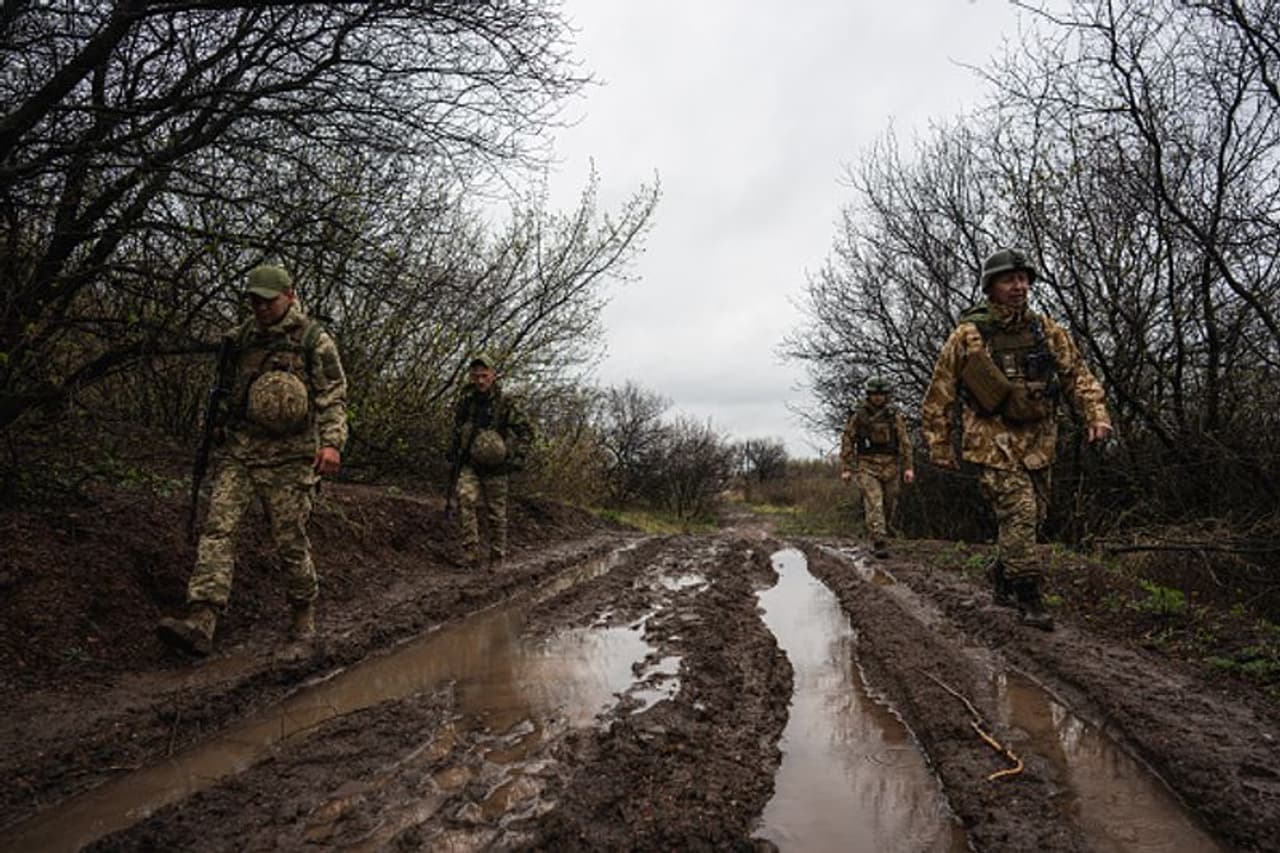
Moscow is demanding that Ukrainian troops pull back entirely from the remaining areas of Donetsk and Luhansk, effectively granting Russia complete authority over the entire Donbas region. The demand would force Kyiv to cede heavily guarded cities and defensive lines that Russia has struggled to crack after years of fighting.
Experts point out that Russia aims to claim the last quarter of this partially held territory, converting a prolonged military deadlock into a formalized diplomatic victory. Strategically, this would lock in a major industrial basin and shorten Russia’s front, but it would also give Moscow a stronger base for pressure down the line.
For Ukraine, the tradeoff isn’t just land, but it’s also leverage, deterrence, and a precedent that borders can be changed by force, a calculation that resonates far beyond the Donbas.


Recognition of Crimea as Russian territory
Putin wants Kyiv to formally recognize the 2014 capture of Crimea as Russian sovereignty, an outcome Ukraine and much of the international community have resisted since day one. This demand continues to be an absolute no-go for Kyiv and much of Europe, while Moscow portrays it as an essential and unyielding aspect of its national sovereignty and defense.
Accepting this would normalize a fait accompli and rewrite the rules that have underpinned European security since the Cold War. Beyond symbolism, it would codify Russia’s control over a pivotal Black Sea hub and set a template for coercive territorial change that other actors could try to emulate.
No NATO membership for Ukraine
Ukraine should abandon its NATO bid. Moscow casts the alliance as a security threat, while hinting that “alternative guarantees” might substitute for Article 5. There have been talks in Washington about establishing alternative collective security arrangements beyond NATO, presented as a potential compromise, though specifics on how they would be enforced remain entirely unclear.
For Ukraine, shelving NATO would close a long‑sought anchor in Euro‑Atlantic structures and replace it with softer, likely reversible promises. For Europe, it would reshape the continent’s security map that includes a large frontline state left outside the treaty umbrella, reliant on politics and bilateral deals at precisely the moment resolve tends to get tested.
Language and religious protections
The plan reportedly includes official status for the Russian language and guarantees allowing the Moscow‑linked Orthodox Church to operate freely in Ukraine.
Kyiv has leveled charges against certain parts of that church for supporting Moscow’s propaganda and operations in the conflict, accusations that the religious body itself firmly rejects. The protections Russia seeks would constrain Ukraine’s ability to police those lines during and after conflict.
Limited Russian pullback in exchange for concessions
Russia signals it could “freeze” current front lines in Kherson and Zaporizhzhia and withdraw from small occupied pockets in the northeast, but only after Kyiv accepts the other terms.
Importantly, this proposed arrangement includes no upfront halt to fighting, meaning active combat would persist right up until all the stipulated requirements have been fully satisfied. The effect would be to consolidate a land bridge to Crimea while offering narrowly tailored withdrawals elsewhere.
In practice, a freeze on those southern fronts would hard‑code substantial territorial losses for Ukraine, including critical infrastructure and agricultural zones, while relieving pressure on Russia’s force posture.
In essence, Kyiv would end up exchanging lasting territorial concessions in the southern regions for temporary and potentially undoable moves in the northeast, an exchange crafted to appear as genuine de-escalation while preserving the fundamental dynamics of the ongoing conflict.
Check the Breaking News Today and Latest News from across India and around the world. Stay updated with the latest World News and global developments from politics to economy and current affairs. Get in-depth coverage of China News, Europe News, Pakistan News, and South Asia News, along with top headlines from the UK and US. Follow expert analysis, international trends, and breaking updates from around the globe. Download the Asianet News Official App from the Android Play Store and iPhone App Store for accurate and timely news updates anytime, anywhere.