- Home
- Sports
- T20 World Cup 2026: 3 Ducks on the Trot - What’s Behind Abhishek Sharma’s Slump in Form?
T20 World Cup 2026: 3 Ducks on the Trot - What’s Behind Abhishek Sharma’s Slump in Form?
Indian opener Abhishek Sharma is facing a nightmare run at the T20 World Cup, recording three consecutive ducks and raising concerns over his form in the tournament.
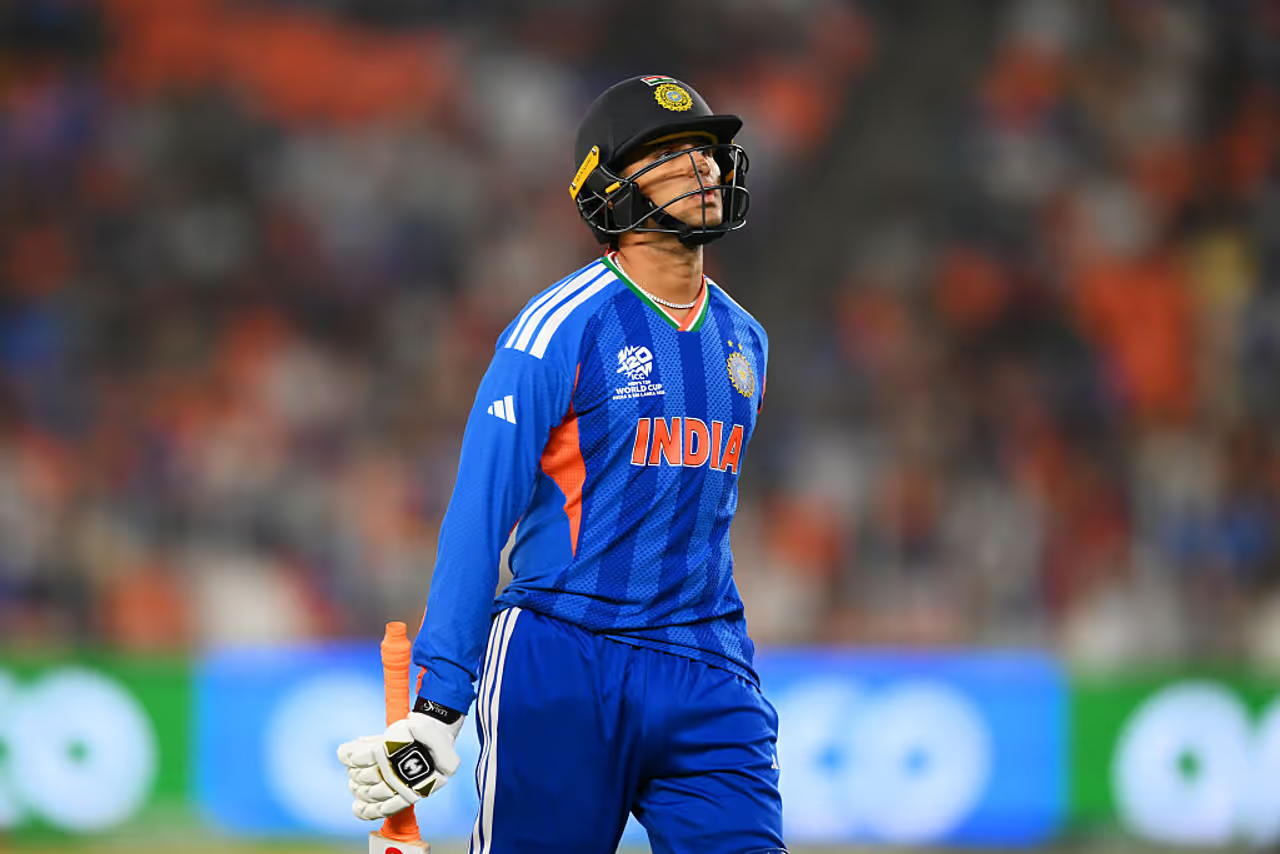
Abhishek Sharma's Nightmare Run of Form Continues
Team India opener Abhishek Sharma has once again been dismissed for a duck in the Men in Blue’s final group stage match of the T20 World Cup 2026 against the Netherlands at the Narendra Modi Stadium in Ahmedabad on Wednesday, February 18.
This was his third consecutive duck of the tournament for Abhishek Sharma, having previously been dismissed without a run against the USA and Pakistan. The southpaw’s string of poor performances in the tournament must have raised concerns in India camp as he is considered one of the players for the Men in Blue’s quest for the T20 World Cup title defence.
As Abhishek Sharma’s inconsistent performance raised serious concerns, let’s look at the key factors behind his slump in form during the T20 World Cup.


1. After-Effect of his Stomach Infection
The major factor behind Abhishek Sharma’s rare dip in form could be attributed to health and fitness after being diagnosed with a stomach infection. The southpaw was admitted to the local Delhi hospital due to a stomach infection and was under medical observation for two days before being discharged, and he was ruled out of the clash against Namibia at the Arun Jaitley Stadium in New Delhi.
It was reported that Abhishek lost two kgs while recovering from a severe stomach infection, leaving him physically drained and short of match fitness during a crucial phase of the T20 World Cup. Though the 24-year-old trained hard in the nets, his preparations appeared to have hampered by after-effect of illness, including stamina and endurance, which could have been attributed to ack of rhythm and timing at the crease.
2. Pressure of Going Aggressive
Abhishek Sharma has been entrusted with the task of going aggressive in the powerplay, as he has often dominated the first six overs with his fearless approach. However, it appears that an ultra-aggressive mandate at the top of the batting order has also increased the margin of error. India’s batting coach Sitanshu Kotak stated that ‘high-risk, high-reward’ has contributed to Abhishek's failures.
This aggressive mindset, which previously made him the second-fastest Indian batter to score 1000 T20I runs and score the majority of the runs in the powerplay, has resulted in a ‘boom-or-bust’ cycle where he has recorded five ducks in the last seven T20I innings, including the final group stage match against the Netherlands. This highlights how his high-risk approach, one of his bigger strengths, is now leading to frequent early dismissals under pressure.
3. Tactical Targeting by Opposition Bowlers
In the matches against Pakistan and the Netherlands, opponents have used spin bowling early in the powerplay to deny him pace on the ball, attack stumps with tight lines, and exploit his intent to attack from the outset, leading to mistimed strokes and early dismissals. In the match against the Netherlands, spinner Aryan Dutt used subtle variations in pace and a flatter trajectory to rush Abhishek for a room, leading to his dismissal for a duck.
The struggle to face the spinners with the new ball has exposed a technical vulnerability early in his innings, preventing him from setting and building momentum in the powerplay. Abhishek Sharma has scored 134 runs at an average of 33.5 and a strike rate of 176.31 against spinners in the powerplay, but his recent tactical targeting has disrupted his timing and confidence, leading to a string of dismissals.
4. Lack of Crease Time
One of the key factors behind Abhishek Sharma’s slump in form could be a lack of time at the crease. Having faced just five balls in his first two outings against the USA and Pakistan before his 3-ball duck against the Netherlands, he has been unable to settle, build rhythm, or gain confidence, amplifying his impact on fitness and technical issues.
A lack of gametime at the crease could have contributed to southpaw’s inability to regain form, timing, and confidence, leaving him prone to early dismissals under pressure. Batting in the nets cannot necessarily replicate the match intensity, pressure, or the strategic plans of the opposition bowlers, meaning Abhishek Sharma’s shot selection and rhythm in real matches have been inconsistent in the tournament so far.
5. Pressure of World No.1 T20I Batter
Another key factor behind Abhishek Sharma’s rare slump in form could be the pressure of being the World No. 1 T20I batter. The swashbuckling left-handed batter entered the T20 World Cup as the top batter in the world, and with the spotlight on him, given his aggressive hitting and consistency at the top of the order, he has created added expectations from the fans and media.
Former India head coach Ravi Shastri has urged Abhishek Sharma, following his duck dismissal against Pakistan, to give himself a little bit of time and focus on the mental side of the batting as the world's top-ranked player, rather than forcing shots too early. The pressure of being the World No.1 batter could have added pressure on Abhishek to perform instantly in every match, forcing risky shots and disrupting his natural rhythm, leading to his string of early dismissals.
Stay on top of all the latest Sports News, including Cricket News, Football News, WWE News, and updates from Other Sports around the world. Get live scores, match highlights, player stats, and expert analysis of every major tournament. Download the Asianet News Official App from the Android Play Store and iPhone App Store to never miss a sporting moment and stay connected to the action anytime, anywhere.