Why is Janmashtami Celebrated? All You Need to Know About Lord Krishna’s Birthday
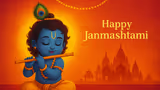
Janmashtami, the celebration of Lord Krishna’s birth, marks the divine arrival of the eighth avatar of Vishnu who ended evil and restored dharma. This auspicious festival is observed with fasting, devotional songs of Krishna’s life across India.
Why is Janmashtami Celebrated?
Janmashtami celebrates the divine birth of Lord Krishna in Mathura, over 5,000 years ago. According to Hindu mythology, Krishna was born to Devaki and Vasudeva at midnight in a prison cell, during a time when the cruel king Kansa, Devaki’s brother, ruled the region.
Prophecies had predicted that Devaki’s eighth son would be the cause of Kansa’s downfall. Out of fear, Kansa imprisoned Devaki and Vasudeva and killed their first seven children. However, when Krishna was born, divine intervention helped Vasudeva smuggle the newborn to safety across the Yamuna river to Gokul, where he was raised by Yashoda and Nanda Maharaj.
Lord Krishna later grew up to overthrow Kansa and played a central role in the Mahabharata, guiding Arjuna with his timeless teachings in the Bhagavad Gita.


When is Janmashtami Celebrated?
Janmashtami, also known as Krishna Janmashtami or Gokulashtami, is one of the most widely celebrated Hindu festivals in India and across the world. It marks the birth of Lord Krishna, the eighth incarnation (avatar) of Lord Vishnu, who is considered the preserver of the universe in the Hindu trinity.
Janmashtami is celebrated on the eighth day (Ashtami) of Krishna Paksha in the month of Shravana or Bhadrapada (August–September), according to the Hindu lunar calendar. In 2025, Janmashtami will be observed on August 16.
Significance of Krishna’s Birth
Lord Krishna is revered for his divine wisdom, charm, mischief, and unconditional love. His birth is seen as a symbol of the victory of good over evil, and the festival reminds devotees of the power of dharma (righteousness), love, and truth.
How is Janmashtami Celebrated?
Celebrations vary across regions on Janmashtami, but key customs include:
Fasting and Devotional Singing: Devotees observe a day-long fast, sing bhajans, and chant Krishna’s name until midnight, the time of his birth.
Midnight Celebrations: At temples and homes, idols of baby Krishna are bathed, dressed, and placed in decorated cradles at midnight. Devotees sing aarti and break their fast with prasad.
Dahi Handi: In Maharashtra and parts of North India, groups form human pyramids to break a hanging pot of curd or butter (Dahi Handi), reenacting Krishna’s childhood pranks of stealing butter.
Rasa Lila & Drama Performances: In Mathura, Vrindavan, and Manipur, dramatic reenactments of Krishna’s life, called Rasa Lila, are performed with great devotion.
Global Celebrations
Janmashtami is celebrated not just in India but globally—especially by the ISKCON (International Society for Krishna Consciousness) community. Cities like London, New York, and Melbourne host elaborate processions, temple gatherings, and cultural performances.
Janmashtami is more than a celebration of Lord Krishna’s birth—it’s a spiritual reminder of love, compassion, and the triumph of good over evil. Through fasting, prayer, and festive rituals, devotees across the world reconnect with one of Hinduism’s most beloved deities in a vibrant and joyful celebration of divine presence.
Explore the latest Lifestyle News covering fashion, wellness, travel, Food and Recipes, and more. Stay updated with trending Health News, fitness tips, and expert insights to inspire your daily living. Discover personalized lifestyle trends that keep you stylish and informed. Download the Asianet News Official App from the Android Play Store and iPhone App Store for everything that adds value to your everyday life.