
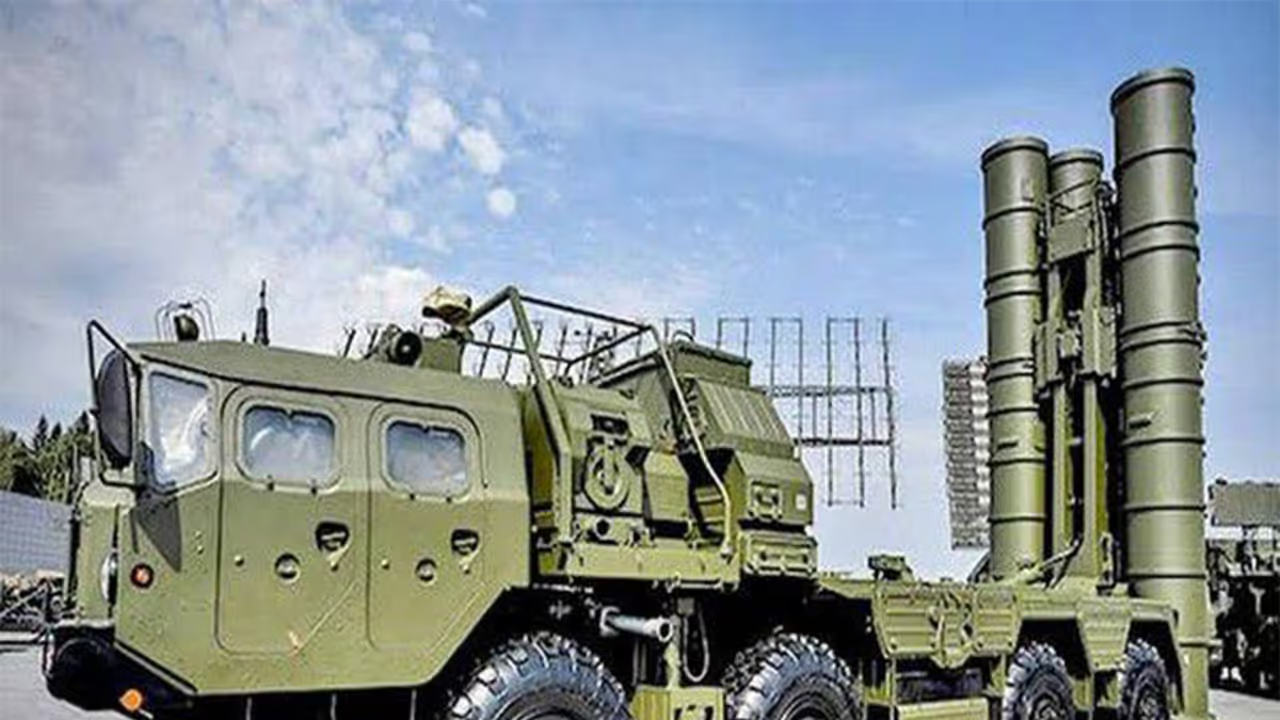
Zen Technologies has received an arms manufacturing licence from the Indian government to produce 12.7mm to 40mm cannons. The move aims to strengthen India's indigenous defence capabilities, especially in air defence and counter-drone systems.
The Government of India has granted an arms manufacturing licence under the Arms Act, 1959, for the production of 12.7mm, 23mm, 30mm and 40mm cannons, to Zen Technologies. The move is aimed at strengthening the country's indigenous defence manufacturing ecosystem.
Strategic Importance of Rapid-Fire Cannons
The licence covers rapid-fire cannon systems that are widely used in air defence, naval operations and counter-unmanned aircraft system (C-UAS) roles. These weapon systems are considered crucial in providing last-layer protection against evolving aerial threats, including drones, loitering munitions and low-flying hostile platforms.
According to a press release issued by Zen Technologies, the authorised systems are expected to significantly enhance India's capability to safeguard critical infrastructure, forward areas, armoured formations and strategic installations.
The cannons, when integrated with modern fire-control systems, radar networks, electro-optical and infrared sensors, and programmable ammunition, can deliver high levels of accuracy, responsiveness and cost-efficiency in real-time combat scenarios.
A Push for Self-Reliance in Defence
The decision reflects the government's continued emphasis on achieving self-reliance in defence production and reducing dependency on imports.
The initiative aligns with the broader Indigenous Design, Development and Manufacturing (IDDM) framework, which prioritises domestically developed and produced defence systems.
Addressing Modern Threats and Boosting Economy
Recent conflicts have underscored the growing role of drones, swarm attacks and asymmetric aerial threats, prompting countries to invest in layered and adaptive air defence solutions. In this context, rapid-fire cannons serve as an effective and economical countermeasure, particularly in close-range engagement scenarios.
The move is expected to contribute to the development of a robust domestic defence industrial base, encouraging innovation, technology development and manufacturing within the country. It may further support job creation and strengthen supply chains linked to advanced defence production.
Overall, the granting of the licence marks a step forward in India's efforts to modernise its defence preparedness while promoting indigenous capabilities to address emerging security challenges.
(Except for the headline, this story has not been edited by Asianet Newsable English staff and is published from a syndicated feed.)