
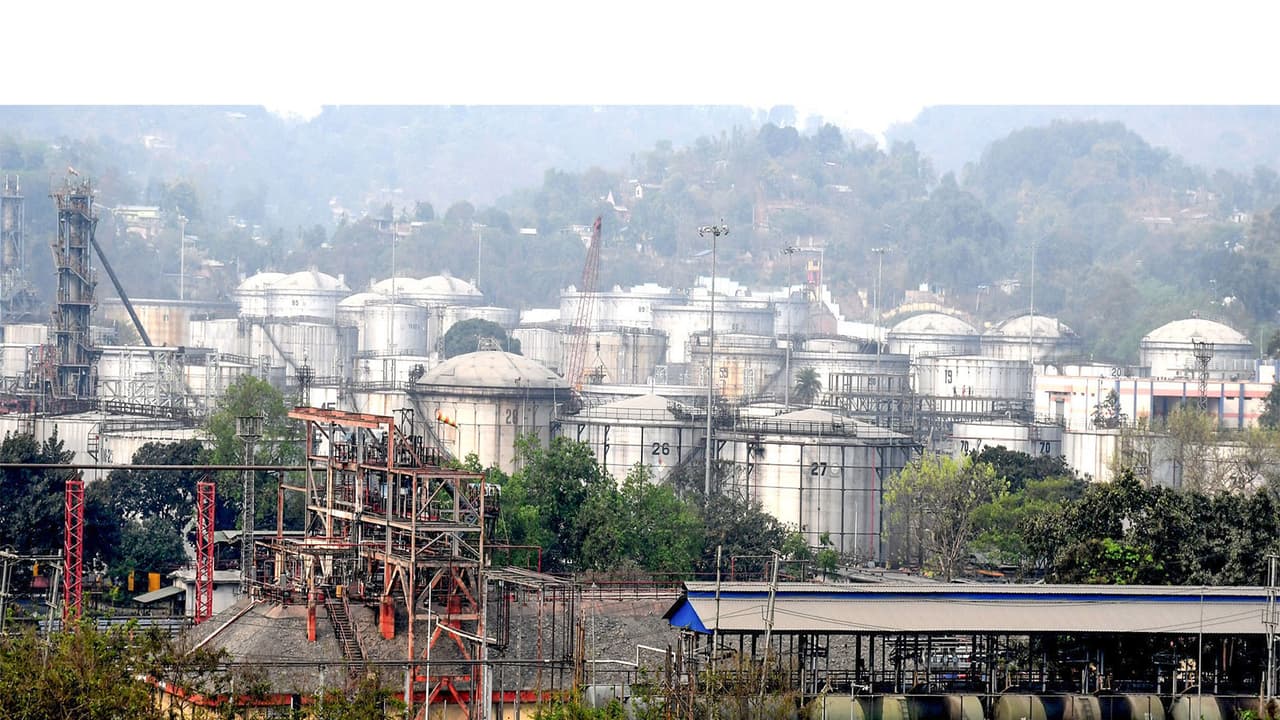
Missile strikes on Qatar's Ras Laffan city cut LNG exports by 17%, causing a USD 20 billion annual revenue loss. Repairs may take five years, forcing force majeure declarations and raising energy security concerns for India, a major importer.
Missile attacks on Qatar's Ras Laffan Industrial City have significantly disrupted global energy supplies, reducing the country's liquefied natural gas (LNG) export capacity by 17 per cent and raising concerns for import-dependent nations like India. In an official statement, QatarEnergy said the strikes, which occurred on March 18 and early March 19, 2026, caused extensive damage to key production facilities and are expected to result in an estimated loss of USD 20 billion in annual revenue. The company added that repairs could take up to five years, forcing it to declare long-term force majeure on some LNG contracts.
Providing an update, Minister of State for Energy Affairs and QatarEnergy President and CEO Saad Sherida Al-Kaabi said "The missile attacks reduced Qatar's LNG export capacity by 17 per cent and caused an estimated loss of USD 20 billion in annual revenue- Extensive damage to our production facilities will take up to five years to repair and will compel us to declare long-term force majeure"
Impact on India's Energy Security
The disruption has raised concerns for India, which relies heavily on Qatar for its energy needs. Official data from the Petroleum Planning & Analysis Cell (PPAC) and the Ministry of Commerce shows that Qatar accounts for nearly half of India's LNG imports. In 2024, India imported about 27.8 million metric tonnes (MMT) of LNG, with Qatar supplying 11.30 MMT worth USD 6.40 billion, representing nearly 47 per cent of total LNG imports.
Official 2025-26 data from the Petroleum Planning & Analysis Cell (PPAC) and the Ministry of Commerce also confirmed that Qatar remains India's primary gas supplier The ongoing disruption is expected to increase vulnerability for India's energy imports amid rising geopolitical tensions, as reduced supply from its largest supplier could impact availability and pricing in the domestic market.
Details of Damaged Facilities
As per official statement by Qatar, the attacks damaged two liquefied natural gas (LNG) producing Trains 4 and 6 totaling 12.8 million tons per annum (MTPA) of production, representing approximately 17 per cent of Qatar's exports. Train 4 is a joint venture between QatarEnergy (66 per cent) and ExxonMobil (34 per cent), and Train 6 is a joint venture between QatarEnergy (70 per cent) and ExxonMobil (30 per cent).
Minister Al-Kaabi said: "The damage sustained by the LNG facilities will take between three to five years to repair. The impact is on China, South Korea, Italy and Belgium. This means that we will be compelled to declare force majeure for up to five years on some long-term LNG contracts."
Pearl GTL Facility Targeted
The attacks also targeted the Pearl GTL (Gas-to-Liquids) facility, a production sharing agreement operated by Shell, that converts natural gas into high-quality cleaner burning drop-in fuels and produces base oils used to make premium engine oils and lubricants, and paraffins and waxes.
"The damage caused to one of the two trains at Pearl GTL is being assessed and is expected to be offline for a minimum of one year" Minister Al-Kaabi added. (ANI)
(Except for the headline, this story has not been edited by Asianet Newsable English staff and is published from a syndicated feed.)