
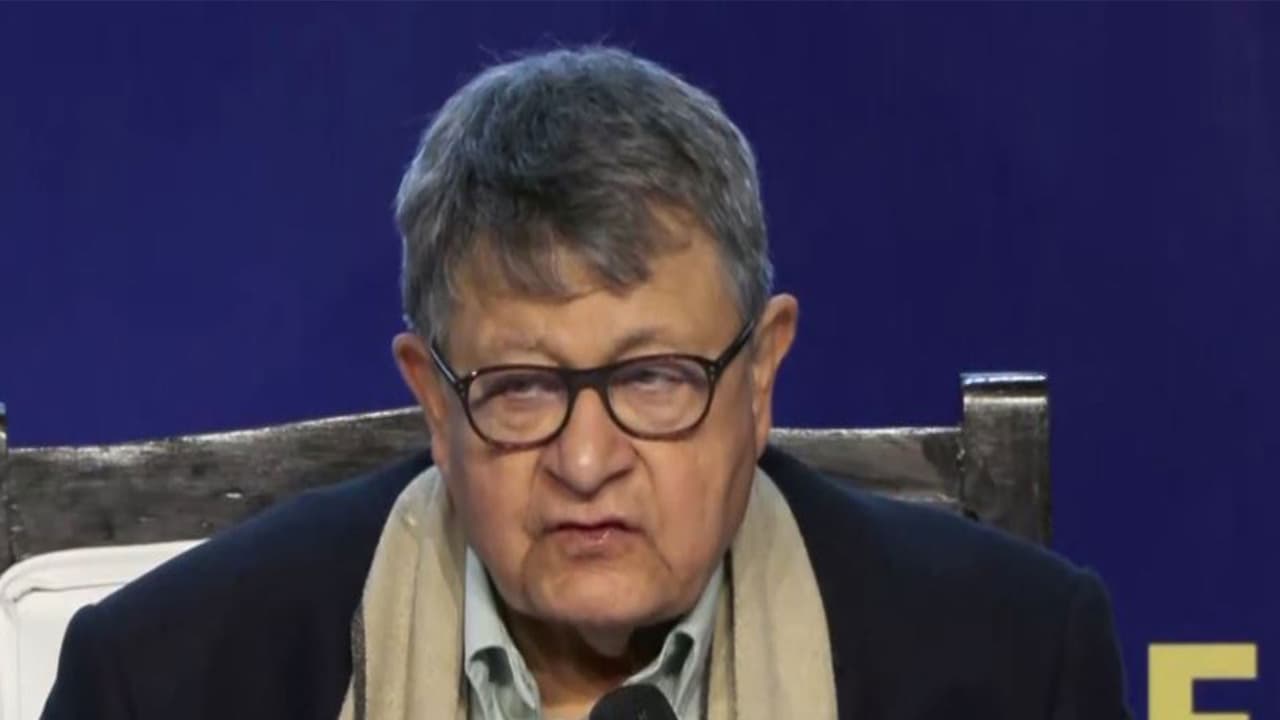
NITI Aayog VC Suman Bery said the global context for climate action has shifted since COP26, with net-zero now a guide for economic transition. He called for policy clarity, invoking the Tinbergen rule for a development-led transition.
Vice Chairman of NITI Aayog, Suman Bery, on Tuesday noted that concerns around competitiveness, affordability, and economic security have become increasingly central to climate discussions.
"While countries made a solemn commitment to net-zero emissions at the COP26 climate summit in Glasgow in 2021, the global context has shifted significantly since then," Bery said. "Here we are in 2026, and a lot of water has flowed under the bridge. The net zero should be viewed not just as an emissions target, but as guidance for a wider economic and technological transition," he said.
Call for Policy Clarity
Speaking at a release event of 'Viksit Bharat & Net Zero' sectoral reports on Transport, Industry and Power, Bery emphasised the need for greater clarity in India's climate and energy policy framework, invoking the Tinbergen Assignment Rule to argue that policymakers must clearly align policy instruments with well-defined goals.
He recalled that Dutch economist Jan Tinbergen, the first recipient of the Nobel Prize in Economics, had laid down the principle that to achieve N independent policy objectives, governments must deploy N independent policy instruments. Applying this logic to the current energy transition, Bery said India must be clear about whether its trajectory is focused narrowly on emissions reduction or on a broader development-led transition. "If we define our trajectory as building out capacity rather than only cutting emissions, then we need clarity on what exactly the goal is that we are trying to target," he said.
Prioritising Cost-Effective Abatement
Referring to earlier work conducted while he was at McKinsey, commissioned by former environment minister Jairam Ramesh ahead of the Copenhagen climate talks, Bery highlighted the concept of the low-cost abatement curve.
He argued that if climate policy is fundamentally about reducing carbon emissions, then priority should be given to the most cost-effective abatement options. "That would imply a more technology-agnostic approach than what we currently see," he said, cautioning against over-commitment to specific missions such as green hydrogen or carbon capture, utilisation and storage (CCUS) without sufficient evidence that they lie on the low-cost abatement path. (ANI)
(Except for the headline, this story has not been edited by Asianet Newsable English staff and is published from a syndicated feed.)