
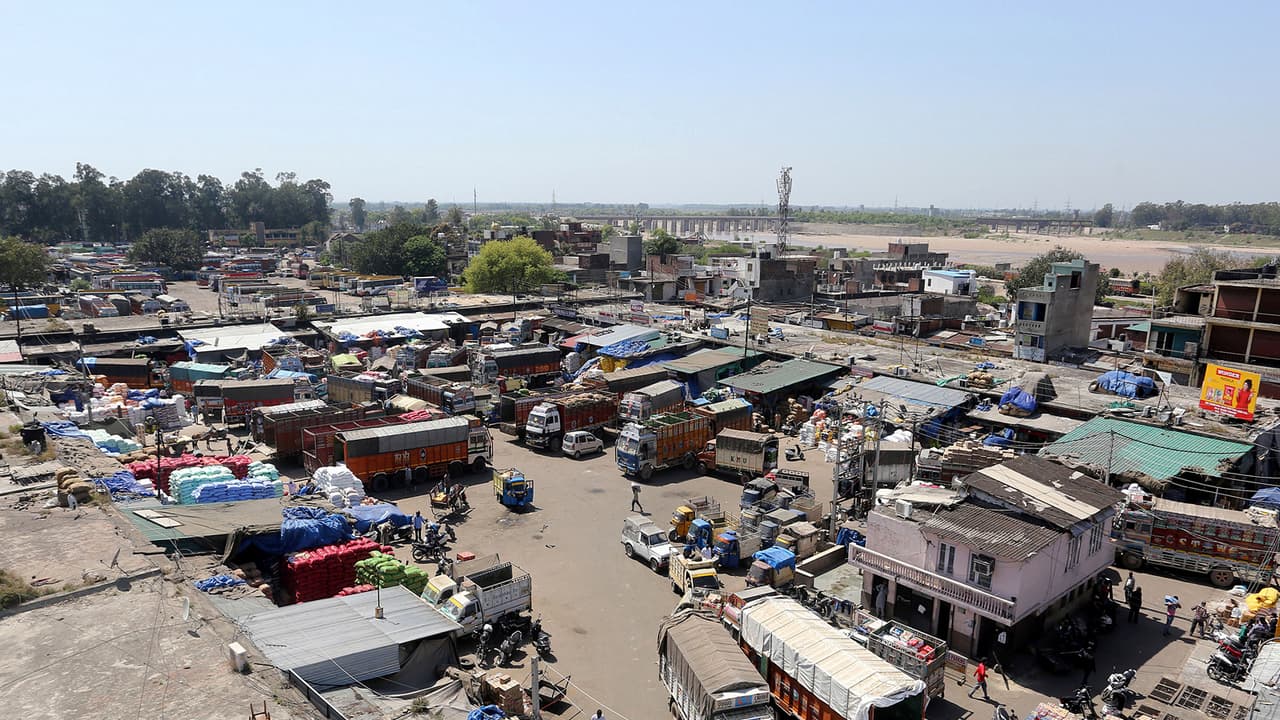
India's industrial and warehousing leasing grew 16% YoY in 2025 to 36.9M sq ft, says a Colliers report. 3PLs led demand, with Delhi NCR and Chennai contributing 46% of the activity. New supply also rose by 15% to 41.7M sq ft.
In 2025, India's industrial and warehousing sector demonstrated remarkable resilience, with leasing activity reaching 36.9 million sq ft across the top eight cities, marking a 16% year-on-year growth, as per a report by Colliers India. This surge was primarily driven by large-ticket transactions, which accounted for 45% of the total demand, particularly from Third-Party Logistics (3PL) providers.
Key Drivers of Demand
Delhi NCR and Chennai emerged as the primary engines of this growth, collectively contributing 46% of the annual leasing activity. While 3PL players maintained their dominance with a 32% share of the total Grade A space uptake, segments such as engineering and e-commerce also gained significant traction, cumulatively making up 35% of the year's demand.
Micro-Market and Quarterly Breakdown
"At a micro market level, Bhiwandi in Mumbai led the leasing activity in 2025 with about 4.9 million sq ft of Grade A space uptake, followed by Chakan-Talegaon in Pune and Oragadam in Chennai", the report stated. " On a quarterly basis, after a relatively modest third quarter, Q4 2025 saw about 10.4 million sq ft of industrial & warehousing demand. Chennai, closely followed by Pune, cumulatively accounted for 56% of the quarterly demand", the report added.
Notable Transactions and Sector Preferences
Specific high-profile transactions highlighted this momentum, such as Jabil Inc.'s 385,000 sq ft lease in Pune and DHL's 380,400 sq ft uptake in Chennai. Interestingly, the e-commerce sector showed a preference for massive fulfillment centers, with 61% of its quarterly uptake coming from large-scale deals. Conversely, the FMCG and retail segments focused on agility, with over two-thirds of their deals falling into the mid-sized category to support the rise of hyperlocal delivery services.
Market Projections by City Hubs
"Delhi NCR and Chennai each recorded over 8 million sq ft of demand in 2025, collectively contributing over 45% of the leasing activity. Concurrently, markets like Pune and Mumbai saw space uptake of around 5 million sq ft each. The demand for Grade A warehouses across these four primary industrial hubs was predominantly driven by 3PL and engineering firms. With well-established manufacturing clusters and superior infrastructure connectivity, we expect these markets to cumulatively account for 70-80% of industrial & warehousing demand in 2026 as well", says Vimal Nadar, National Director & Head, Research, Colliers India.
Supply Response and Vacancy Levels
On the supply side, developers responded to the robust demand with an impressive 41.7 million sq ft of new completions in 2025, representing a 15% annual increase. Delhi NCR led the construction activity, contributing 30% of the year's new supply. This surge in development reached a peak in Q4 2025, which saw 13 million sq ft of new space enter the market, a staggering 40% jump from the previous year's final quarter.
Despite this influx of supply, vacancy levels remained stable at approximately 16% as demand continued to outpace new additions in high-activity micro-markets. This competitive environment led to a rise in average rentals by 5-10% in prominent logistics clusters. Established hubs like Delhi NCR, Chennai, Mumbai, and Pune--which are currently dominated by 3PL and engineering firms--are projected to remain the primary drivers of the market, likely accounting for 70-80% of the total demand in 2026.
With developers maintaining an upbeat outlook and large-scale deals becoming more frequent, the industrial and warehousing landscape in India appears set for sustained expansion. (ANI)
(Except for the headline, this story has not been edited by Asianet Newsable English staff and is published from a syndicated feed.)