
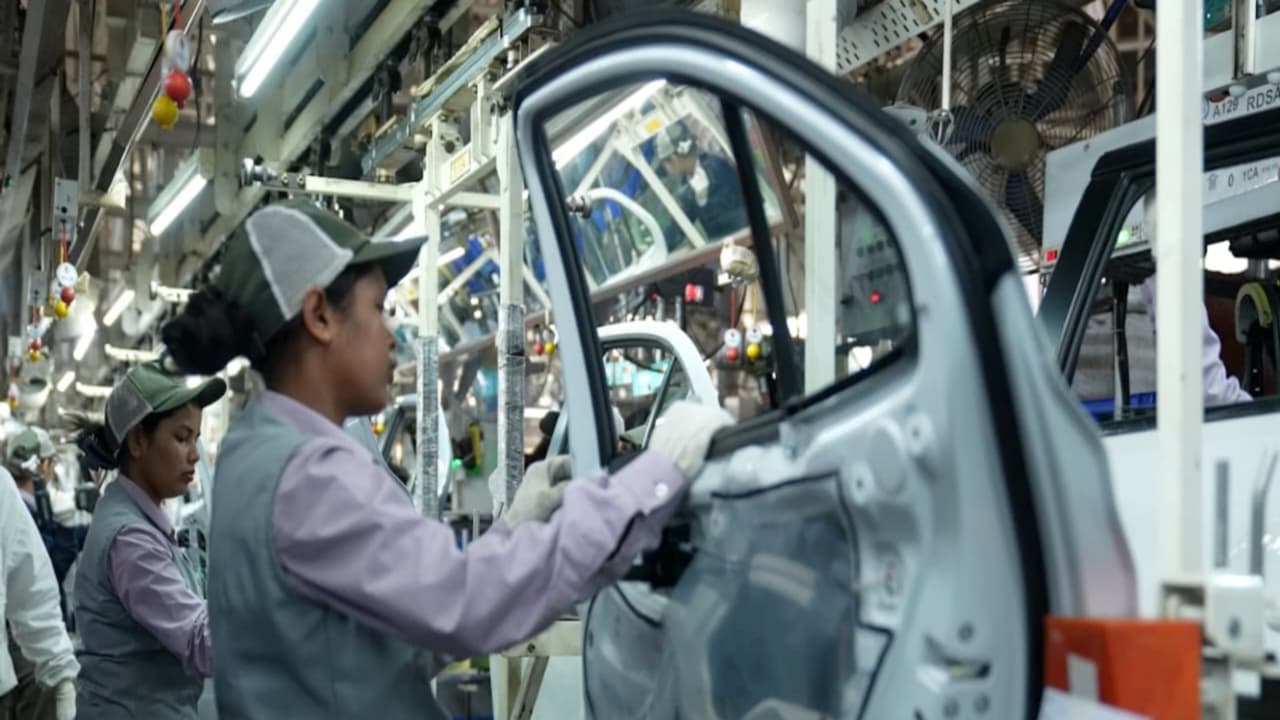
Despite moderated sentiment due to global uncertainties and rising costs, India's manufacturing sector is set for stable growth, with sectors like machine tools, metals, and automotive showing strong resilience, according to a FICCI survey.
India's manufacturing sector is expected to remain on a stable growth trajectory in the coming quarters despite heightened geopolitical tensions and rising input costs, with sectors such as machine tools, metal and metal products, automotive and auto components, and electronics continuing to show resilience, according to the latest quarterly survey by the Federation of Indian Chambers of Commerce & Industry (FICCI).
FICCI's Quarterly Survey on Indian Manufacturing Sector for Q1 FY2026-27 notes that manufacturing sentiment has moderated compared to the previous quarter owing to global uncertainties. The report states that the survey "reflects moderated sentiment for production compared to the previous quarter indicating the potential impact of the ongoing geopolitical situation," while adding that manufacturers' responses continue to reflect "overall positive sentiments and stable domestic fundamentals for manufacturing growth."
Sector-Specific Growth Outlook
Despite the moderation, FICCI expects several industries to outperform. According to the survey, Machine Tools and Metal & Metal Products have a "Strong to Moderate" growth outlook, while Automotive & Auto Components is expected to witness "Moderate to strong" growth. Electronics & Electricals and Capital Goods are projected to register moderate growth.
The metals sector emerged as one of the strongest performers in the survey. FICCI noted that "On average, the sector is utilizing more than 80% of its capacity," while "Nearly 80% of the respondents reported that they are planning to expand their capacity in the next 6 months." Additionally, 60 per cent of respondents in the sector are planning to hire additional workers over the next three months, highlighting sustained investment confidence despite external headwinds.
Electronics and electricals also remain relatively optimistic. The survey found that "Over 67% of the respondents reported that they are planning to expand capacity in the next 6 months," reflecting continued confidence in domestic demand and the long-term manufacturing ecosystem.
Capacity, Investment, and Geopolitical Headwinds
At the aggregate level, FICCI observed that the impact of geopolitical developments has been visible in production and demand indicators. The report noted that "The existing average capacity utilization in manufacturing is close to 72%, which is similar to the capacity utilization in the previous survey. The future investment outlook is steady for the next six months." However, it also identified challenges to expansion, including the "current geopolitical situation (tariffs, trade restrictions, demand uncertainty)," labour availability, raw material shortages, increasing logistics costs and regulatory challenges.
Mounting Production Costs
The survey also highlighted mounting cost pressures across industries. It said that "Nearly 79% of respondents reported an increase in the cost of production as a percentage of sales," compared with 70 per cent in the previous quarter, with higher raw material, energy, logistics and utility costs emerging as the principal drivers.
Moderate Growth in Other Industries
Meanwhile, Chemicals, Fertilizers & Pharmaceuticals and the Miscellaneous manufacturing segment remain relatively cautious, with FICCI assigning them a "Moderate to Low" growth outlook amid geopolitical volatility, elevated input costs, supply-chain disruptions and weaker investment and hiring intentions. Capital Goods and Textiles, Apparels & Technical Textiles are expected to post moderate growth, although expansion and recruitment plans remain subdued.
Overall, the survey suggests that while India's manufacturing sector continues to face challenges from global trade uncertainties and rising production costs, sectors linked to industrial capex, engineering and advanced manufacturing remain well-positioned to support growth. Manufacturers are largely prioritising operational stability while retaining confidence in India's medium-term manufacturing prospects underpinned by resilient domestic fundamentals. (ANI)
(Except for the headline, this story has not been edited by Asianetnews Editorial staff and is published from a syndicated feed.)