
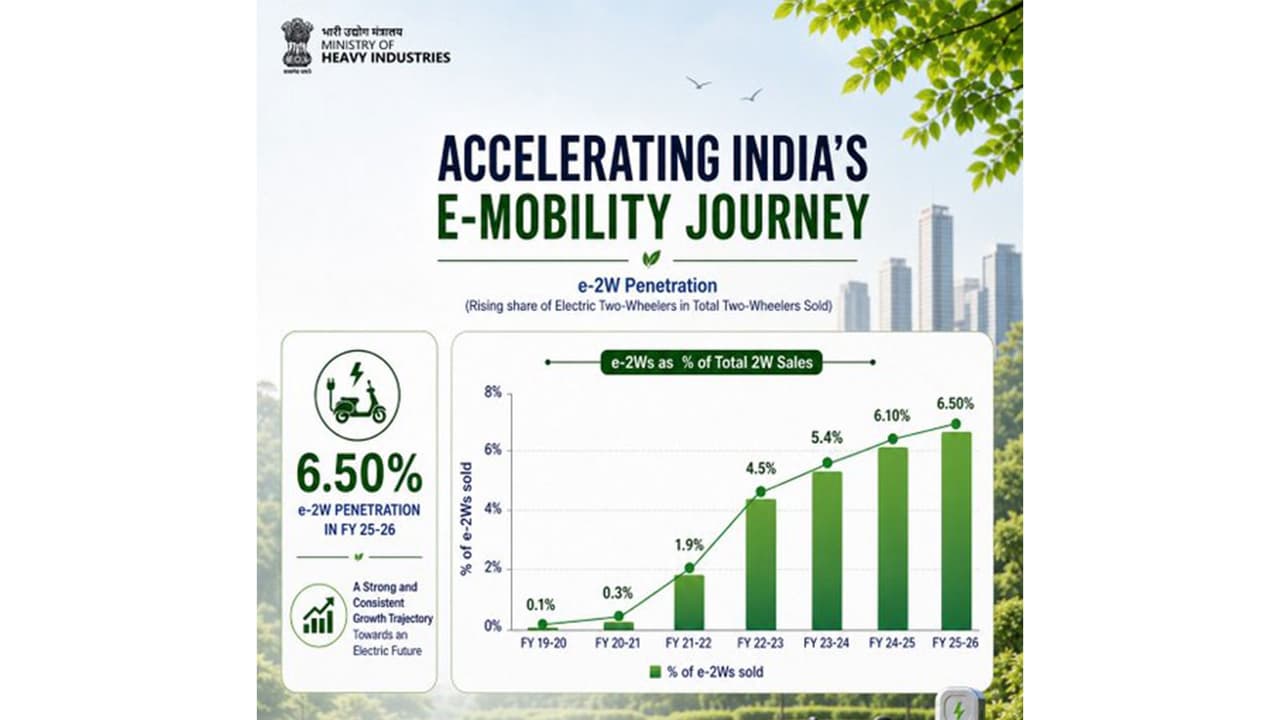
India's e-mobility transition is seeing sustained momentum, with electric two-wheelers set to achieve a 6.5% penetration by FY 2025-26, according to the Ministry of Heavy Industries, driven by government schemes and rising consumer confidence.
India's electric mobility transition is witnessing sustained growth, with electric two-wheelers recording a penetration of 6.5 per cent in FY 2025-26, reflecting rising adoption and strengthening domestic manufacturing capacity, according to the Ministry of Heavy Industries.
In a post on X, the Ministry said, "India's e-mobility transformation is gaining strong and sustained momentum, with electric two-wheelers reaching a penetration of 6.5% in FY 2025-26." It added that the growth reflects broader structural changes in the sector.
Factors Behind the Surge
"This growth reflects rising consumer confidence, rapid technological advancements, and the continued strengthening of India's domestic EV manufacturing ecosystem," the post added.
Government Initiatives Fueling Adoption
The Ministry stated that the increase in adoption is being supported by government-led initiatives aimed at accelerating clean mobility. It said the PM E-DRIVE scheme has played a key role in this expansion.
"The steady increase in e-2W adoption highlights the impact of MHI's progressive initiatives, with the PM E-DRIVE scheme driving adoption, supporting industry growth, and accelerating the transition to clean mobility," it said.
Aligning with National Climate Goals
According to the Ministry, these measures are contributing to wider environmental and efficiency goals. "These efforts are significantly contributing to improved energy efficiency, reduced emissions, and the promotion of sustainable transportation across the country," the post added.
Linking the development with national policy direction, the Ministry said the progress aligns with India's long-term climate and manufacturing goals. "Aligned with the vision of Prime Minister Narendra Modi, this progress contributes meaningfully to India's commitment to achieving Net Zero emissions by 2070, while advancing the goals of Atmanirbhar Bharat and building a globally competitive e-mobility ecosystem," it said. (ANI)
(Except for the headline, this story has not been edited by Asianet Newsable English staff and is published from a syndicated feed.)