
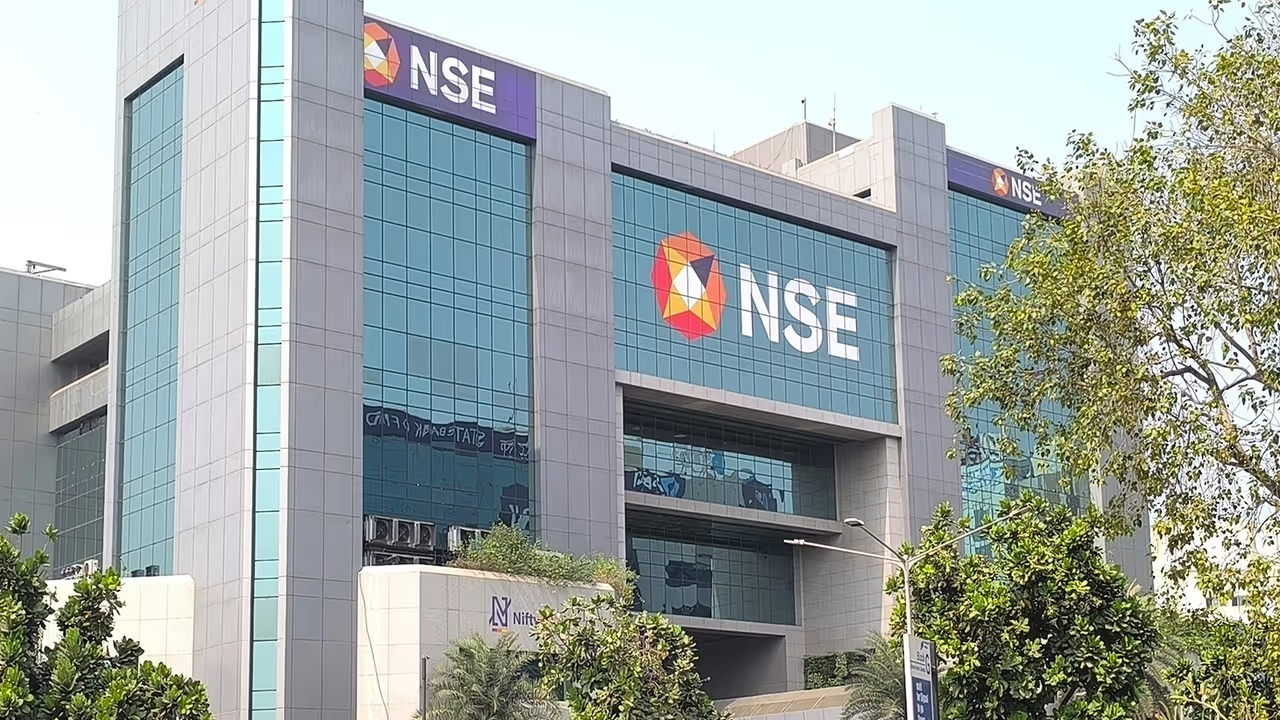
Indian equity markets sustained their rally for a second session, bolstered by strong corporate earnings and FII inflows, even as global geopolitical tensions related to the US-Iran conflict continue to create uncertainty for investors.
Indian Stock Market Rally Continues
Indian equity markets opened higher for the second consecutive session on Tuesday, extending the ongoing rally as investors remained optimistic about improving second-quarter earnings, foreign institutional investors turning buyers, and easing crude oil prices. However, uncertainty surrounding the US-Iran conflict continued to keep global markets cautious. The Nifty 50 index opened at 23,582.25, gaining 141.45 points or 0.60 per cent, while the BSE Sensex opened at 76,288.65, rising 595.87 points or 0.79 per cent.
Sectoral Performance and Expert Insights
Almost all sectoral indices on the National Stock Exchange (NSE) opened in positive territory. Nifty IT led the gains, rising 1.09 per cent, followed by Nifty FMCG, which gained 0.90 per cent, and Nifty Private Bank, which advanced 0.85 per cent. Nifty Auto rose 0.80 per cent, while Nifty Realty gained 0.66 per cent. Nifty PSU Bank advanced 0.59 per cent, Nifty Media gained 0.55 per cent, and Nifty Pharma increased 0.21 per cent.
Market experts said the rally over the past two sessions has been supported by easing crude oil prices, better-than-expected corporate earnings and foreign investors returning to Indian equities. V K Vijayakumar, Chief Investment Strategist at Geojit Investments, said several factors were supporting the continuation of the market rally. "Decline in Brent crude to USD 104, further weakening of the AI trade, continuing flow of good Q2 results and FIIs turning buyers have potential to accelerate the ongoing rally," he said. He added that patient value buying could reward investors, while market participants would closely watch the outcome of the US midterm elections and its impact on geopolitical developments.
Geopolitical Tensions and Global Impact
However, uncertainty over the possibility of renewed military action between the US and Iran remains a concern for global markets. Two contrasting developments are influencing crude oil prices. On one hand, diplomatic efforts involving the US, Iran and regional mediators have raised hopes of a possible peace agreement. These developments have led to a 7 per cent decline in crude oil prices on Monday. However, reports of fresh military strikes on Iranian sites, which have not received official US confirmation, and threats of retaliation from Iranian officials have renewed concerns about a possible escalation.
Ajay Bagga, Banking and Market Expert, said markets were struggling to assess the conflicting signals emerging from the region. "In such a muddled, stalemate vs peace talk progress vs renewal of bombing vs retaliation on an escalatory curve optionality situation, markets are trying to make sense of policy based on quirks and egos. Best to be very conservative and wait out this week as the downside risks are too high," he told ANI.
Commodities and International Market Movements
In the commodities market, Brent crude continued its downward trend but remained elevated at USD 104.72 per barrel. As per NSDL data, in the equity segment of the Indian markets, FPIs have infused around Rs 4,458 crore in just two days of November. Gold prices also extended their correction, declining 0.81 per cent to Rs 1,38,904 per 10 grams for 24-karat gold during Tuesday's opening session. Silver prices fell 2.22 per cent to Rs 1,79,697 per kg.
Meanwhile, Asian markets opened with mixed trends. Singapore's Straits Times gained 0.31 per cent to trade at 5,282, while Hong Kong's Hang Seng advanced 0.34 per cent to 23,474. Japan's Nikkei 225 declined 0.33 per cent to 63,081, Taiwan's weighted index fell 1.68 per cent to 44,095, and South Korea's KOSPI dropped 3.41 per cent to 5,659. (ANI)
(Except for the headline, this story has not been edited by Asianetnews Editorial staff and is published from a syndicated feed.)



