
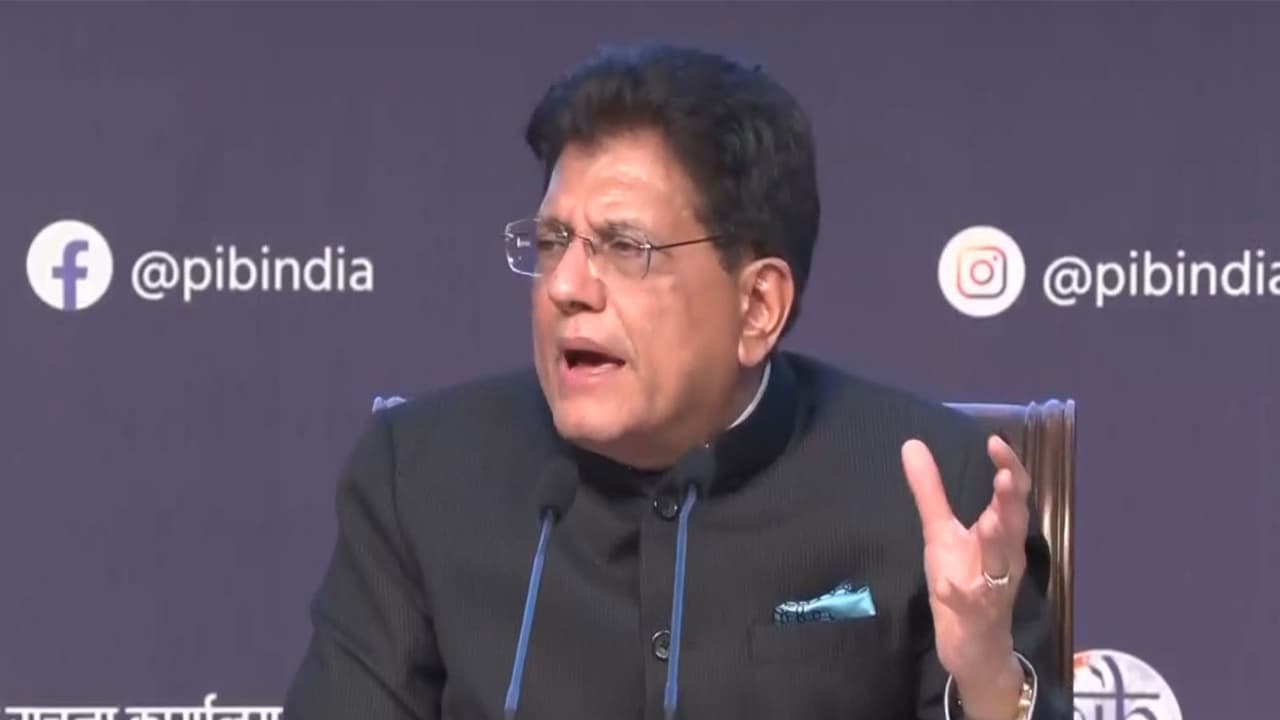
The India-EU FTA is poised to elevate India's textile exports from USD 7 billion to USD 30-40 billion, creating 6-7 million jobs, said Union Minister Piyush Goyal. The deal provides a level playing field with competitors like Bangladesh.
FTA to Boost Textile Exports, Create Millions of Jobs
Indian textile industry is set to benefit from the India-EU FTA with exports and has potential to grow from USD 7 billion to USD 30-40 billion very quickly, Union Minister of Commerce and Industry Piyush Goyal said on Tuesday, noting that this could generate 6-7 million jobs in the labour-intensive sector.
Goyal, who addressed a joint press conference here after India-EU FTA was finalized, said the two sides agreeing to key initiatives across domains is a statement of deep partnership and the strategic intent.
He referred to queries about Bangladesh having a huge lead over India in terms of garment exports to EU and said the neighbouring country, has zero duty access being a least developed country (LDC), and was able to capture USD 30 billion out of the USD 250 billion textiles market of the European Union.
He indicated that once the FTA comes into force, India will be on par with Bangladesh in terms of duties. "First of all, in terms of job creation, most of us here are aware that the textile industry in India is the second largest job creator after agriculture, with nearly 40 million jobs being created in the textile sector. India exports about USD 7 billion worth of textiles and garments to the EU every year, and the duty rates are anywhere up to 12% on the goods that we export to the EU," he said.
"...the press used to always ask us, why is Bangladesh able to export USD 30 billion worth of textiles, and India is such a small player? Because Bangladesh, being a least developed country, LDC, had zero duty access, and they were able to capture 30 billion out of the 250 billion dollar market of the European Union in textiles alone. Now, we see before our eyes a potential to grow from 7 billion to at least 30-40 billion very quickly. If we add this kind of business only in the textile sector alone, we are looking at close to 6-7 million jobs coming into that sector. So it has tremendous potential. The sectoral gains in various areas, particularly in the labour-intensive areas, give us tremendous potential for job creation in India," he added.
Unprecedented Market Access and Growth Potential
Piyush Goyal highlighted the unprecedented access Indian goods will have once the FTA is implemented. "This agreement covers almost 99 per cent of the total exports that are sent from India to the European Union and about 97 per cent plus of the total exports from EU to India," Goyal stated.
He noted that while India's current footprint in the European market is modest--accounting for roughly 1.5 per cent of goods imports and 2.5 per cent of services imports--the new deal provides a launchpad for exponential growth.
Goyal emphasised that areas with "very serious labour interest," such as textiles, apparels, home decor, and furnishing, will receive "duty free access from day one."
Navigating EU's Carbon Border Adjustment Mechanism (CBAM)
While the agreement slashes tariffs, both sides are also addressing modern regulatory challenges, specifically the EU's Carbon Border Adjustment Mechanism (CBAM). Commerce Secretary Rajesh Agrawal clarified that CBAM remains a "horizontal regulation which is applicable to all partner countries across the globe," but confirmed that the FTA includes specific provisions to help Indian industries navigate these environmental costs.
"One, a technical dialogue has been agreed to be set up which will address the pathway for our industries to access the market in spite of the CBAM regulation being there," Agrawal explained.
A key focus of this cooperation will be the accreditation of Indian agencies to ensure they can verify carbon emissions according to EU standards locally. "We'll be working together to see that the verifiers for CBAM in India are also accredited by the use agencies so that our industry is able to access them," Agrawal added.
The two economies will also collaborate on the "technical processes through which this CBM measurement will be done," ensuring that Indian exporters are not blindsided by the measurement methodologies used in Europe.
(Except for the headline, this story has not been edited by Asianet Newsable English staff and is published from a syndicated feed.)