
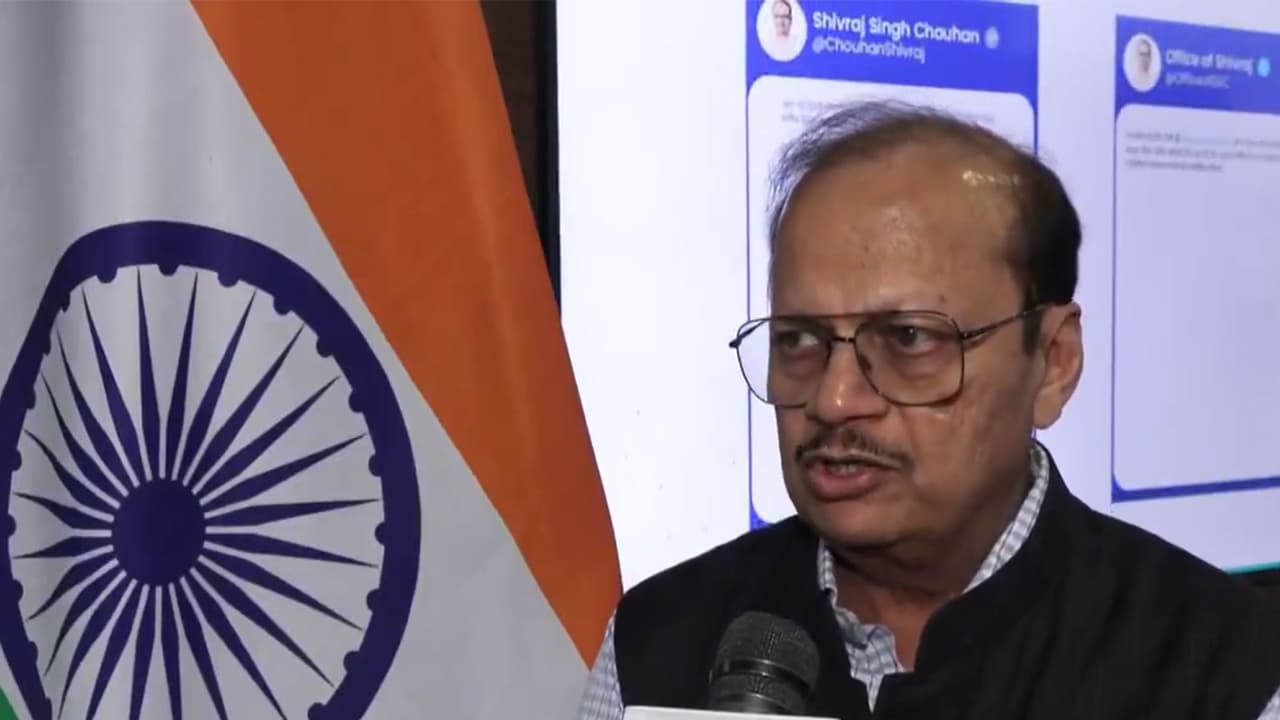
Former IOCL director Sandeep Jain warns India must diversify its gas sources, including Russian LNG, to mitigate risks from Middle East tensions and the Strait of Hormuz, which could lead to "demand destruction" and "economic depression."
India should definitely look for a geographical diversification for gas to mitigate the risks posed by ongoing geopolitical tensions in the Middle East, according to Sandeep Jain, Former Executive Director (Gas) at Indian Oil Corporation Ltd. (IOCL). Speaking to ANI, Jain emphasized that India needs to consider all options, including "Russian-sanctioned LNG" that is currently available. He argued that the high cost of current imports could lead to "demand destruction" and "economic depression."
Jain said that government-owned entities such as IOCL, BPCL, and HPCL increased refinery production and sought alternative routes. He observed that these companies "are very flexible in contracting LPG from the US, from Argentina, and from Russia," as well as other available sources. Jain noted that these efforts aimed to ensure that "households, whichever uses LPG, don't face any issues."
Geopolitical Risks at the Strait of Hormuz
Jain noted that the escalation between the US, Israel, and Iran conflict has left India "at a crossroad" because the Strait of Hormuz facilitates the flow of 20 per cent of liquefied natural gas (LNG), crude oil, and liquefied petroleum gas (LPG) globally.
Impact on LPG Supply
Jain said that India is "very adversely impacted" by these developments because the country imports roughly 60 to 70 per cent of its LPG, with 90 per cent of those volumes arriving through the Strait of Hormuz. He indicated that this disruption "has directly impacted every household" in the country that relies on LPG for daily needs.
Jain highlighted the scale of the challenge, stating that the "Indian government is trying hard because it's not easy to replace 14 to 15 million metric ton of LPG per annum which comes from this narrow strait."
Crude Oil and LNG Constraints
The impact also extended to crude oil, with Jain stating that "around 40% of crude which India consumed around 5.2 million barrels per day comes from this Strait of Hormuz."
While public sector units successfully moved toward alternative sources, including sanctioned crude from Russia, the LNG sector faced more severe constraints. Jain noted that "LNG has got literally impacted" as 65 per cent of India's LNG flows from the Middle East, with 60 per cent passing through the strait. He pointed out that major producers like Qatar Energy and ADNOC declared force majeure after two production facilities were destroyed, leading to a supply cut of "more than 50%" for Indian industries. (ANI)
(Except for the headline, this story has not been edited by Asianet Newsable English staff and is published from a syndicated feed.)