
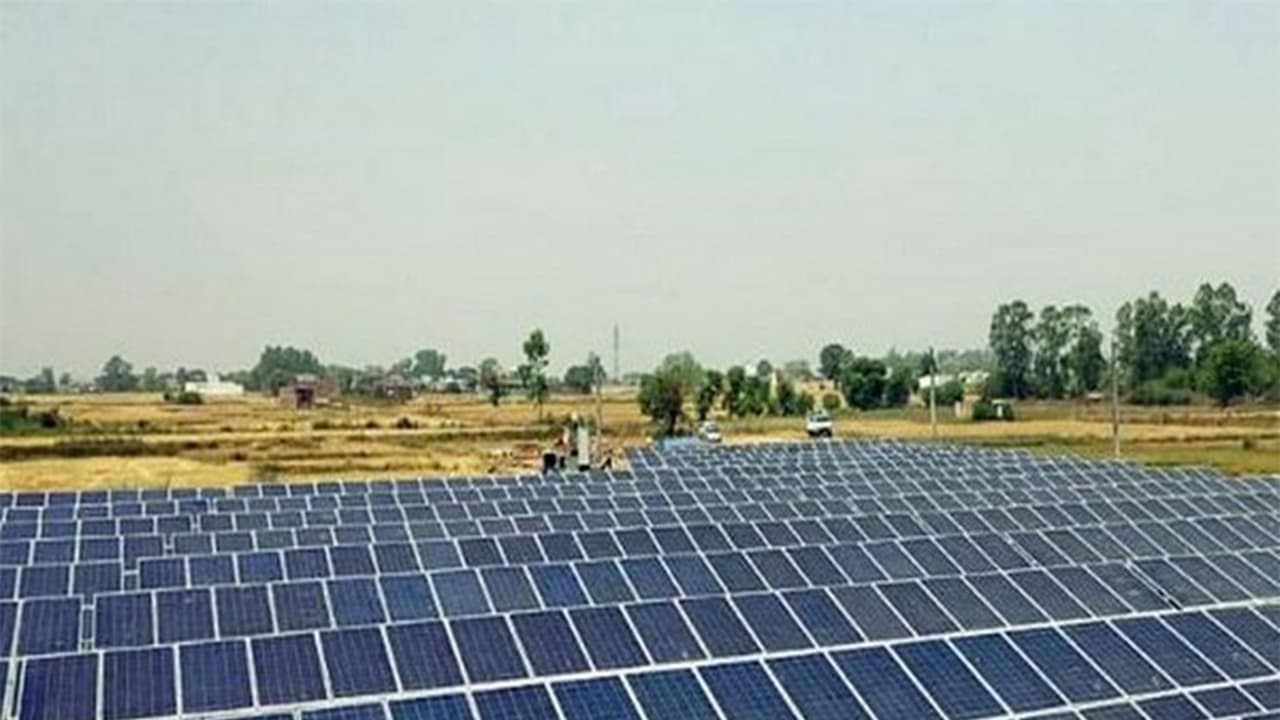
Rooftop solar and the KUSUM scheme drove about 40% of India's solar capacity additions in YTD FY27, a significant rise from 22% in FY26, says a Bernstein report, highlighting their growing importance amid challenges for utility-scale projects.
Rooftop solar and the KUSUM scheme accounted for around 40 per cent of India's solar capacity additions in the year-to-date FY27 period through July, emerging as key drivers of renewable capacity growth even as utility-scale projects faced transmission-related challenges, according to a Bernstein report.
Decentralised Solar Leads Capacity Growth
The report highlighted the growing contribution of decentralised solar projects to India's renewable energy expansion, with rooftop and KUSUM additions leading the growth in solar capacity during the current fiscal. "In FY27 till July, Rooftop and KUSUM scheme account for ~40% additions," Bernstein said in its report on India's industrials and infrastructure sector.
Bernstein noted that India had recorded strong renewable capacity additions in FY26, adding 45 GW of solar and 6 GW of wind capacity. Rooftop solar and the KUSUM scheme accounted for 22 per cent of solar capacity added during FY26, indicating their increasing role in the country's solar expansion. "While India added record renewables in FY26 (45GW solar and 6 GW wind), 22% of the solar capacity was through rooftop and KUSUM scheme," the report said.
Transmission Constraints Impact Utility-Scale Projects
The brokerage said the trend has become more pronounced in the current fiscal, with rooftop solar and KUSUM emerging as major contributors to incremental solar capacity. "If we look at the split of solar capacity additions, rooftop solar and KUSUM scheme additions have led growth in YTD FY27 additions," Bernstein said.
The report attributed the changing composition of solar additions partly to challenges faced by utility-scale renewable projects due to transmission constraints. "Rooftop and KUSUM scheme account for ~40% additions, with utility scale assets facing challenges due to transmission constraints," Bernstein said.
The data cited by the brokerage showed that India's annual solar capacity additions rose sharply from 24 GW in FY25 to 45 GW in FY26. In FY27 through July, the country had already added a significant amount of solar capacity, with rooftop and KUSUM projects accounting for a substantially larger share of the additions. The expansion of rooftop solar and KUSUM is becoming an increasingly important component of India's renewable energy growth, alongside utility-scale projects.
Future Outlook and Government Schemes
The report also referred to the Central Electricity Authority's long-term capacity addition projections, which suggest that renewable additions could plateau and moderate over the next one to two years as transmission infrastructure catches up. India aims to install rooftop solar systems in 10 million households under the PM Surya Ghar scheme, with a combined capacity of 30 GW by the end of the financial year. (ANI)
(Except for the headline, this story has not been edited by Asianetnews Editorial staff and is published from a syndicated feed.)