
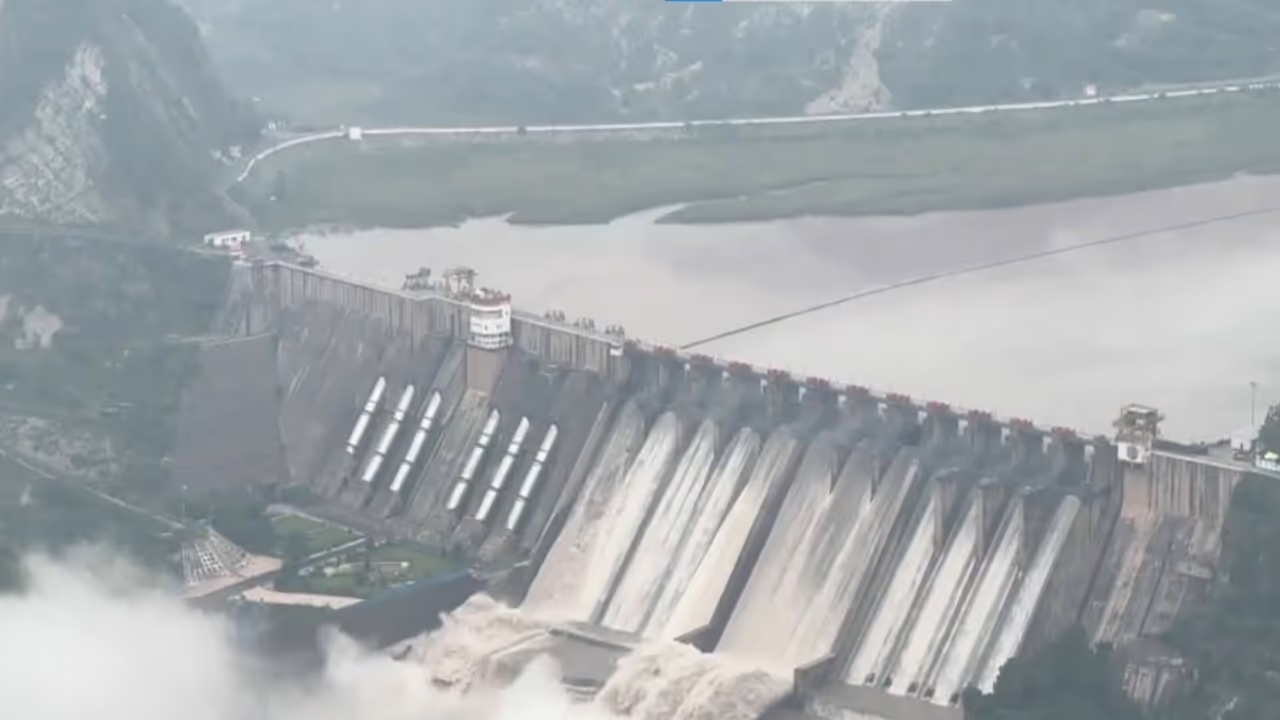
India has identified 345.38 GW of pumped storage hydropower potential, with only 7.43 GW currently operational. The country plans to accelerate capacity addition to support its expanding renewable energy sector and ensure grid stability.
India has identified 345.38 gigawatts (GW) of pumped storage hydropower potential, but only 7.43 GW is currently operational, highlighting the need to accelerate capacity addition to support the country's growing renewable energy sector.
Current Status and Future Demand
According to a Press Information Bureau (PIB) note, India has identified 320 pumped storage projects, of which 11 projects with a combined capacity of 15.87 GW are under construction or implementation. The expansion of solar and wind power has increased the need for energy storage to balance fluctuations in electricity generation and meet peak demand, particularly during evening hours. Pumped storage hydropower works like a large battery. It uses surplus electricity to pump water to an upper reservoir and releases it through turbines to generate power when demand rises.
The Central Electricity Authority (CEA) estimates that India will need 73.93 GW of energy storage capacity by 2031-32, including 26.69 GW from pumped storage projects and 47.24 GW from battery energy storage systems.
Regional Potential and Development Hurdles
India's identified potential includes 258 off-stream projects with a combined capacity of 288.71 GW. The western region accounts for the largest share at 129.72 GW, with Maharashtra contributing 67.36 GW and Gujarat 33.36 GW. However, developing this capacity will require detailed assessments of geographical conditions, geology, water availability, environmental impact and transmission connectivity.
Government Roadmap and National Goals
The CEA's roadmap envisages adding 100.81 GW of pumped storage capacity by 2035-36, taking the country's total capacity to around 105.56 GW. The government has introduced measures to support project development, including financial assistance for enabling infrastructure, waivers on transmission charges and faster approvals.
The PIB noted that expanding pumped storage capacity would improve grid flexibility and help integrate a larger share of renewable energy into the power system. With India targeting 500 GW of non-fossil fuel-based power capacity by 2030, pumped storage hydropower is expected to play an important role in storing surplus electricity and supplying it during periods of high demand. (ANI)
(Except for the headline, this story has not been edited by Asianetnews Editorial staff and is published from a syndicated feed.)