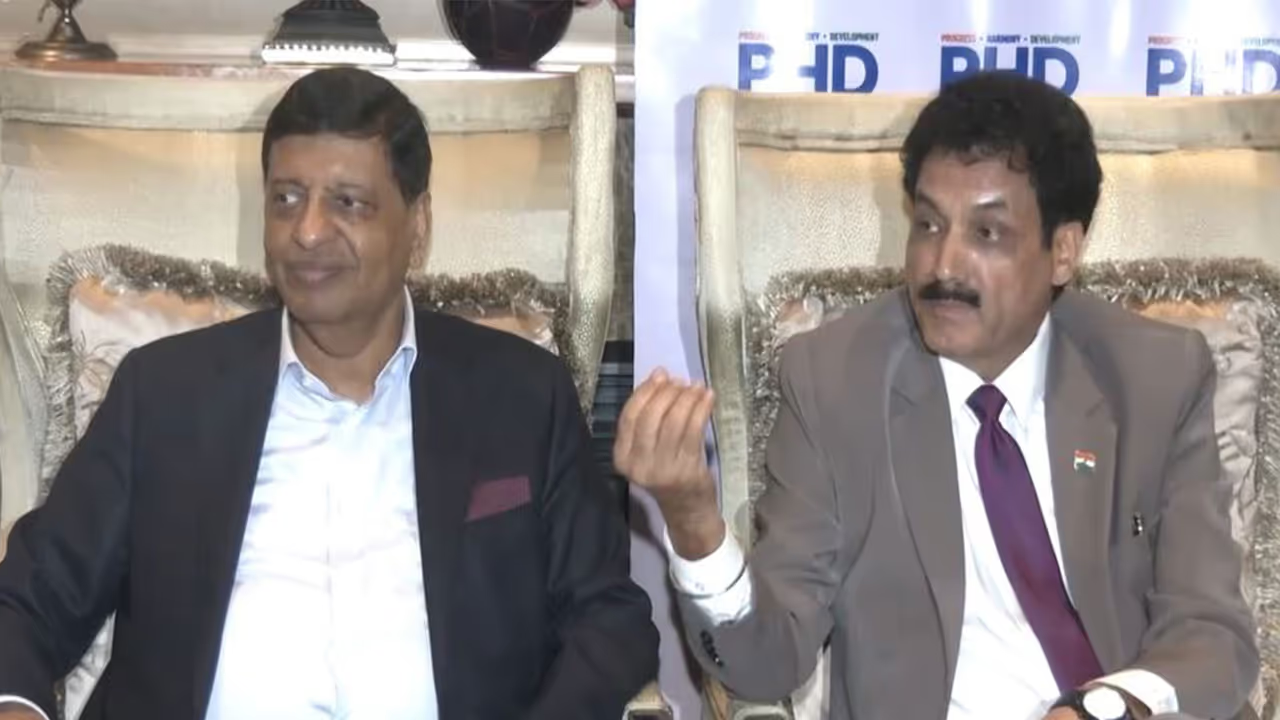
PHDCCI President Anil Gupta advocates for increased domestic energy exploration, renewable adoption, and electric vehicle use to strengthen India's economic resilience and lower import dependency while projecting 7 percent growth for FY27.
Accelerating India's Energy Independence
India needs to accelerate domestic oil and gas exploration, expand renewable energy generation and promote electric mobility to reduce its dependence on energy imports and strengthen economic resilience amid global uncertainties, Anil Gupta, President of PHDCCI and Chairman and Managing Director of KEI Industries Limited, said.
Talking to the media, Gupta called for greater private sector participation in domestic oil and gas exploration, supported by favourable contractual terms. "We should try to do more and more exploration, especially by roping in the private sector and giving them very good contractual terms so that they push for more and more oil and gas exploration," he said. He also called for greater utilisation of India's available energy resources, including solar, wind and coal, alongside wider adoption of electric passenger and commercial vehicles to reduce dependence on imported oil.
Economic Resilience and Strategic Growth
Gupta said India had managed the impact of the global oil price surge relatively well, with retail petrol and diesel prices rising by around 10-15 per cent, compared with increases of more than 100 per cent in some other countries. On India's economic resilience, he attributed the country's growth momentum to domestic consumption, the China-plus-one strategy and expanding access to international markets through free trade agreements (FTAs). "One of the reasons that India remains immune to the world crisis is that our own good consuming population," Gupta said, adding that the China-plus-one strategy had also supported industrial growth and exports. He said the FTAs signed with Europe, the UAE and other countries would gradually support exports, although developing markets and building trust between buyers and sellers would take time. He expected these agreements to begin delivering results over the next two to three years.
Critical Minerals and MSME Development
On critical minerals, Gupta said India was almost entirely dependent on imports for copper, with around 95 per cent of its requirements sourced from overseas, while the country was self-reliant in aluminium. He expressed optimism that government initiatives to promote rare earth mineral exploration and production would help India move towards self-reliance over the next two to three years.
Ranjeet Mehta, CEO and Secretary General of PHDCCI, highlighted the need to improve awareness among micro, small and medium enterprises (MSMEs) about government support schemes and international trade opportunities. "Most of the MSMEs in our country are totally unaware of these schemes," Mehta said, adding that PHDCCI was conducting outreach programmes at district and smaller-city levels to familiarise businesses with platforms such as GeM and TReDS.
Future Outlook
Gupta said India could achieve GDP growth of more than 7 per cent in FY27, adding that the country's economic outlook remained positive.
(Except for the headline, this story has not been edited by Asianetnews Editorial staff and is published from a syndicated feed.)