
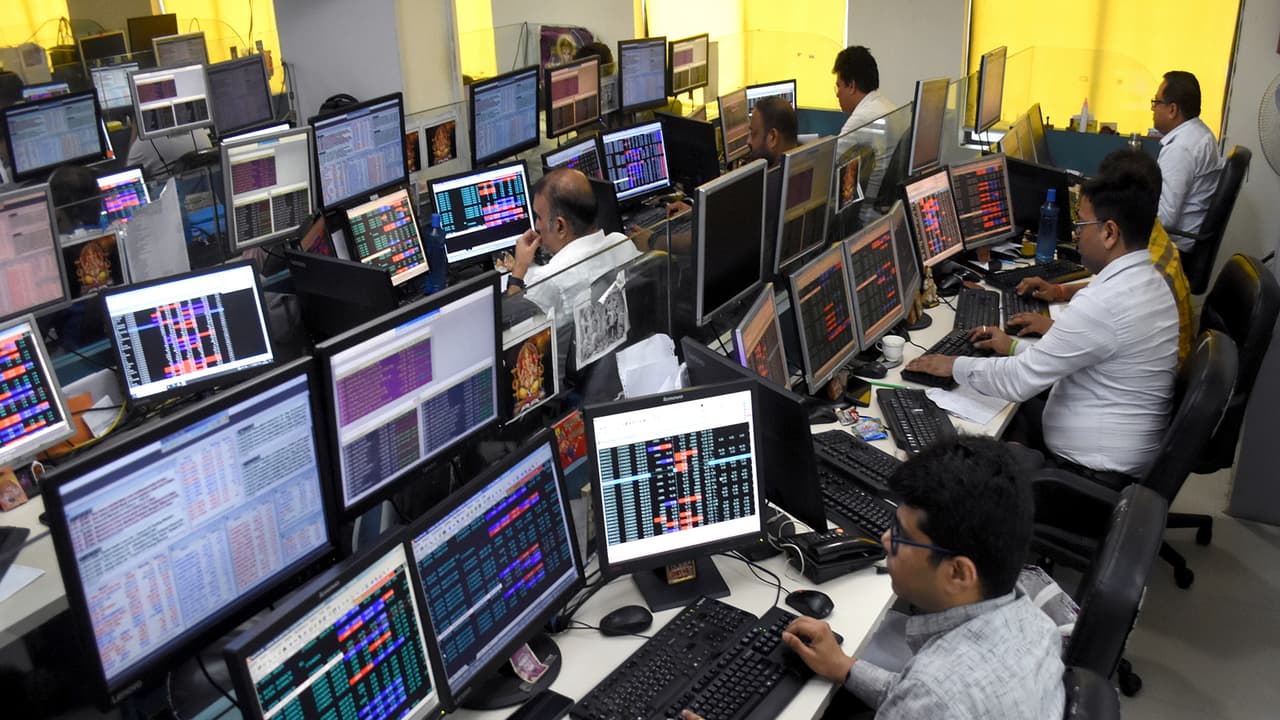
DIIs' share in Indian equities hit a record 17% by March 2026 as FPI holding fell to a 15-year low. DIIs invested Rs 8.5 lakh crore, cushioning the market from FPI outflows amid global volatility, according to SEBI's annual report.
DIIs Emerge as Key Force in Indian Equities
Domestic institutional investors increased their share in Indian equities to an all-time high of 17 per cent by the end of March 2026, while the share held by foreign portfolio investors fell to a 15-year low of 15.8 per cent, according to the Securities and Exchange Board of India's (SEBI) Annual Report 2025-26.
The shift came during a year when foreign investors pulled money out of the Indian market amid heightened global uncertainty, while domestic institutions continued to invest.
SEBI said domestic institutional investors (DIIs), including banks, development financial institutions, insurance companies, mutual funds and the National Pension System (NPS), recorded a cumulative net investment of Rs 8.5 lakh crore during 2025-26.
"Despite this volatility, Domestic Institutional Investors (DIIs), comprising Banks, DFIs, insurance, mutual funds and NPS, acted as a critical countervailing force, absorbing foreign divestments with a record cumulative net inflow of Rs 8.5 lakh crore, heavily supported by consistent mutual fund SIPs," SEBI said in the report.
This pushed the share of domestic institutional investors in Indian equities to a record level even as foreign investor ownership declined. The shift also reflects the growing role of domestic savings in India's capital markets.
Strong SIP Inflows Boost Domestic Investment
Mutual fund investments through systematic investment plans (SIPs) remained a major source of domestic money during the year.
According to the report, the number of SIP accounts increased 3.9 per cent to 10.45 crore in 2025-26 from 10.05 crore in the previous financial year. Average net monthly SIP investments increased 25.8 per cent to Rs 16,413 crore from Rs 13,052 crore.
Market Performance and Global Headwinds
The domestic buying helped cushion Indian markets during a volatile year. The Nifty 50 touched a record high of 26,328.6 in early January 2026 before geopolitical tensions in the Middle East led to a correction. The index ended the financial year with a decline of 5.1 per cent.
Foreign investment was affected by global factors, including geopolitical tensions in West Asia, elevated crude oil prices and rising US bond yields, which led investors to move money across global markets during the year.
Despite the market volatility, India remained the world's fifth-largest stock market, with total market capitalisation at Rs 411.6 lakh crore at the end of 2025-26, according to the SEBI report. (ANI)
(Except for the headline, this story has not been edited by Asianetnews Editorial staff and is published from a syndicated feed.)