
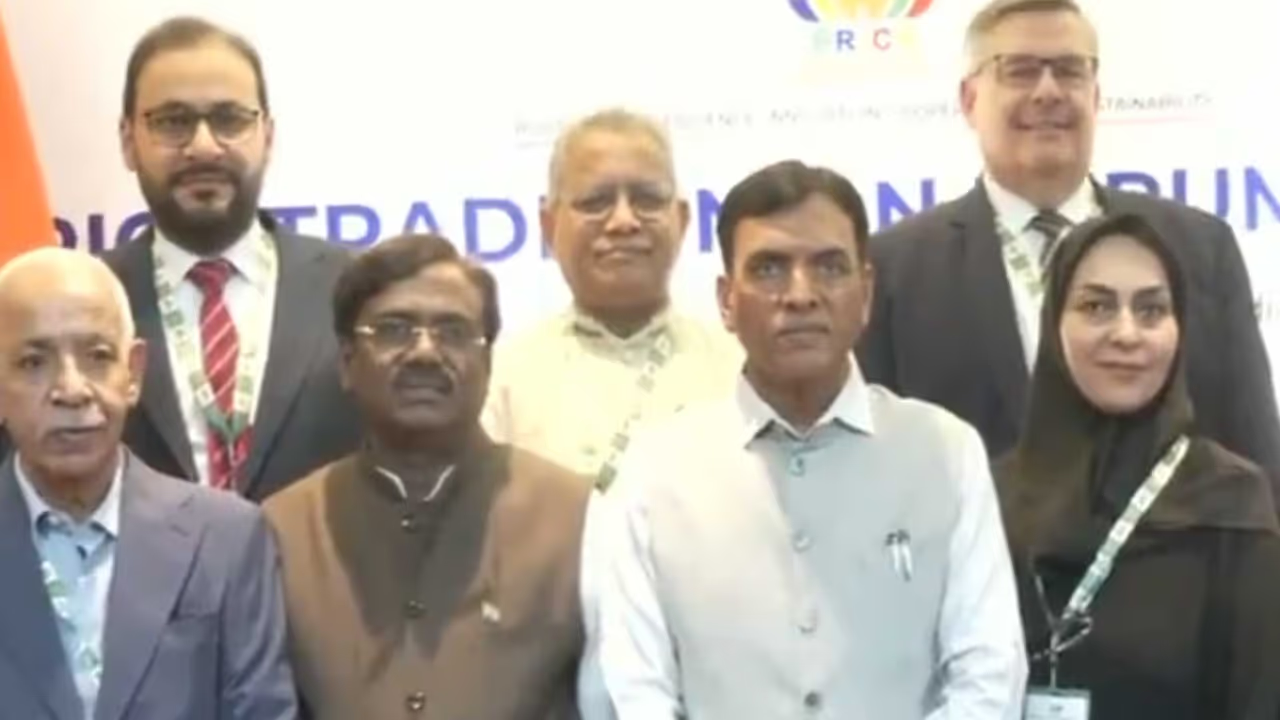
At the BRICS Trade Union Forum in Hyderabad, delegates called for AI to be used to help workers, not replace them. They stressed the need for social dialogue between governments, employers, and workers to manage technological advancements.
Trade union representatives attending the BRICS Trade Union Forum in Hyderabad have called for artificial intelligence (AI) to be deployed as a tool to improve workers' lives rather than replace jobs, while also urging member nations to strengthen social dialogue and address global economic and geopolitical challenges affecting workers.
Focus on AI and Future of Work
Speaking on the sidelines of the three-day forum, Indonesian delegate Ditha Juliet said discussions among BRICS trade unions would focus on the growing role of technology and AI in shaping the future of work. "One of the key issues we will discuss over the next three days is how technology and AI can make an impact on future workers," she said, adding that AI should be implemented to help workers rather than lead to layoffs or job losses. Juliet stressed that trade unions have an important responsibility in educating workers about technological changes and ensuring clear communication on how AI can enhance productivity without threatening employment. She said social dialogue between governments, employers and workers would be crucial as AI adoption accelerates.
Call for Better Conditions and Geopolitical Action
Echoing similar concerns, Carlos Miller, a representative of Brazil's CTB Trade Union, said the forum provides an opportunity for trade unions to convey workers' expectations to BRICS governments. "Our expectations are very high. We need to tell our governments that this conversation among the BRICS countries should result in increased salaries, better working conditions and that our people should benefit from BRICS," he said. Miller also highlighted the need for a more multilateral global order, saying workers should be placed at the centre of policy discussions.
Referring to the ongoing geopolitical tensions in West Asia, he expressed concern over the safety of seafarers in the region. He said that more than 20,000 seafarers were stranded around the Persian Gulf and the Strait of Hormuz, with many of them being Indians, and urged India to raise not only concerns over rising fuel prices but also the safety and welfare of workers on board vessels.
Regional Economic Impact
Meanwhile, Telangana Minister Vivek Venkatswamy said disruptions around the Strait of Hormuz could have significant implications for India's economy, as higher fuel prices would eventually push up transportation costs and prices of essential commodities. Stressing the need for resource conservation, he said governments must begin planning measures to deal with the evolving situation, adding that the Telangana government had already taken steps such as discontinuing the use of escort vehicles to reduce fuel consumption. (ANI)
(Except for the headline, this story has not been edited by Asianet Newsable English staff and is published from a syndicated feed.)