
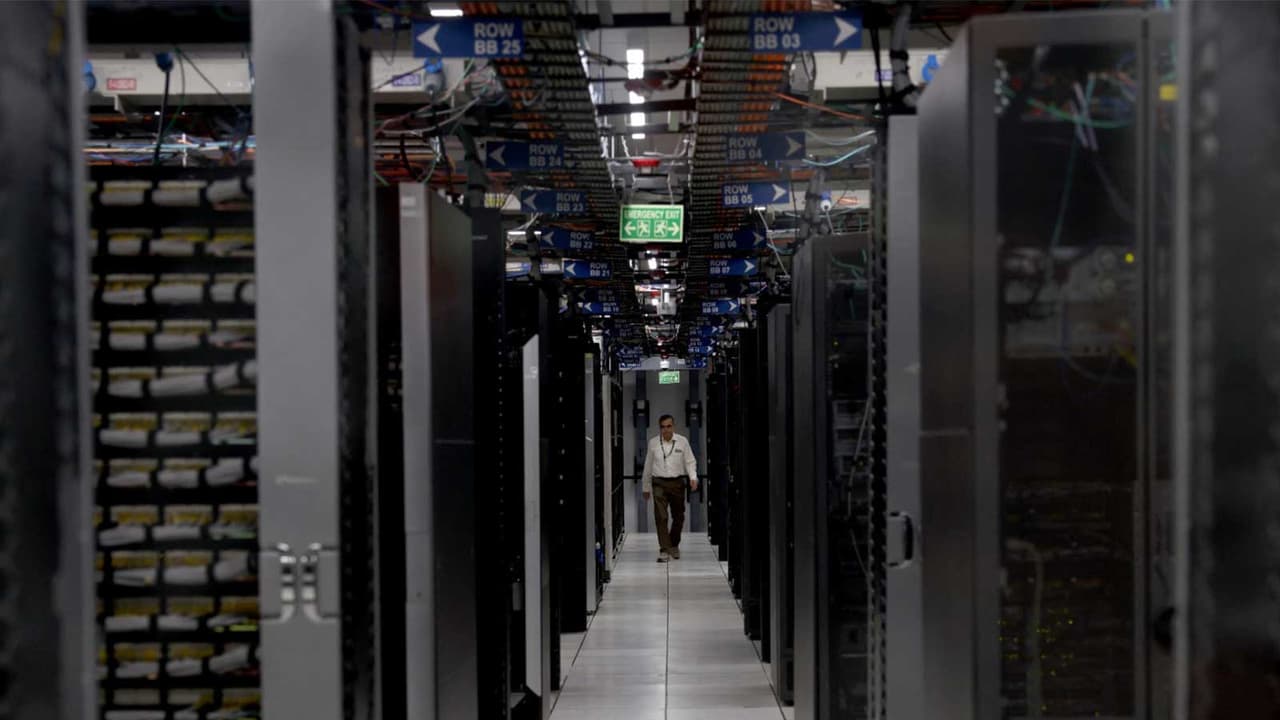
A Morgan Stanley report warns the AI race could be won by firms securing enough electricity and data-centre infrastructure, not just advanced chips. It forecasts a 32 GW US power shortfall by 2028, threatening to sideline smaller companies.
AI Race Hinges on Infrastructure, Not Just Chips
The global race to expand artificial intelligence (AI) capabilities could increasingly be determined by which companies can secure enough electricity, financing and data-centre infrastructure to operate advanced chips, rather than simply by their ability to acquire the latest technology, according to a Morgan Stanley research report.
The assessment comes as rapid investment in AI infrastructure threatens to outpace the availability of electricity, raising concerns that smaller companies could struggle to compete with financially stronger technology giants.
Power Shortfall and Market Concentration
In its equity research report titled "What Does the Power Shortfall Mean for Semis?", Morgan Stanley estimated that US data-centre developers could face a 32-gigawatt (GW) power shortfall through 2028, even after accounting for additional power-generation solutions. This represents around 34 per cent of projected power requirements. The report said, "Nvidia confirmed our thesis that there is not enough power to meet demand, and there are more semiconductors being built than there are places to put them."
The findings suggest that expanding chip production alone may not be enough to sustain the AI boom unless companies can also secure electricity, suitable land and operational data centres. Morgan Stanley said access to electricity was increasingly favouring large companies with strong financial backing and predictable revenues. "We believe we're in an environment where data center energization is being concentrated across a handful of large, credit-worthy players," the report stated. It added that companies with strong credit support and large power requirements were securing electricity more quickly, potentially leaving smaller developers at a disadvantage.
Ripple Effects on Semiconductor Industry
The research estimated that major technology companies and specialist cloud providers could account for approximately 94 per cent of global data-centre capacity additions in 2026, followed by 64 per cent in 2027 and 57 per cent in 2028. "We believe this could potentially 'squeeze out' or put pressure on other players over time," Morgan Stanley said.
The constraints could also affect semiconductor manufacturers if data centres are unable to install the chips they have ordered. "If there's chip capacity expected to come online that cannot be deployed at data centers, we could see customers push out delivery or start canceling orders," the report warned. However, Morgan Stanley expects Nvidia and Broadcom to meet their 2027 forecasts, citing their visibility into customer demand and infrastructure availability. It sees greater risks for suppliers of memory chips, optical equipment and other supporting components if deployment slows.
Long-Term Challenges and Global Expansion
The report also indicated that the infrastructure challenge could persist beyond 2028, with the projected cumulative US data-centre power shortfall potentially widening to 68 GW by 2029. The shortage could encourage technology companies to expand computing infrastructure outside the United States, including in Asian markets such as India.
Morgan Stanley's Asia data-centre team estimates that 14 GW of demand from US hyperscalers could shift to Asia through 2030, although the report does not specify India's share. "While we expect international expansion to continue, we don't see it as a solution to the US power problem," the report said.
The findings underline a growing challenge for the AI industry: technological advances and spending on chips may not translate into additional computing capacity unless electricity supply and supporting infrastructure expand at a similar pace. (ANI)
(Except for the headline, this story has not been edited by Asianetnews Editorial staff and is published from a syndicated feed.)